You know the delay rarely begins with a dramatic refusal. It begins with a tiny detour. You open one tab before the difficult task, reorganize the list, answer a low-stakes message, and somehow lunch arrives first.
The best app depends on which detour keeps winning.
How we compared anti-procrastination apps
We used one avoided task with a clear deadline and tested the mechanism each app brings to the moment of avoidance:
- Can it turn the task into a small first action?
- Can it put that action somewhere in time?
- Can it reduce access to the usual distraction?
- Does it offer an immediate reason to begin?
- What happens after a missed day?
- How much maintenance does the system add?
We did not reward an app for having the longest feature list. A focus timer that gets you started can beat a life dashboard you spend an hour configuring.
The quick guide
| App | Best for | Main mechanism | Price checked July 30, 2026 |
|---|---|---|---|
| Forest | Phone distraction | Grow a tree while the focus timer runs | Free to start; paid options vary by platform |
| Structured | Time blindness and vague days | Put tasks on one visual timeline | Free; Pro price varies by region |
| Todoist | Fast task capture | Turn thoughts into organized tasks and due dates | Free; Pro is $7 monthly or $60 yearly |
| Finch | Gentle self-care and restarting | Care for a virtual companion through small actions | Free core; Plus is $9.99 monthly or $69.99 yearly |
| Habitica | Strong game rewards | Earn XP, gold, gear, and social progress | Free core; optional subscription and in-app purchases |
| Fabulous | Guided routines | Follow coached journeys and repeated rituals | Free download; subscription price shown at checkout |
| TaskCoach | Goal-connected follow-through | Connect goals, tasks, time, habits, focus, and coaching | Free core; Premium starts at only $8 per month |
1. Forest: best for blocking the first distraction
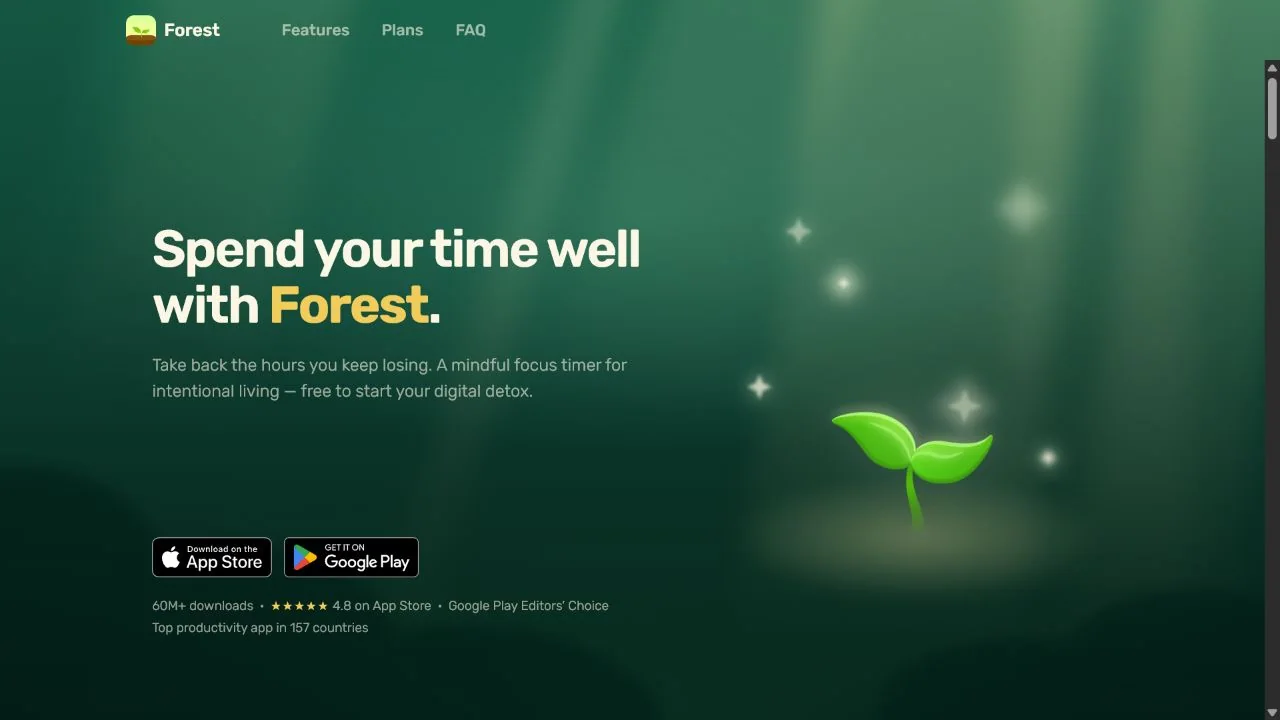
Forest gives the focus session a visible stake. Start a timer and a tree grows while you stay with the work. Leaving the session can interrupt that growth, depending on the platform and settings.
What works
- The rule is understood in seconds.
- The timer creates a defined start and finish.
- The tree gives a delayed task an immediate visual payoff.
- A forest of completed sessions makes focused time visible over weeks.
Limitations
Forest cannot decide what deserves the session or break a vague task into steps. You can grow a beautiful tree while working on the wrong thing. The consequence can also feel too punitive if one interruption ruins a session.
Best for: someone who already knows the task and keeps reaching for the phone.
2. Structured: best when time feels invisible
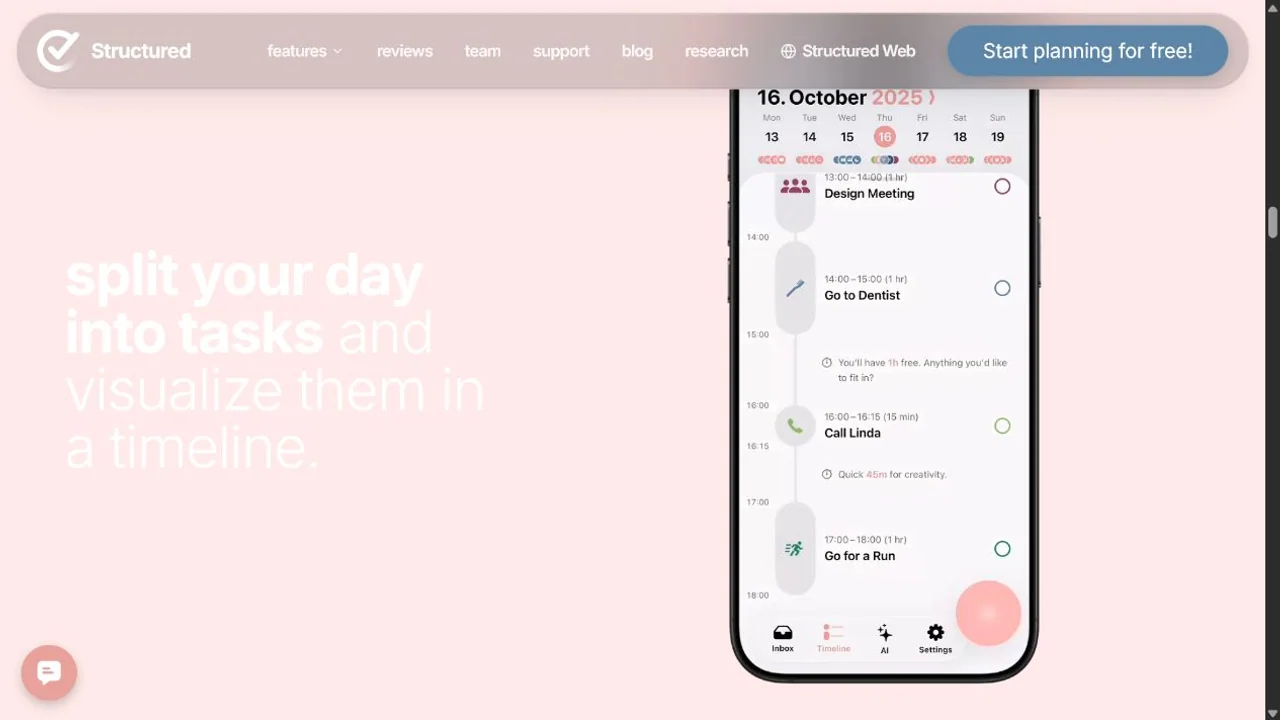
Structured places tasks and appointments on one vertical timeline. That changes "work on the report later" into a block between two visible commitments.
What works
- A task gains a start point, duration, and surrounding context.
- The day is easier to scan than a long list of due dates.
- The free plan is enough to test the core timeline.
- Optional AI can help create or adjust tasks without becoming the whole product.
Limitations
The plan still needs honest durations and manual care. Structured has less project depth than Todoist and less goal or coaching context than TaskCoach.
Best for: someone who postpones tasks because the day remains an abstract list.
3. Todoist: best for catching the task quickly
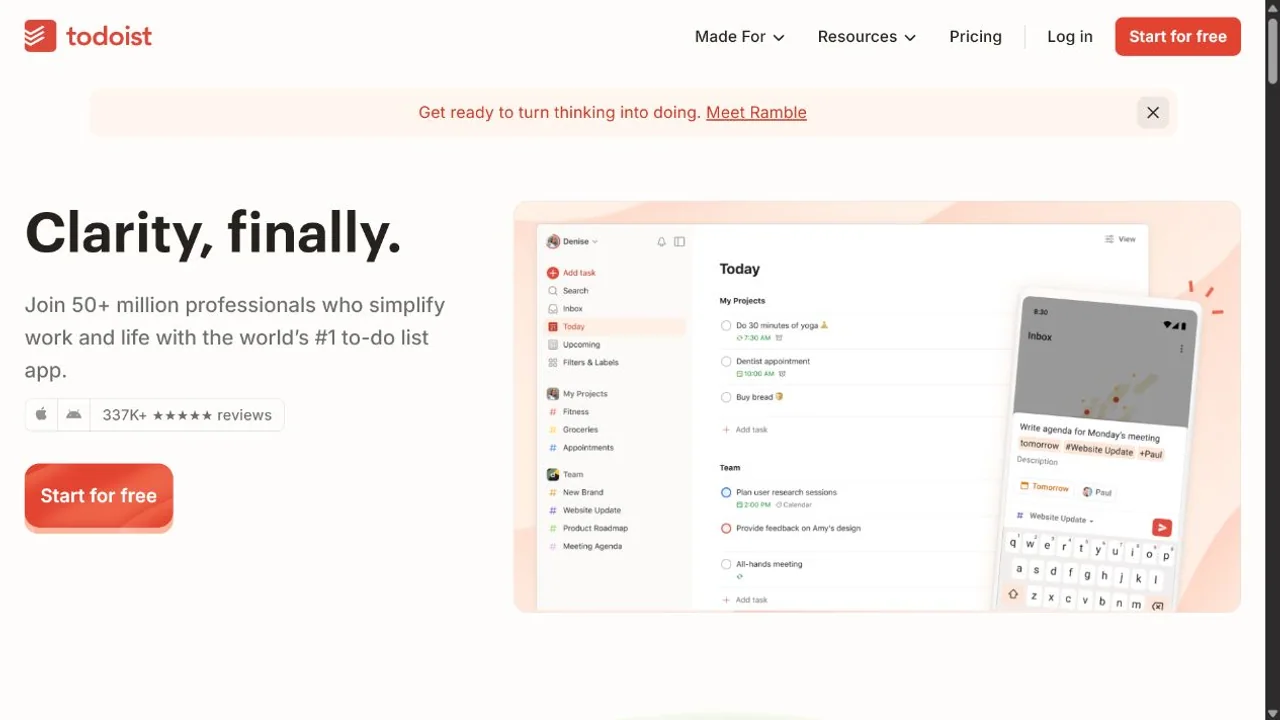
Todoist excels at getting work out of your head. Natural-language capture, recurring dates, priorities, projects, filters, boards, and a calendar layout make it a mature task manager with very little friction.
What works
- Quick Add is faster than most broad planning systems.
- The product handles personal and work lists cleanly.
- Subtasks can turn one intimidating item into a visible sequence.
- The free tier covers core capture and organization.
Limitations
Todoist can become an excellent inventory of work you still avoid. Scheduling, emotional re-entry, and accountability require a method you build around the list. Pro is currently $7 monthly or $60 yearly in the US.
Best for: someone whose first problem is losing, forgetting, or poorly organizing tasks.
4. Finch: best for a gentle restart
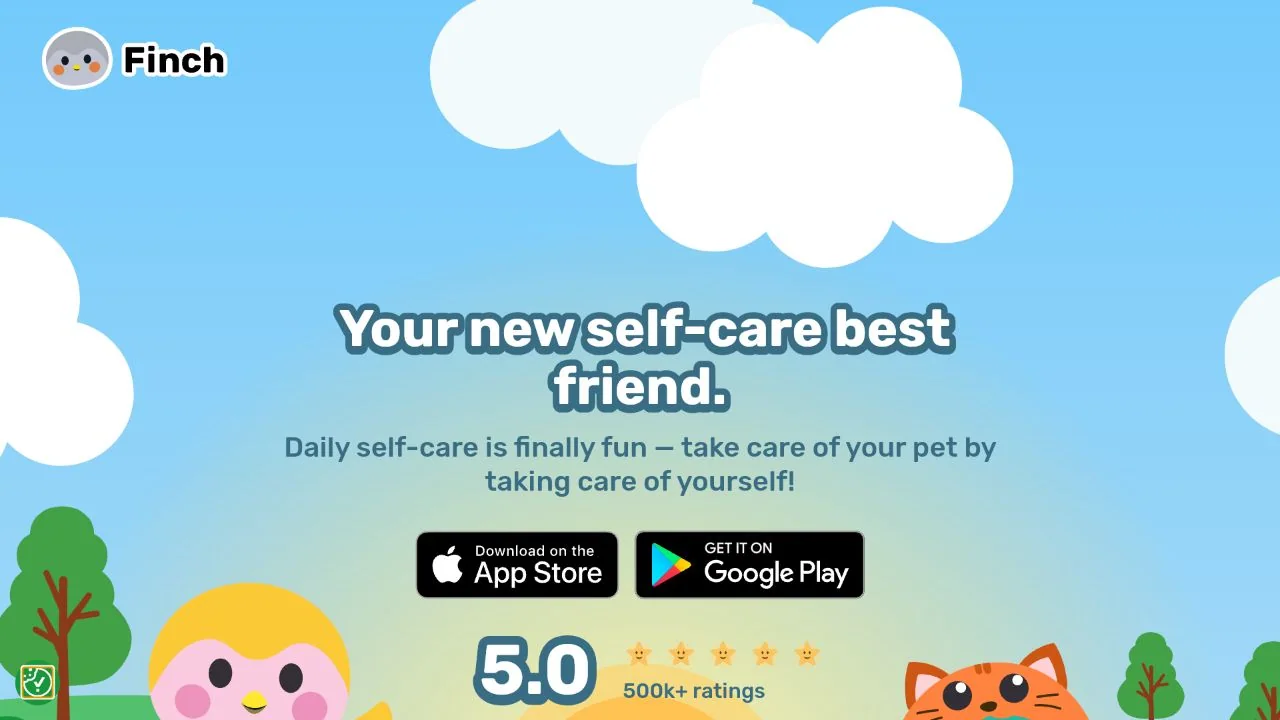
Finch turns small self-care goals into care for a virtual bird. Reflections, breathing tools, focus sessions, journeys, and mood check-ins share the same warm mobile experience.
What works
- Tiny goals still feel worth completing.
- The tone can lower the shame attached to a difficult day.
- Reflection and breathing tools sit beside action.
- Core self-care features remain free.
Limitations
Finch is not designed for complex projects, calendar repair, or long planning horizons. The companion loop will feel motivating to some people and distracting to others. Finch Plus is listed at $9.99 monthly or $69.99 yearly.
Best for: someone whose procrastination grows after stress, low mood, or a broken streak.
5. Habitica: best for a full game loop
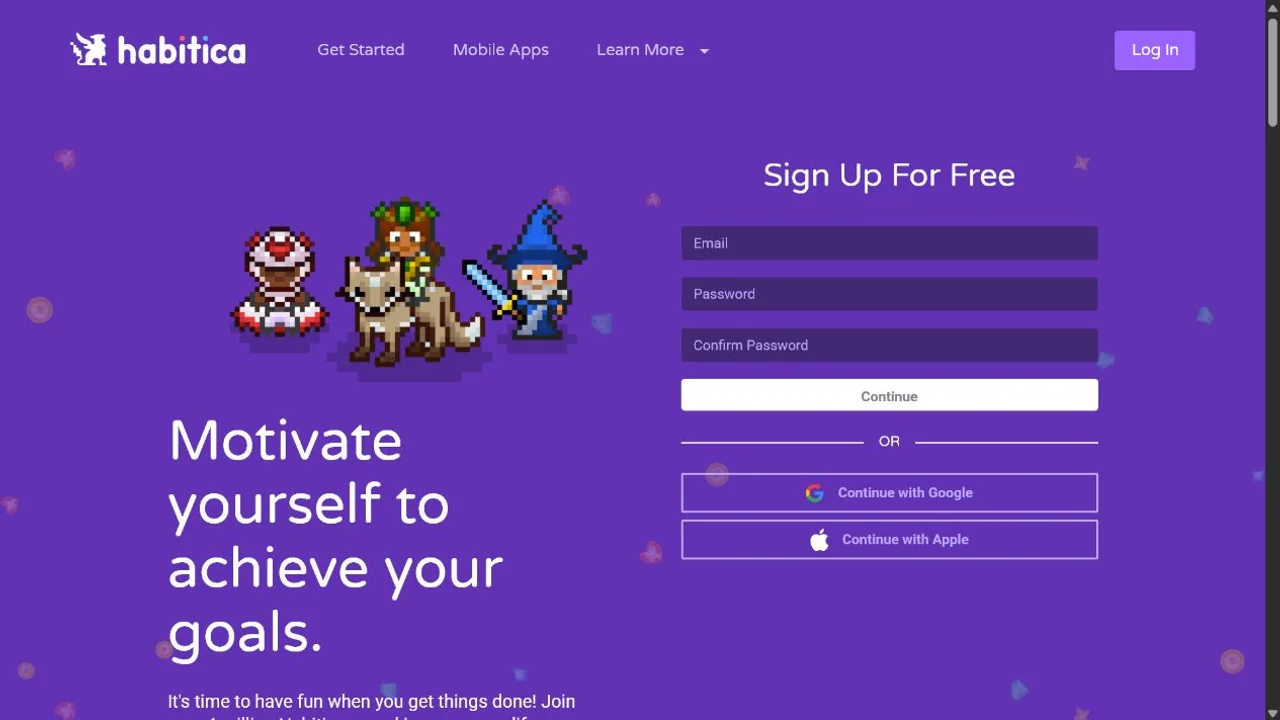
Habitica treats habits, daily goals, and to-dos as actions inside an RPG. Completion earns experience, gold, gear, pets, and quest progress. Missed daily tasks can cost health.
What works
- It offers the deepest game structure in this comparison.
- Parties and quests can add social accountability.
- Custom rewards let you connect real effort to a chosen payoff.
- The main task and habit system is free.
Limitations
The game requires attention. Equipment, currencies, quests, and character progress can become a second hobby. Health loss may also turn a rough week into avoidance for people who respond badly to punishment.
Best for: someone who wants productivity to feel like an actual game and enjoys social RPG systems.
6. Fabulous: best for coached routines
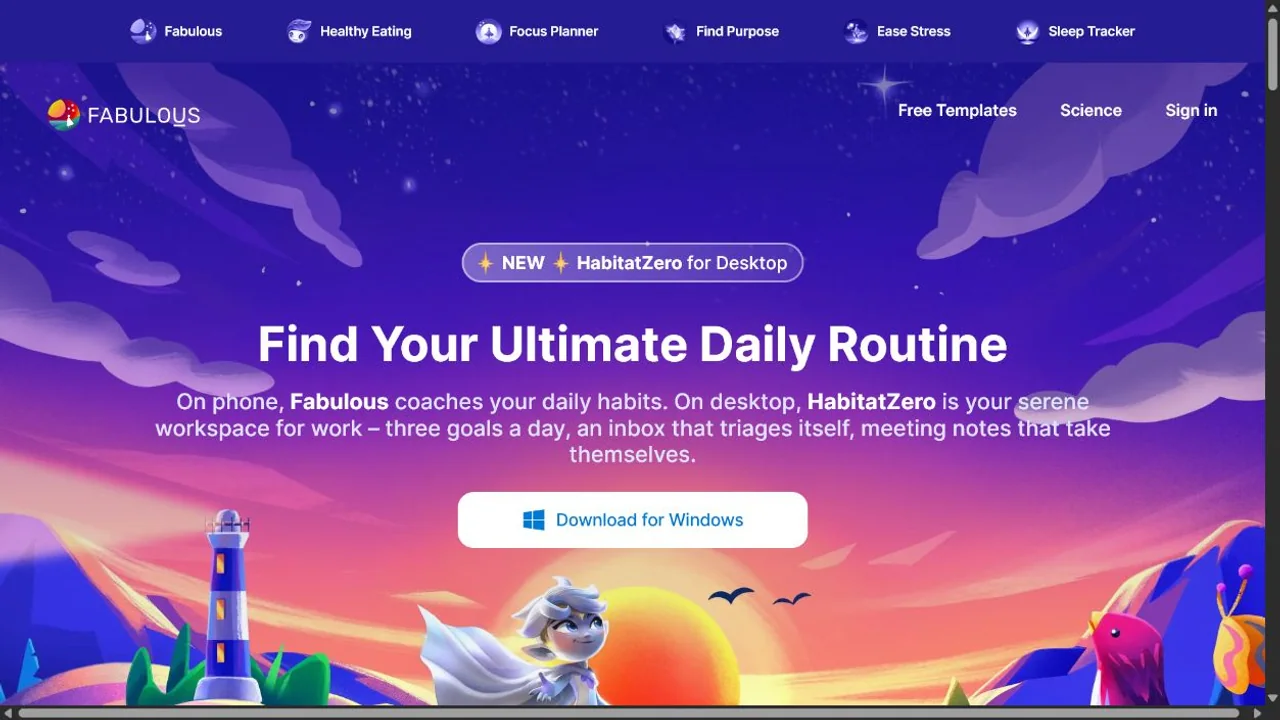
Fabulous focuses on repeated journeys and rituals. The app guides routines around sleep, focus, exercise, nutrition, and reflection with a polished, encouraging presentation.
What works
- The product gives a routine a beginning, sequence, and tone.
- Guidance reduces the need to design every habit from scratch.
- The visual experience makes a repeated ritual feel intentional.
- It fits people who want coaching content more than task management.
Limitations
Fabulous is less flexible for projects and mixed one-off work. Subscription offers can vary by channel and region, so inspect the actual renewal terms before starting a trial.
Best for: someone who procrastinates on a known routine and wants a guided path through it.
7. TaskCoach: best for connected follow-through
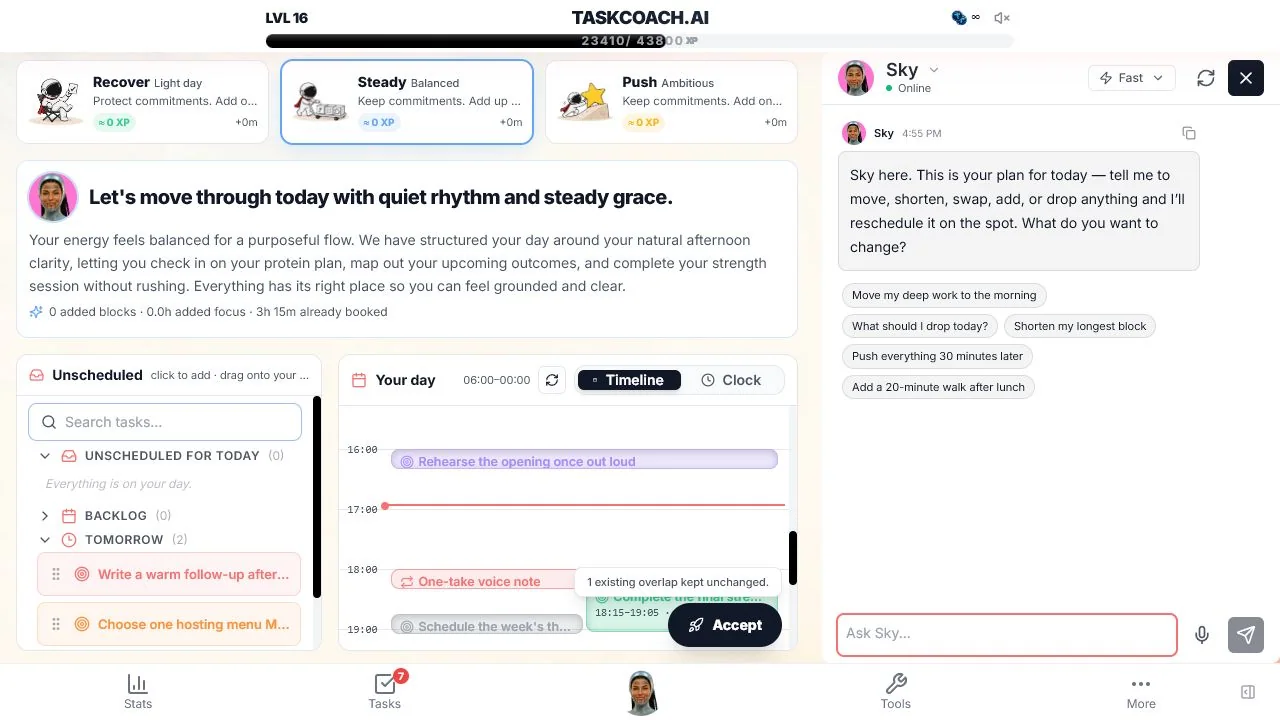
TaskCoach combines goals, tasks, habits, a calendar, focus work, notes, journaling, analytics, and coaching. Plan Day reads the current workload and prepares Recover, Steady, and Push drafts. You can move blocks before accepting the plan.
What works
- An avoided task can stay linked to the goal that made it matter.
- Planning, focus, reflection, and coaching share context.
- The lighter Recover plan offers a defined response to low-capacity days.
- Ordinary AI changes appear for review before they are accepted.
Limitations
TaskCoach asks for more initial setup than Forest, Finch, or Structured. Its breadth can feel busy when you only need a timer. We also publish TaskCoach, so weigh this entry as a disclosed product recommendation.
The core planning tools are free, with AI assistance available inside selected features. Premium adds the standalone cross-context Brain Chat and other advanced features. It costs $14.99 monthly, or $88.88 when billed yearly.
Best for: someone who wants the start, schedule, goal, habit, and review to live in one loop.
Match the app to your procrastination trigger
| The moment you get stuck | Start with |
|---|---|
| You open distracting apps before beginning | Forest |
| You cannot see where the task fits | Structured |
| The task never makes it into a trusted system | Todoist |
| Shame makes a missed day become a missed week | Finch |
| The payoff is too distant to feel motivating | Habitica |
| You avoid a repeated routine | Fabulous |
| Daily work keeps disconnecting from larger goals | TaskCoach |
A ten-minute setup that matters more than the download
Whichever app you choose, prepare the task properly:
- Name the result you can see.
- Define a first action that takes five minutes or less.
- Put that action at a real time.
- Remove the easiest competing distraction.
- Decide what you will do after a miss.
"Work on taxes" will keep winning the avoidance contest. "Open last year's return and list the missing documents at 18:30" gives the app something it can help you execute.
The bottom line
Choose Forest for distraction, Structured for visual time, Todoist for capture, Finch for gentle re-entry, Habitica for game rewards, Fabulous for guided routines, and TaskCoach for goal-connected planning and accountability.
If your gap spans several of those stages, try TaskCoach free with one real avoided task. Ten minutes will tell you more than another afternoon spent comparing feature grids.