Start with the stuck point
"Executive function app" sounds like one software category. It is closer to a toolbox.
Executive functions include working memory, inhibitory control, and cognitive flexibility. In daily life, the strain can show up as a forgotten commitment, an invisible hour, a task that feels too large to begin, a routine that falls apart between steps, or a plan that becomes useless after one interruption.
Those problems need different supports.
An app earns a place here when it moves a specific demand into the environment. It might hold the next step, display time, provide a cue, reduce a decision, or add another person's presence. No app in this list is a treatment, and none can diagnose why you are struggling.
If the hardest moments are losing time or failing to begin, our guides to ADHD time blindness and ADHD task initiation give you practical protocols before you choose software.
Best executive function apps at a glance
| App | Best for | Support mechanism | Free option |
|---|---|---|---|
| Tiimo | Seeing time and the day | Visual schedule, focus tools, AI breakdown | Yes |
| Goblin Tools | Breaking down one overwhelming task | AI-generated steps and estimates | Free website |
| Focusmate | Starting with accountability | Scheduled video coworking | 3 sessions per week |
| Structured | One readable daily timeline | Tasks and events in a visual sequence | Yes |
| Routinery | Following repeated routines | Step-by-step routine timer and prompts | Free download; paid features vary by region |
| Todoist | Capturing and retrieving commitments | Fast entry, reminders, filters, recurrence | Yes |
| TaskCoach | Connecting daily action to goals and habits | Shared context across planning and coaching | Free core |
1. Tiimo: best for making time visible
Tiimo puts the day on a visual timeline and combines it with to-do lists, a focus timer, reminders, mood check-ins, and AI planning. You can type or speak a brain dump, then ask the AI to split it into steps, estimate time, and organize a realistic plan.
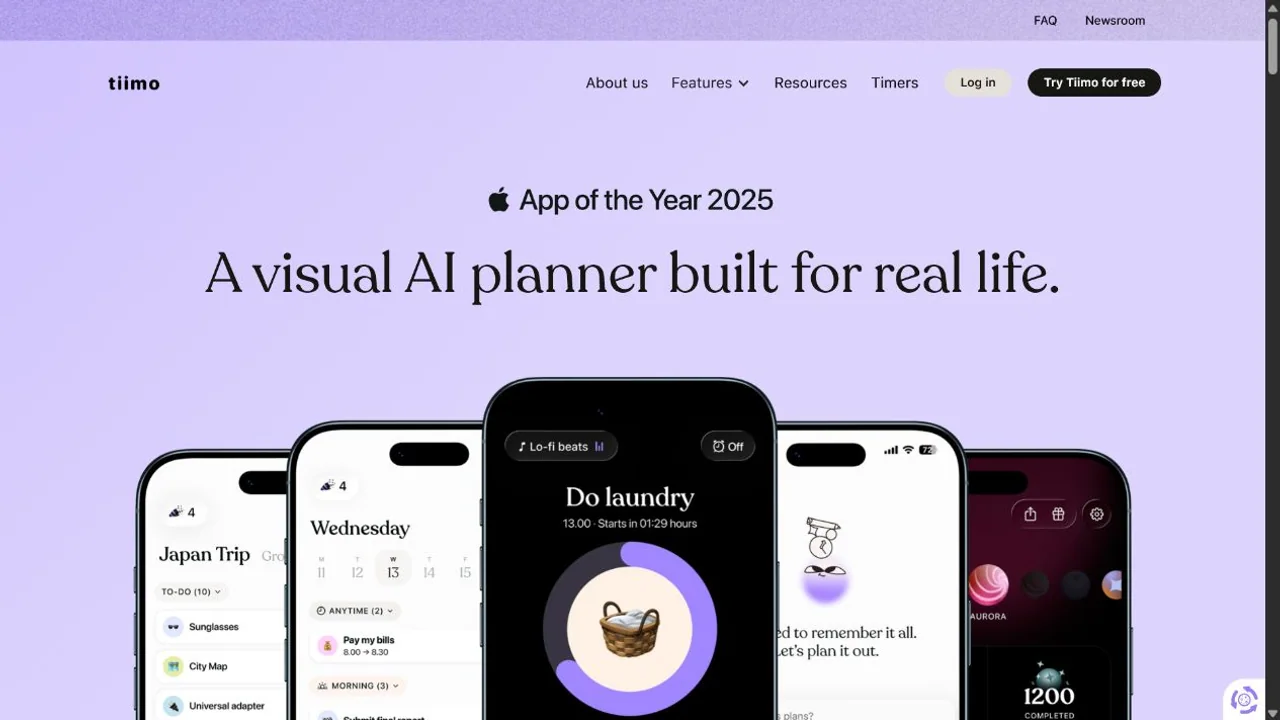
That makes Tiimo useful when a conventional list leaves two questions unanswered: When will this happen? and What does the day feel like as a sequence? The product is built with neurodivergent people in mind, and its tone is deliberately gentler than many streak-heavy productivity apps.
The free plan covers essential planning, to-dos, and the focus timer. AI task breakdown, custom widgets, and advanced scheduling are part of Pro, with local pricing shown at checkout.
For the broader buying criteria, see our AI planner for ADHD guide. For direct substitutes, compare the best Tiimo alternatives.
Use it for: a morning plan, transitions, visible time, and turning a brain dump into steps.
Watch for: the urge to perfect the whole week. Begin with today and one recurring transition.
2. Goblin Tools: best for task breakdown
Goblin Tools is a set of small AI tools designed for moments when everyday tasks feel too large or ambiguous. Magic ToDo breaks a task into smaller actions. Estimator suggests duration. Compiler turns a brain dump into a list, while Formalizer helps rewrite difficult messages.
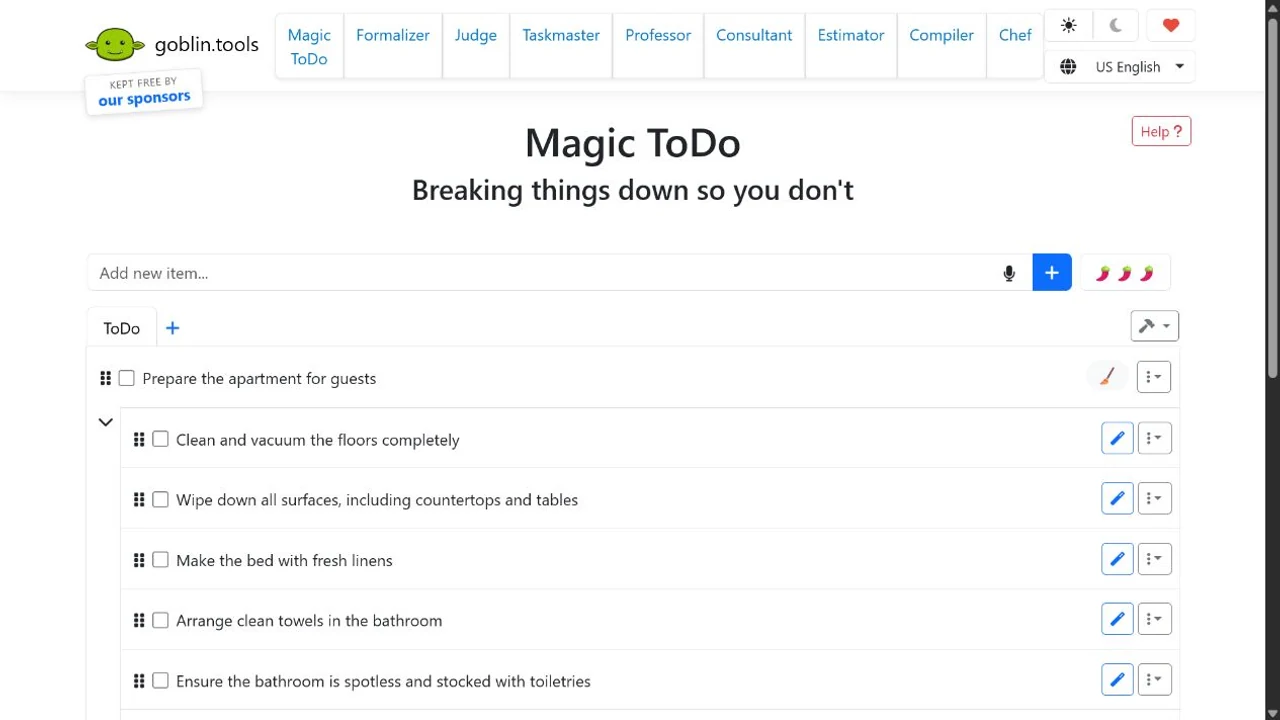
Its narrowness is useful. You do not need to adopt a new calendar or rebuild your task system. Open the website, paste "prepare the apartment for guests," adjust the breakdown level, and copy the useful steps wherever you keep tasks.
The website is free and does not require a login. The official mobile apps help fund it. Because the output comes from general-purpose AI, Goblin Tools itself advises users to treat it as a guess and apply their own knowledge.
Use it for: vague chores, administrative tasks, difficult emails, and estimating an unfamiliar sequence.
Watch for: accepting a long generated list without pruning it. Delete steps that add friction.
3. Focusmate: best for getting started
Focusmate schedules a video coworking session with another person. At the beginning, each person states an intention. Both work quietly, then check in at the end. Sessions are available in short and longer formats.
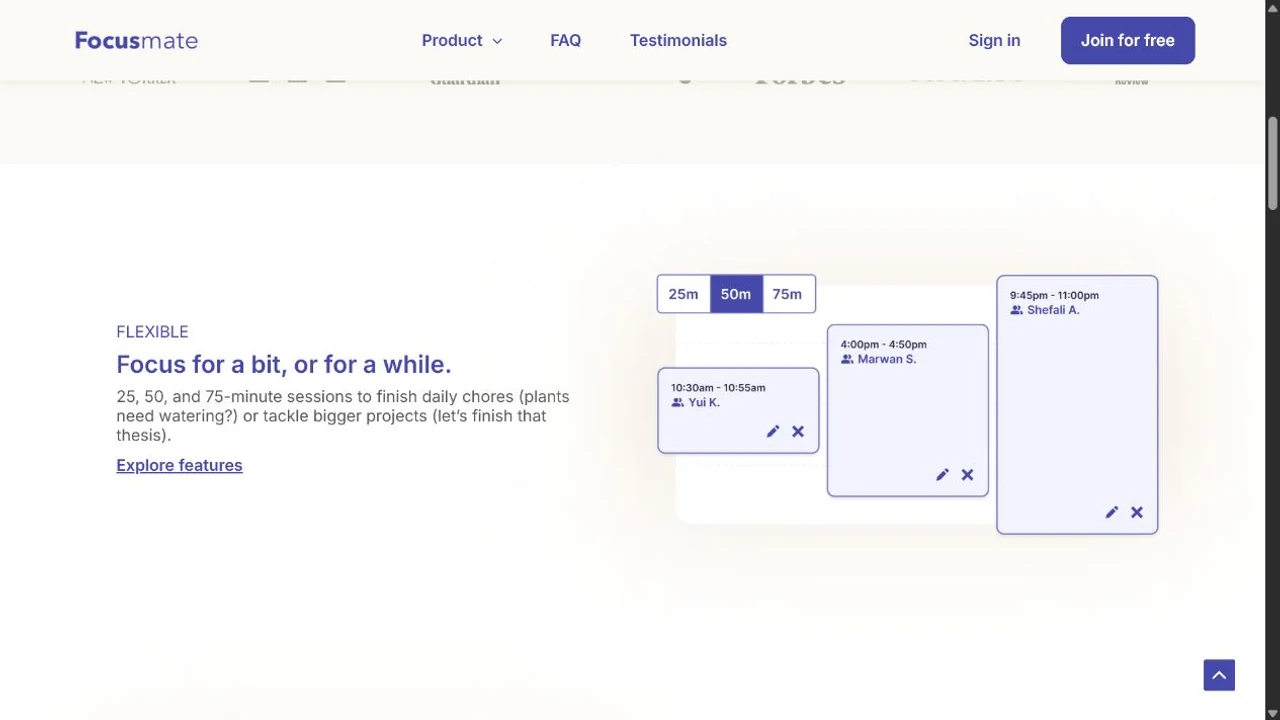
The app supports task initiation through a commitment in time and another person's presence. It does not organize your projects, which can make it a good companion to the task manager you already use. If a private to-do has been postponed for days, a booked session gives the start a place on the calendar.
The free plan includes three sessions per week. Plus costs $8 per month when billed yearly or $12 month to month for unlimited sessions.
Research on body doubling is still developing, so avoid treating a positive experience as proof of one universal mechanism. The practical test is simpler: do you begin more reliably when the session is booked?
Use it for: difficult starts, study blocks, paperwork, and quiet work that benefits from a witness.
Watch for: using the booking as a substitute for choosing a specific first action.
4. Structured: best simple daily timeline
Structured combines tasks and appointments in a single visual timeline. You can import calendar events, create tasks quickly, view the week or month, and move between phone, web, and watch. Structured AI can help create or adjust tasks.
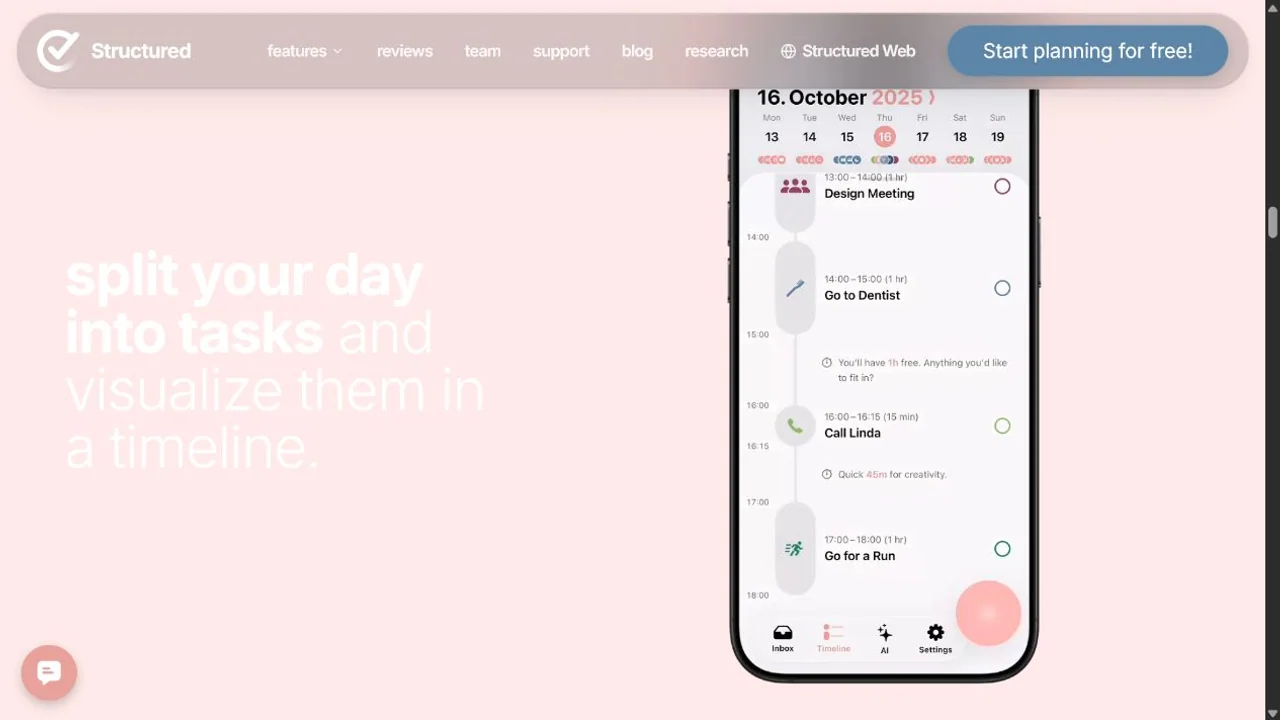
The interface reduces the need to hold the sequence of the day in working memory. A list says what exists. A timeline shows what comes next and how much room surrounds it.
Structured is lighter than Tiimo. It offers less explicit neurodivergent guidance and less broad life context, but that restraint can help someone who closes an app when the dashboard gets busy.
Use it for: seeing the day, planning transitions, and keeping appointments beside tasks.
Watch for: filling every open space. Blank time is capacity, not a scheduling error.
5. Routinery: best for repeated sequences
Routinery centers on a routine timer. You define a sequence, assign time to each step, press start, and follow prompts from one action to the next. Voice prompts and watch support can reduce the need to return to your phone between steps.
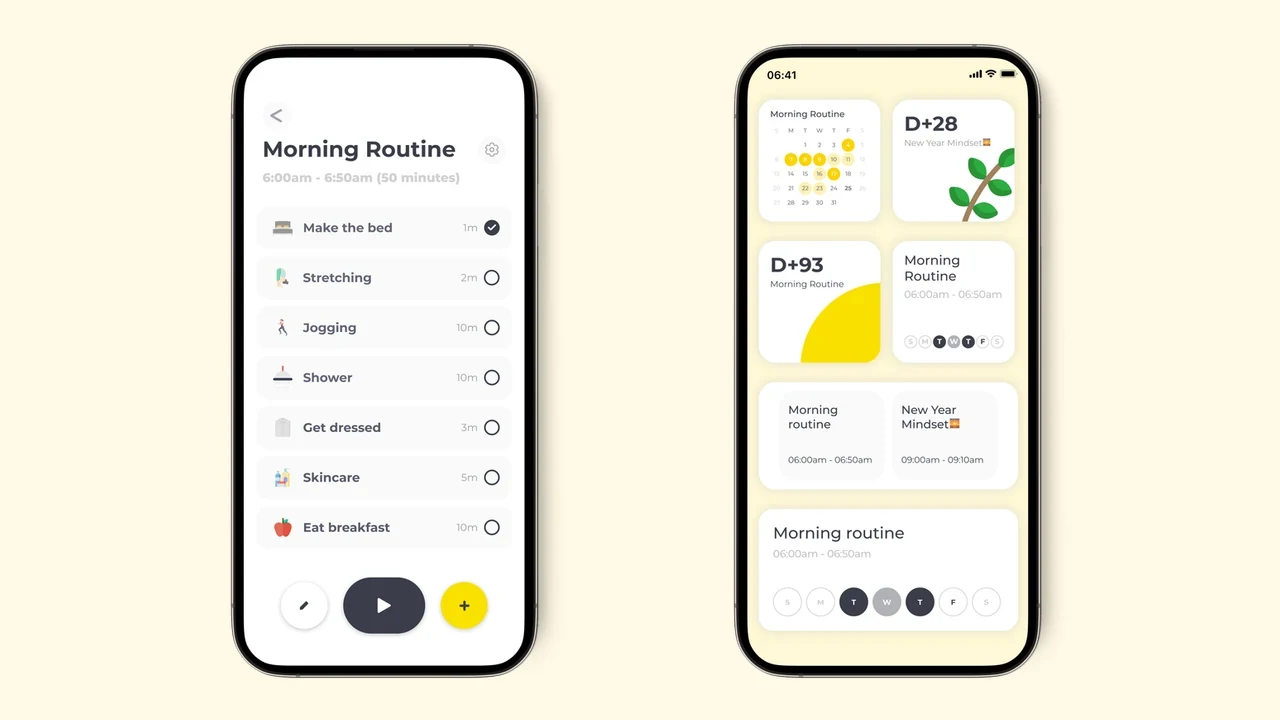
This is a different job from task management. A morning routine may contain ordinary actions you already know how to do. The failure happens in the handoff between them. A guided sequence removes repeated decisions and makes elapsed time visible.
Routinery works best for stable flows such as leaving the house, closing the kitchen, starting work, or preparing for bed. It is less suited to a changing project backlog.
Use it for: mornings, evenings, medication routines, cleaning resets, and shutdown rituals.
Watch for: building a routine for your ideal day. Time the version you can complete on a low-energy day first.
6. Todoist: best for fast capture
Todoist is the mature general-purpose task manager in this list. Smart Quick Add handles dates and recurring language, while reminders, projects, labels, filters, and cross-platform apps help a task return at the right moment. Its current Assist features can help with task work and filters.
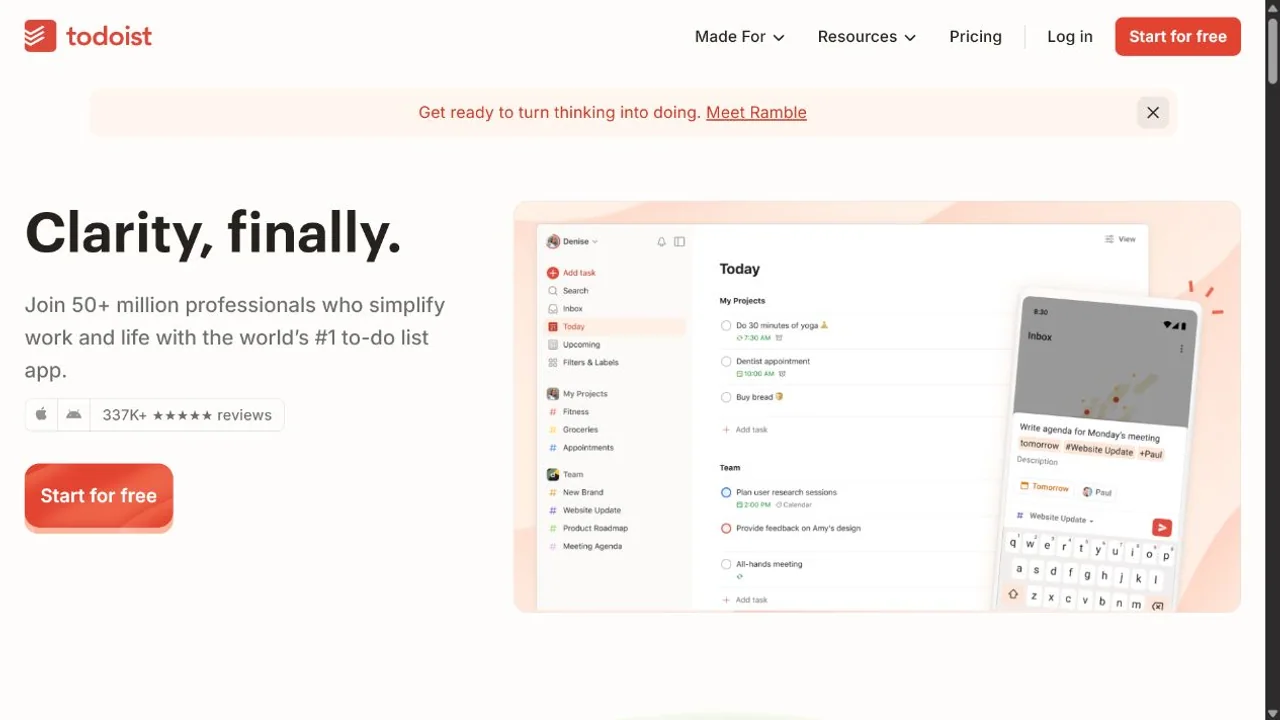
Reliable capture supports prospective memory: the need to remember to do something later. Todoist is especially good when the commitment already makes sense and you need a dependable place to store, retrieve, and repeat it.
The free Beginner plan covers five personal projects, reminders, flexible list and board views, basic filters, calendar integration, and limited Ramble capture. Paid features add more projects, calendar layout, task duration, custom reminders, and deeper history.
Use it for: recurring tasks, quick capture, household lists, and a dependable cross-device inbox.
Watch for: turning projects and labels into a maintenance hobby. Create structure only when retrieval becomes difficult.
7. TaskCoach: best connected planning and follow-through
TaskCoach combines goals, habits, tasks, a calendar, notes, focus sessions, journaling, and coaching. Plan Day reads the current context and drafts Recover, Steady, and Push versions of the day. You can adjust the blocks before accepting a schedule.
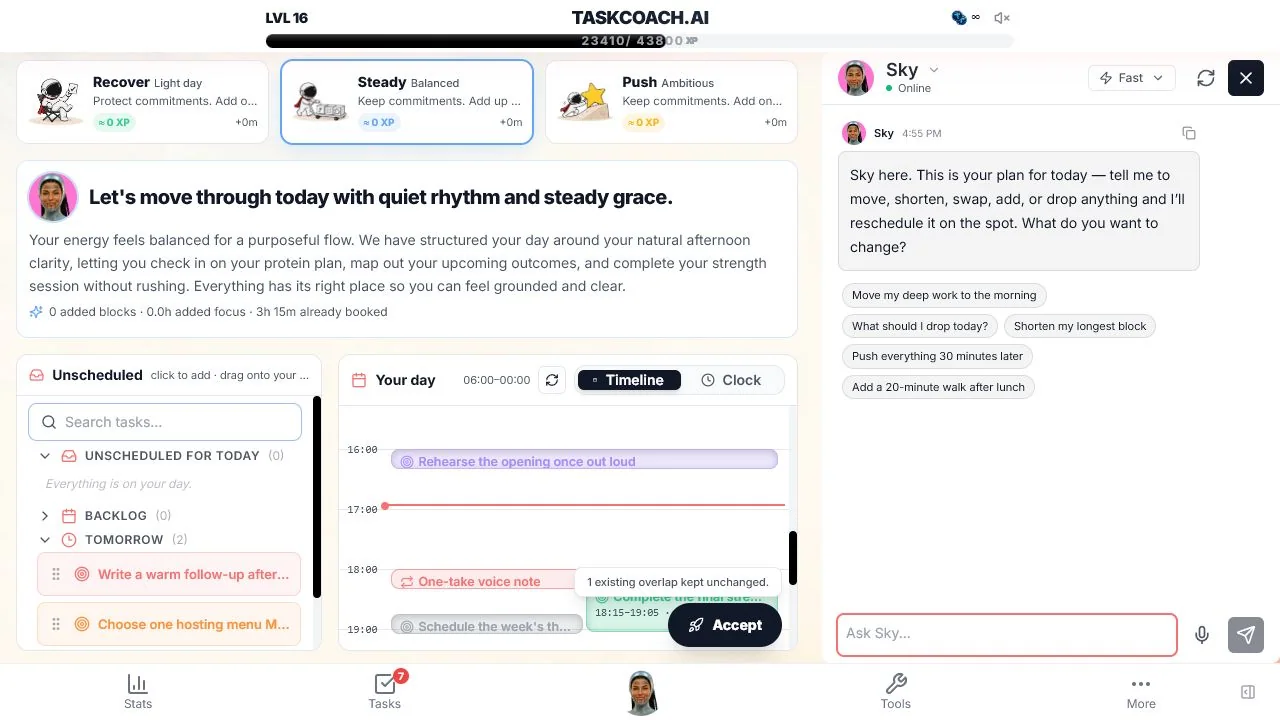
This approach fits when a task list is only one piece of the problem. A goal can produce tasks, habits can anchor the day, focus sessions record work, and the coach can refer to the same system. Ordinary AI changes appear as proposals for you to accept or reject.
The cost is breadth. You will get less value if you only enter isolated tasks and never use the surrounding context. We publish TaskCoach, so weigh this recommendation with that relationship in mind.
The core tools are free, with AI assistance available inside selected features. Premium adds two-way Google and Outlook calendar sync, the standalone Brain Chat, and broader cross-context AI tools. It costs $14.99 monthly, or $88.88 when billed yearly.
Use it for: linking daily planning to larger goals, habits, focus, and reflection.
Watch for: importing your entire life on day one. Start with one goal and this week's real tasks.
The best AI planner apps guide compares TaskCoach with calendar-first and visual alternatives.
Match the app to the executive function demand
Use this quick routing guide:
- You forget what you meant to do: capture it in Todoist or TaskCoach.
- You cannot see how the day fits together: use Tiimo or Structured.
- A task feels too vague to enter: run it through Goblin Tools.
- You know the next step and still do not begin: book Focusmate.
- You lose the thread between routine steps: press play in Routinery.
- Your tasks drift away from your goals: connect them in TaskCoach.
Many adults need two layers: one system of record and one narrow support. A simple example is Todoist plus Focusmate. Another is TaskCoach plus Goblin Tools for occasional task breakdown.
What the research suggests
Adele Diamond's review describes three core executive functions: inhibition, working memory, and cognitive flexibility. Planning, reasoning, and problem solving build on them. This matters because the phrase "executive dysfunction" can hide which demand is currently overloaded.
A 2026 study of task management among ADHD-identifying adults adds another useful point. Across 22 interviews and a follow-up design study with 20 participants, the researchers found that existing productivity tools often assume consistent self-regulation and linear time. Participants described social and emotional scaffolding as part of task management, which helps explain why a better list may still leave a difficult start untouched.
The evidence does not declare one winning app. It supports a buying principle: choose an external support that matches the demand.
A two-week test that will tell you more than a feature list
Pick one repeated situation:
- leaving the house on time
- starting a weekly report
- remembering household administration
- recovering after an interrupted morning
- completing a bedtime routine
Use one app for that situation across two weeks. Record only three observations:
- Did you notice the cue?
- Did you begin with less delay?
- Did the system require less maintenance than it saved?
Keep the app if it improves the behavior without becoming another obligation.
Where TaskCoach fits
TaskCoach is worth considering when you want a home for the whole loop: decide a goal, create the next tasks, protect habits, schedule the day, focus, and review what happened. Its AI can help draft parts of that loop, while review controls keep changes in your hands.
If your main need is a single breakdown or a body-double session, choose the narrow tool. If the connected loop is the missing part, try TaskCoach free with one goal and one week of tasks.
The bottom line
The best executive function app makes one recurring demand easier to see, start, sequence, remember, or review.
Choose Tiimo for visual planning, Goblin Tools for breakdown, Focusmate for scheduled accountability, Structured for a clean timeline, Routinery for sequences, Todoist for capture, and TaskCoach for a connected system.
One useful support beats seven promising downloads.