A progress bar can make five minutes of effort feel more real than an important goal six months away. That is the practical appeal of gamified productivity: the app moves some of tomorrow's payoff into the next tap.
The products below use very different game loops. One is a full RPG. One gives you a companion. One grows a tree. One protects a streak. One tells a guided story. One turns progress across your life into levels and ranks.
How we compared the apps
We scored each product on five questions:
- What real behavior earns the reward?
- How quickly does feedback arrive?
- Does the game preserve choice?
- What happens after a miss?
- How much time does the game demand from the work itself?
We also looked for a recovery path. A system that motivates on good days and drives avoidance after one miss is poorly designed for real life.
Gamified productivity apps at a glance
| App | Best for | Main game loop | Price checked July 30, 2026 |
|---|---|---|---|
| Habitica | A complete productivity RPG | Tasks earn XP, gold, gear, pets, and quest progress | Free core; optional subscription and purchases |
| Finch | Gentle self-care | Small actions support a virtual companion | Free core; Plus is $9.99 monthly or $69.99 yearly |
| Forest | Phone-free focus | A tree grows while a focus session runs | Free to start; paid options vary by platform |
| Streaks | Minimal habit consistency | Complete a small set of recurring tasks | Paid app and optional Plus offer vary by storefront |
| Fabulous | Guided routine journeys | Build rituals through staged coaching paths | Free download; subscription price shown at checkout |
| TaskCoach | Whole-life progression | Earn XP, levels, ranks, momentum, and pillar progress | Free core; Premium starts at only $8 per month |
1. Habitica: best full productivity RPG
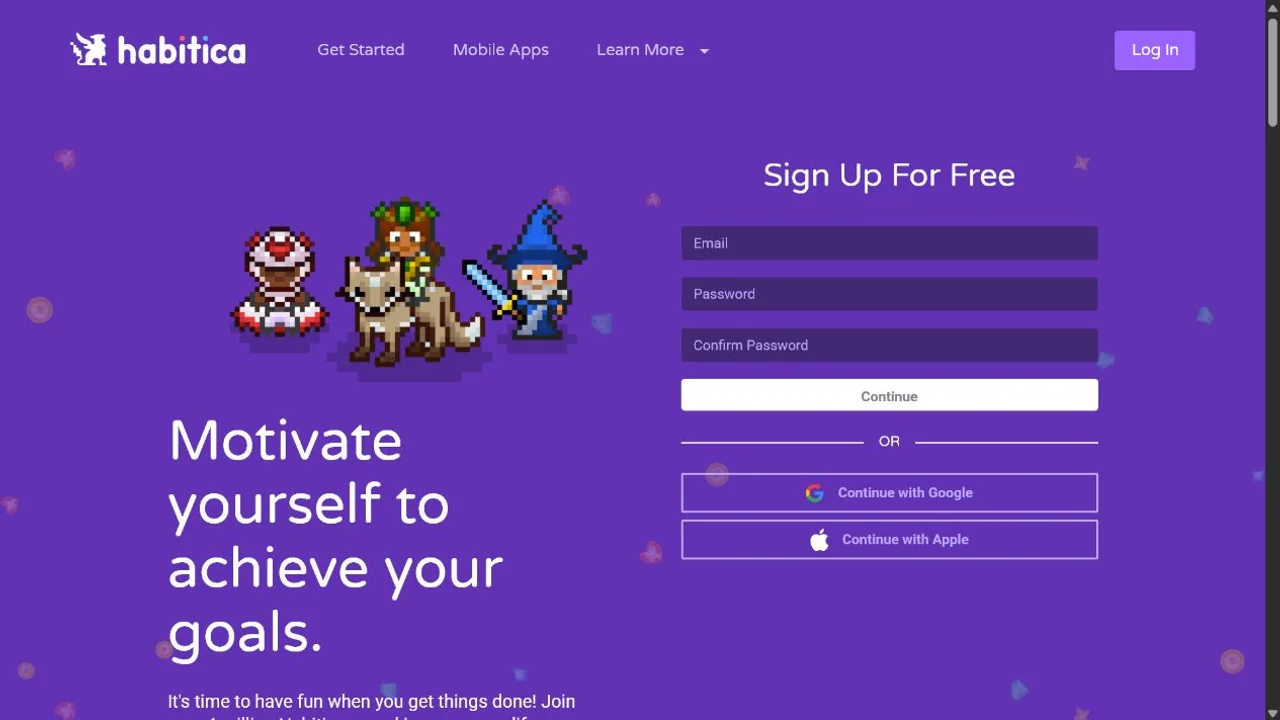
Habitica translates habits, daily goals, and to-dos into role-playing mechanics. Complete work and your character gains experience and gold. Use rewards to buy equipment, collect pets, join a party, and take part in quests. Miss daily goals and your character can lose health.
What works
- Character classes, gear, pets, mounts, currency, and quests create genuine game depth.
- Parties turn individual completion into shared progress.
- Custom rewards can connect earned gold to a real-life privilege.
- The core task, habit, and daily system is free.
Limitations
Habitica asks you to care about the game. That is the point, but it adds maintenance and visual complexity. Health loss can also make an already difficult week feel like failure. Its project planning and analytics remain lighter than dedicated productivity systems.
Best for: someone who already loves RPG progression and wants productivity inside that structure.
2. Finch: best gentle companion
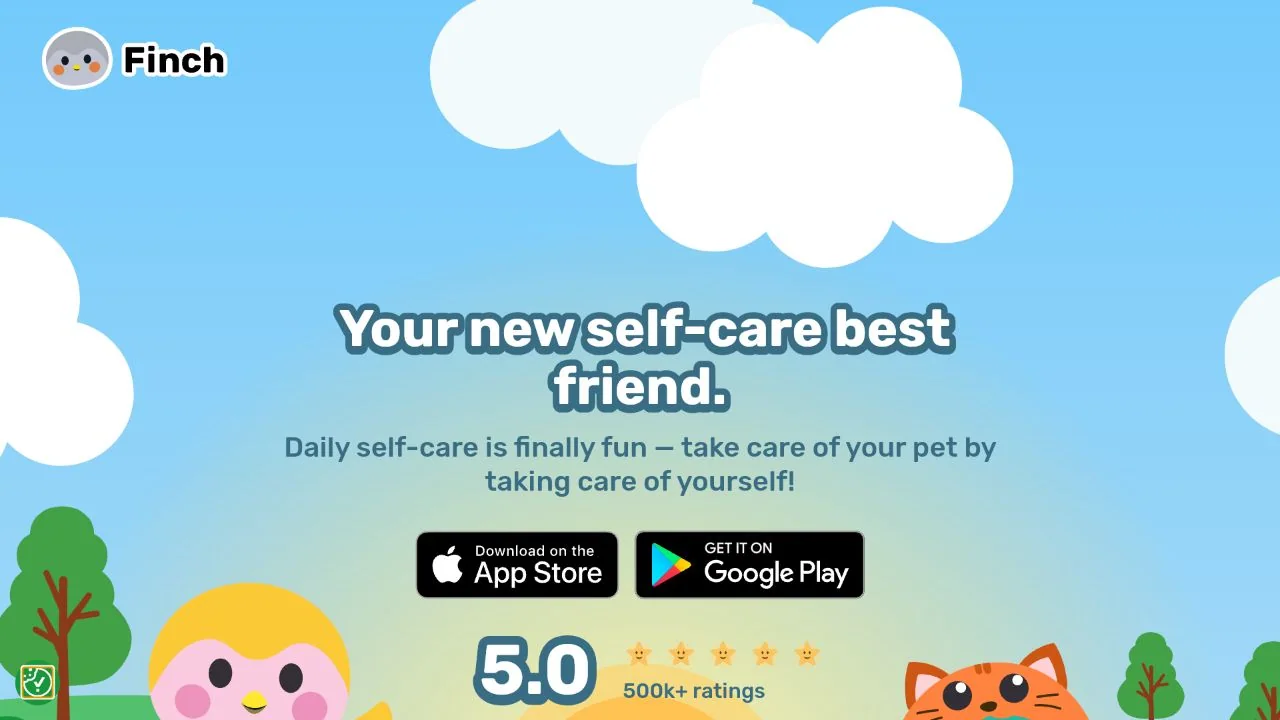
Finch rewards self-care with care for a virtual bird. Small goals, breathing exercises, reflections, focus sessions, journeys, and mood check-ins help the companion grow and explore.
What works
- Very small actions still receive a warm response.
- The companion creates attachment without the complexity of a full RPG.
- Reflections and breathing support the state around the task.
- Missing a day feels less punishing than losing a hard streak.
Limitations
Finch is intentionally focused on self-care. Complex projects, calendar planning, and long-range goals are outside its strongest job. Some people will love caring for a companion, while others will prefer progress attached directly to their own identity.
Best for: someone who needs kindness and an immediate emotional reward to keep returning.
3. Forest: best focus game
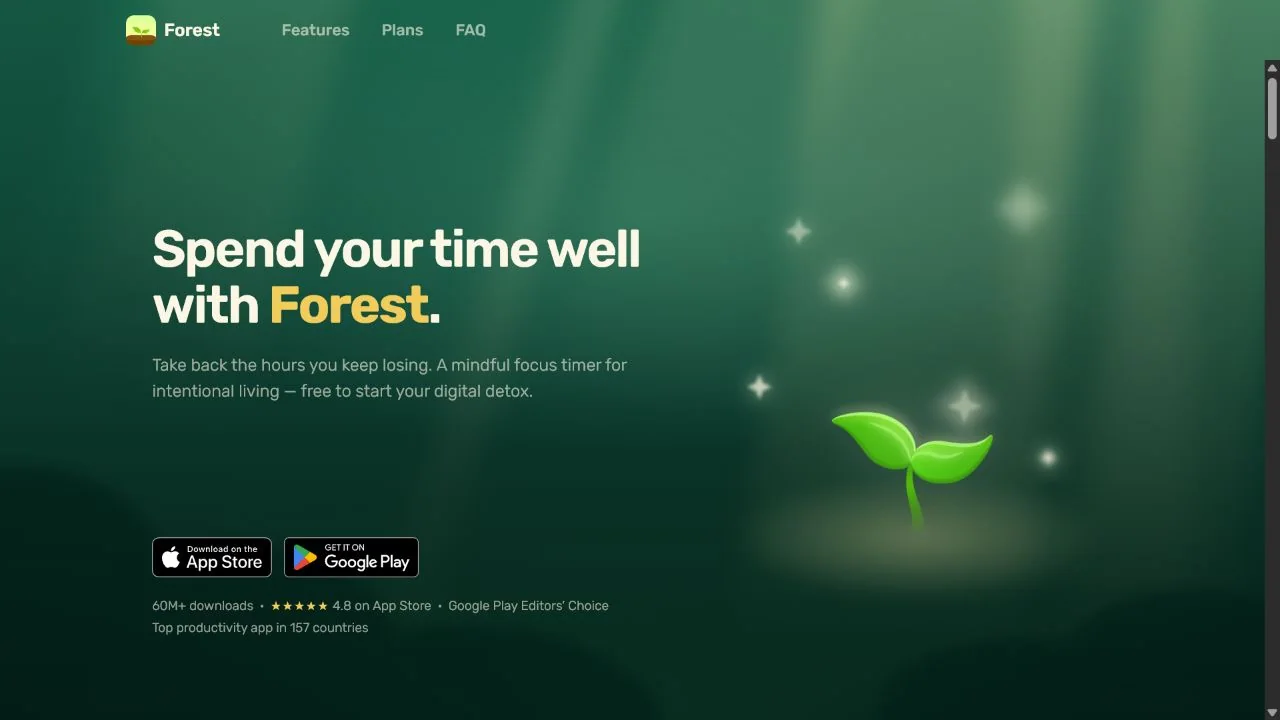
Forest narrows gamification to one behavior: staying with a focus session. A tree grows while the timer runs. Repeated sessions become a visible forest of time spent well.
What works
- The game is understood immediately.
- A session has a clear boundary.
- The growing tree keeps the phone decision visible.
- The forest represents accumulated time without requiring a character or quest system.
Limitations
Forest cannot choose the priority, decompose the task, or plan the day. It gamifies attention rather than productivity as a whole. A failed tree can also feel harsher than the interruption deserves.
Best for: someone who wants a clean commitment device for phone-free work.
4. Streaks: best minimal habit scoreboard
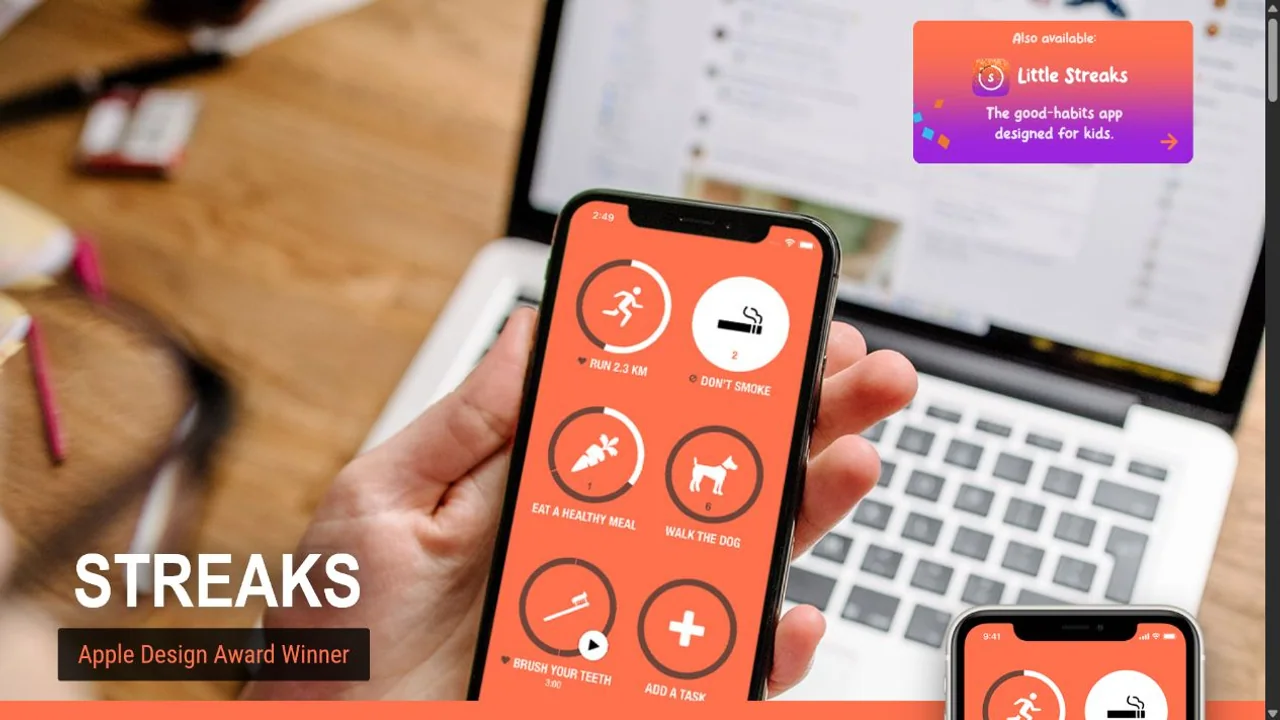
Streaks focuses on a small set of recurring tasks and makes consistency easy to see. The circular completion view keeps the scoreboard close to the behavior, while Apple platform integrations reduce the work of checking in.
What works
- The interface keeps attention on a limited habit set.
- Health data can complete supported tasks automatically.
- Flexible schedules support habits that do not happen every day.
- The product stays closer to a tool than a game world.
Limitations
Streaks offers less narrative, social play, and task depth than Habitica. The emotional cost of a broken chain depends on how you react to streaks. The product is strongest inside the Apple platform.
Best for: someone who wants clear habit feedback with very little game overhead.
5. Fabulous: best guided journey
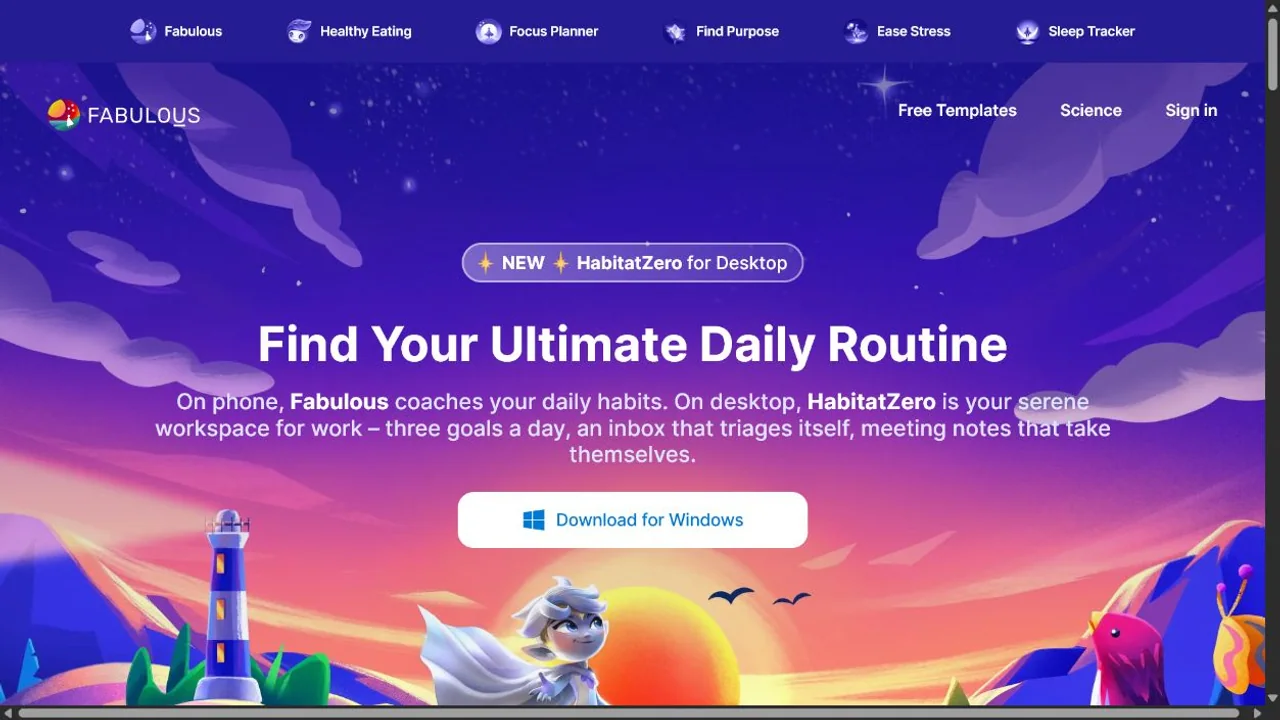
Fabulous uses staged journeys, polished ritual design, and encouraging coaching to make routines feel like progress through a path. Its game layer is lighter than Habitica's, but the sequence and presentation give repeated actions a sense of story.
What works
- A journey reduces the blank-page problem of choosing a routine.
- Strong art direction makes the ritual feel distinct from a plain checklist.
- Coaching content provides context around the action.
- It fits health and wellbeing routines better than a work-focused RPG.
Limitations
The path is more prescribed and less flexible than building your own system. Project work and one-off tasks are not its strongest job. Trial and renewal offers vary, so inspect checkout terms carefully.
Best for: someone who wants a coached routine with a sense of narrative progress.
6. TaskCoach: best whole-life progression
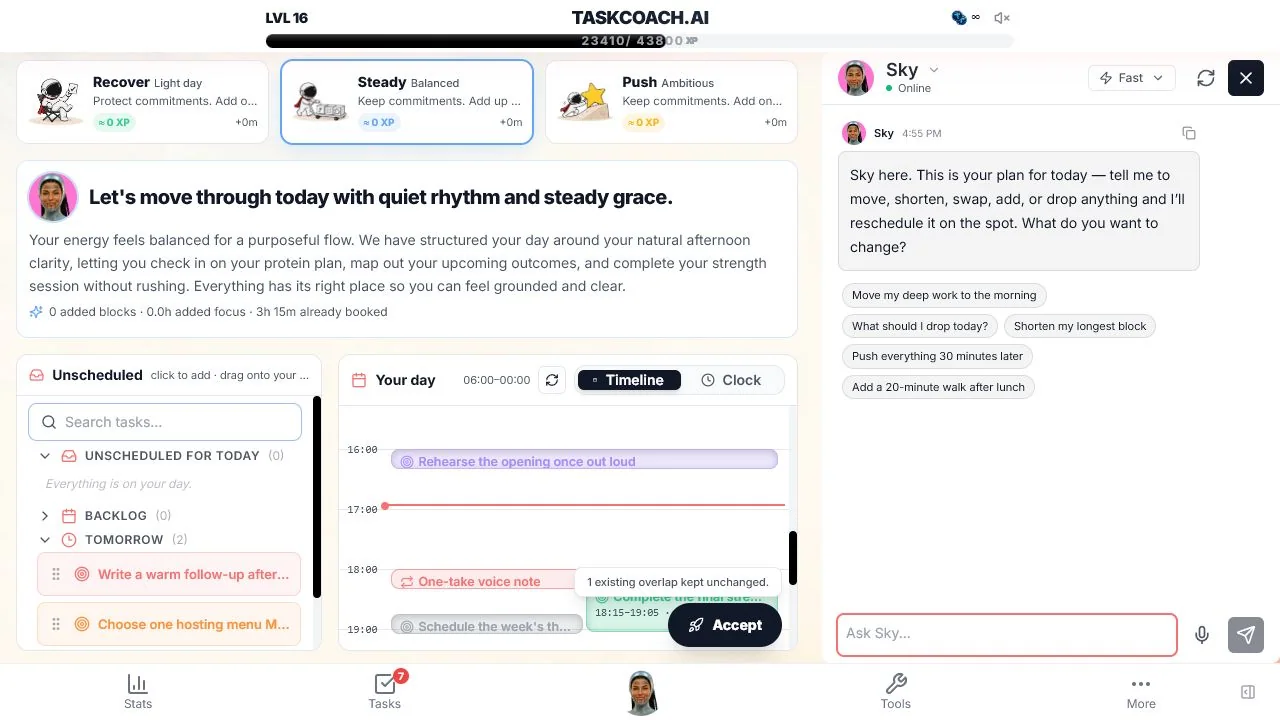
TaskCoach applies progression to seven life pillars: Body, Mind, Career, Wealth, Social, Home, and Leisure. Tasks, habits, focus work, and goal progress feed XP, levels, ranks, momentum, analytics, and leaderboards. The same actions also live inside planning and coaching.
What works
- Progress remains attached to the life area and goal behind the action.
- Rewards scale across tasks, habits, focus, goals, and broader momentum.
- Planning and coaching can use the same history as the game layer.
- A missed habit affects momentum more gradually than a simple all-or-nothing streak.
Limitations
TaskCoach does not match Habitica's RPG depth or Finch's companion warmth. It asks for more setup than Forest or Streaks. We publish TaskCoach, so this entry is a disclosed recommendation.
The core product is free. Premium adds the standalone cross-context Brain chat and unlimited AI use, starting at only $8 per month.
Best for: someone who wants game feedback embedded in a broader personal planning and coaching system.
Which reward loop fits the behavior?
| Behavior you want to repeat | Best starting point |
|---|---|
| Completing varied tasks with friends | Habitica |
| Small acts of self-care | Finch |
| Staying off the phone for one session | Forest |
| Maintaining a compact habit set | Streaks |
| Following a guided wellbeing routine | Fabulous |
| Balancing goals and action across life areas | TaskCoach |
What the research says
Gamification research does not support the claim that points always work. A 2020 meta-analysis found positive average effects on cognitive, motivational, and behavioral learning outcomes, with meaningful differences across designs and settings.
The practical pattern is straightforward:
- visible progress helps when it reflects a behavior you chose
- immediate feedback can make a delayed payoff easier to feel
- social comparison works better when the next position feels reachable
- rewards can backfire when they control a behavior you already enjoyed
That is why these six apps feel so different. The mechanic must match the behavior and the person.
A seven-day test
Use the same target behavior for a week:
- Define the smallest valid completion.
- Pick one app and ignore the rest.
- Record how quickly you start.
- Notice whether the reward pulls you toward the behavior or toward the app.
- Miss one day and watch the recovery.
- Count the maintenance time.
- Keep the system only if the real behavior improved.
The last test matters most. A productive-looking game is still procrastination when the game becomes the main activity.
The bottom line
Choose Habitica for a full RPG, Finch for companionship, Forest for focus, Streaks for minimal habit feedback, Fabulous for guided journeys, and TaskCoach for whole-life progression tied to planning and coaching.
If you want the reward layer connected to the reason, schedule, and review behind the action, try TaskCoach free with one goal and two habits. The fit will become clear quickly.