A habit that doesn't feel like work
Think of a habit you've kept up for years without really trying.
Maybe it's checking a notification first thing in the morning. A daily puzzle. Closing a fitness ring. Watching the same show every Sunday night. Walking the same loop around the block. Something that just happens, no negotiation required, regardless of your mood that day.
Now think about the habit you've been trying to build for years and keep losing: the gym, the journal, the savings habit, the language app you keep "getting back into."
Same brain. Same week. Wildly different results.
The first habit is easier because it's quietly using a few mechanics your brain doesn't know how to argue with. The second habit is harder because it's running on pure intention, and intention runs out by Wednesday.
This is about what those quiet mechanics actually do for you, and why they stop feeling like cheating the moment you start using them on purpose.
What actually changes when a habit is gamified
Five things shift at once, and they compound on each other, which is why the effect is so out of proportion to the effort involved.
1. You stop needing motivation
This is the headline benefit. Gamified habits reward showing up, whether or not you feel motivated. The streak doesn't care whether you feel like it today. The tiny default action is small enough that you've already done it before your brain notices it had a choice.
You'll still have bad days. You'll still feel unmotivated sometimes. The difference is that the unmotivated days stop being relapse days. You do the rep anyway, because the rep takes ninety seconds and breaking the streak would feel worse than just doing it.
That's the whole trick, really. The architecture absorbs your worst days so they don't unwind everything else.
2. The daily action gets tiny
The single biggest reason most habits fail is the size of the daily ask. "Go to the gym" is a 75-minute commitment. "Two pushups" is a five-second one.
You can talk yourself out of 75 minutes fairly easily. Talking yourself out of five seconds is much harder.
The gamified version of any goal is the smallest possible action that still counts as a rep. Once you're moving, you usually do more, but the commitment itself is only to the small version. The big version becomes a bonus, never a requirement. That alone removes the failure mode that kills most habit attempts before they get anywhere.
3. Progress becomes visible
Most habits give you zero feedback for weeks at a time. You eat better for a week and look exactly the same. You write daily for a month and still feel like you haven't moved an inch.
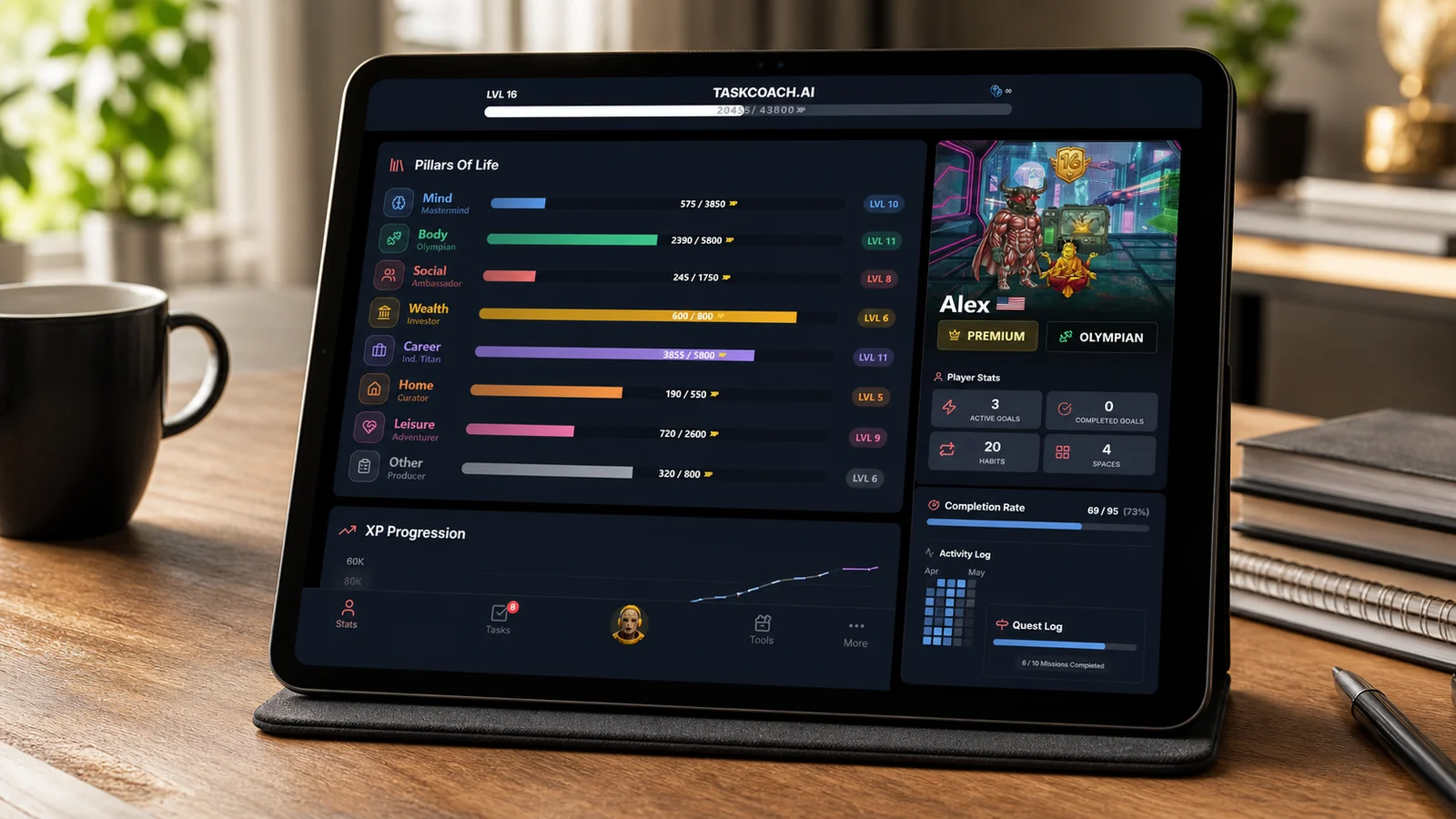
Gamified habits flip this around. A streak counter shows you exactly how long you've kept it up. A progress bar shows you how close you are to the next milestone. A rank gives you a name for what you're becoming.
That sounds minor. It isn't. People are sunk-cost creatures by nature, and the moment progress becomes visible, walking away from it starts to feel expensive. You keep going because quitting means watching the bar reset to zero.
4. The habit starts to define you
Somewhere around day 30 or 40 of a real streak, something quietly shifts.
You stop saying "I'm trying to exercise" and start saying "I'm someone who exercises." The framing changes, and once it does, you're no longer fighting yourself. You're just acting from an identity that happens to include the habit.
Outcome goals end the day the outcome gets hit. Identity-based ones keep compounding. "I want to lose ten pounds" stops mattering the moment you lose them. "I'm someone who trains" doesn't have a finish line.
The gamified version of any habit tilts the framing toward identity almost by accident. Every rep becomes a vote for the kind of person you're turning into. Enough votes in, and the identity becomes the default setting, running the behavior without you having to think about it at all.
5. The habit pulls you instead of the other way around
This is the quietest benefit, and the most surprising one.
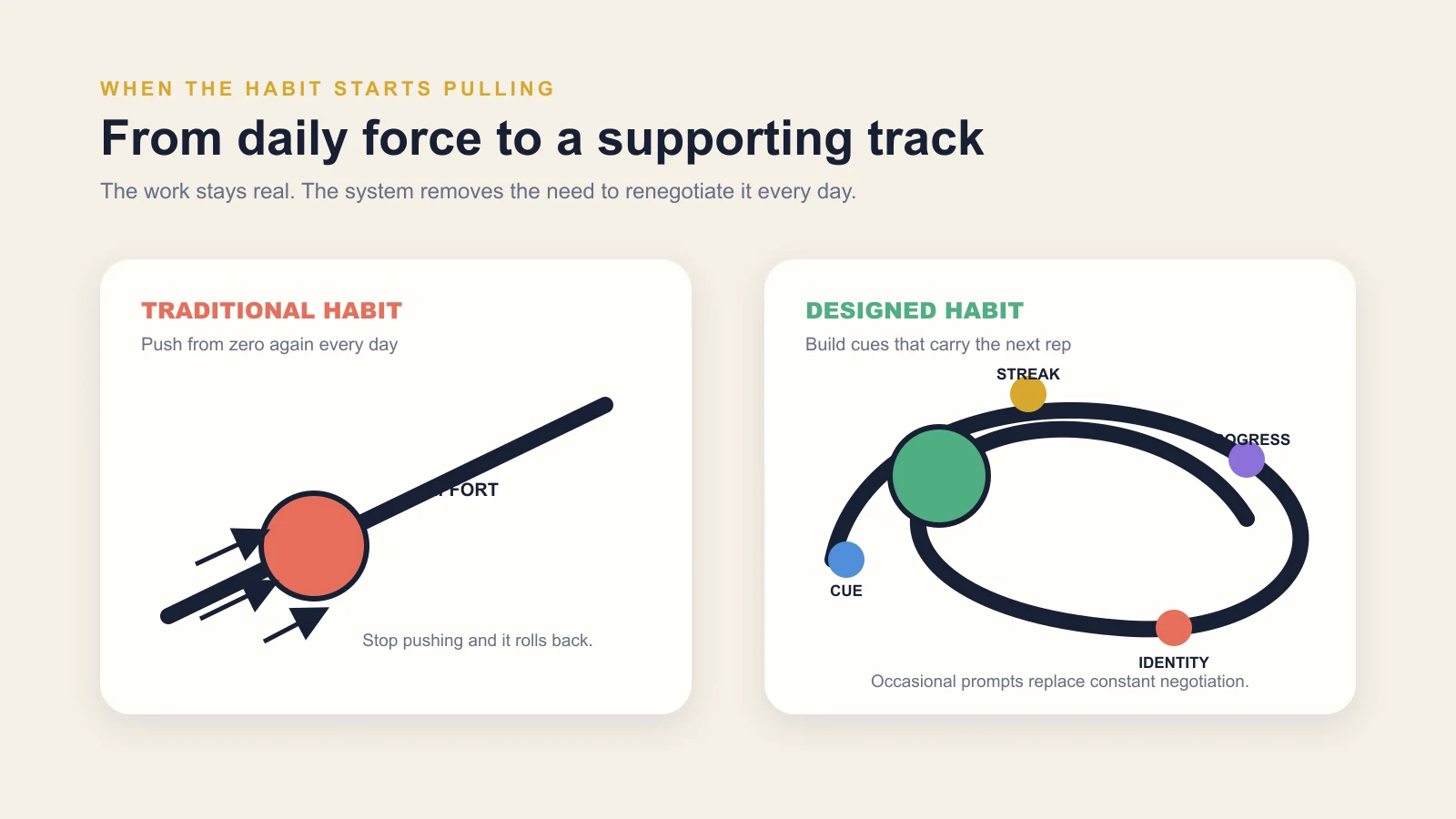
A traditional habit feels like pushing a rock uphill every single day. You spend energy to keep it moving, and the second you stop spending energy, it rolls right back down.
A well-designed gamified habit feels like a rock rolling on a track. You build the track once, and after that the track does most of the work: the streak holds you accountable, the visible bar pulls you forward, the identity claim makes skipping feel strange. You barely notice you're keeping the habit alive, because at that point the habit is basically keeping itself alive.
This is what people actually mean when they say a behavior "stuck": the rock found a track.
What this actually feels like, week by week
Two weeks in, you notice you don't have to remember the habit anymore. The streak reminds you. The notification reminds you. The visible bar reminds you. You just show up.
Four weeks in, the hesitation before the rep starts to disappear. What used to take ten minutes of internal debate (do I really want to do this today?) collapses into something automatic. You're not negotiating with yourself anymore. You're just moving.
Eight weeks in, the rep is part of the day the same way brushing your teeth is. Skipping it would feel strange. People around you start noticing something's different (sharper focus, steadier energy, a savings balance that's actually growing) before you've even thought to mention it.
Twelve weeks in, you realize you've become someone you couldn't quite picture three months earlier. The version of you that white-knuckled this through week two is gone. The version that doesn't have to think about it anymore is who's here now.
That's the felt experience. It's why gamified habits feel like cheating: nothing you're doing is actually harder than what you used to do, and yet you end up a different person on the other side of it.
How to start without overthinking it
A short, opinionated guide.
Pick one habit. Not three. One. Whichever habit's absence embarrasses you the most right now.
Shrink the daily action until you physically can't say no to it. Two pushups. Fifty words. One minute. It should be smaller than your worst-day willpower could ever talk you out of.
Track the streak somewhere you'll actually see it. A wall calendar, a habit-tracking app, an AI coach that surfaces it daily, whatever you'll genuinely look at. The mechanic only works if you see the streak at the exact moment you might skip.
Tie it to an identity claim. After each repetition, use a concrete statement such as "I'm someone who reads daily." Repeated evidence gives the identity claim its force.
Run it for 30 days before you touch anything. Most people redesign the system in week two, right when they should be letting it run for the full month. The loop doesn't show its real value until the streak gets long enough to matter.
That's the whole protocol. It's almost embarrassingly small, and that's the point. The smaller the commitment, the more reliably the loop runs. The more reliably it runs, the more it compounds.
Audit the game mechanics
Gamification works when the game points toward the behavior you value. It fails when the score becomes easier to optimize than the life around it.
Audit a habit game with four questions:
- What earns the reward? Reward the completed behavior, not opening the app or planning the behavior.
- Can the score be farmed? Ten trivial check-ins should not outrank one meaningful session.
- What happens after a miss? A useful system makes restarting obvious. Punishment and lost progress can turn one missed day into a week of avoidance.
- Can difficulty grow? The challenge should rise only after the basic action becomes stable.
Use a two-layer score. The first layer rewards showing up: one point for putting on running shoes and walking for five minutes. The second records meaningful volume: distance, sets, pages, or minutes. On a hard day, the first layer keeps the identity alive. On a strong day, the second captures real progress.
Set a ceiling on rewards for easy repetitions. If logging water twenty times produces more points than completing the workout, the system teaches logging. The score should remain a rough shadow of progress, not a separate hobby.
Review the game every two weeks. Check whether the target behavior increased, whether dread changed, and whether you would still want the behavior without the current reward. If points rise while the real outcome stalls, adjust the rules.
The best mechanic eventually becomes less important. It helped you repeat the behavior long enough to experience its natural payoff: competence, relief, strength, order, or connection.
Keep the game in service of the habit
Gamified habits feel like cheating because they sidestep the hardest part of habit formation: the daily negotiation with your own willpower. Take that negotiation away and the habit stops competing with your worst-day mood. It runs on a track built to absorb the bad days instead.
What you need is fewer situations where discipline is the only thing holding the habit up.
And here's the quiet upside nobody mentions: once you've installed a loop like this on one habit, the skill of installing it on the next one is already there. The first habit is the proof of concept. Everything after that is compounding.