Neuroscience · Body

How to Upgrade Your Energy Stack: The Blueprint for Permanently Higher Baseline Energy

The first two pieces in this series mapped your energy stack and showed how every drug, from coffee to crystal meth, hijacks it. This piece is the fix: the full protocol for permanently raising your baseline energy. Bigger mitochondria. Higher VO₂ max. A sharper neurochemical dashboard. Stable cortisol. An aligned circadian rhythm. The blueprint, dose by dose, drill by drill.

https://taskcoach.ai/blog/baseline-energy-blueprint/

The real holy grail isn't caffeine

In the first piece of this series, we mapped the human energy stack: five tiers running from quantum-scale electron transport in your mitochondria all the way up to the very unscientific question of why you bother getting out of bed. In the second piece, we walked through how every external compound humans have ever taken (caffeine, nootropics, alcohol, cocaine, crystal meth) hijacks that stack to simulate energy, usually by borrowing from tomorrow.

This piece is the third move. The one nobody's selling on Instagram.

You don't permanently fix your energy by getting better at pulling the fire alarm. You fix it by raising the floor.

The real prize in human optimization isn't finding cleverer ways to squeeze more performance out of a worn-down system. It's rebuilding the system so that, at rest, without any stimulant, on an ordinary Tuesday morning in February, your baseline output is dramatically higher than it used to be. A body that manufactures more ATP at rest. A cardiovascular system that delivers more oxygen per heartbeat. A neurochemical dashboard that hasn't been blunted by ten years of doomscrolling. A hormonal system that doesn't collapse into chronic cortisol.

This is the end-to-end blueprint for getting there. Five tiers, one daily protocol, zero chemistry tricks.


Part 1: the mitochondrial hardware upgrade (tier 1)

At the foundation of your energy stack sit the mitochondria, the cellular power plants that press a free phosphate group back onto ADP to mint ATP. If your cellular engines are sluggish, leaky, or too few in number, no amount of caffeine or willpower is going to hand you sustained energy.

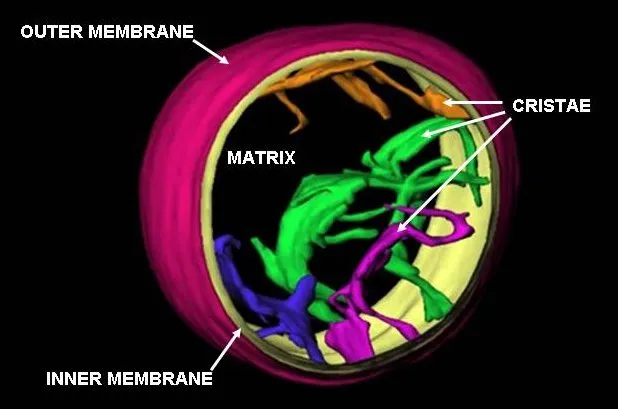
A single mitochondrion in 3D: outer membrane (pink), folded inner membrane (cristae, in green and purple), matrix (yellow). The entire ATP-minting machinery sits across that inner membrane. More mitochondria + healthier cristae = more ATP throughput, period. (Image: Louisa Howard, public domain, via Wikimedia Commons)

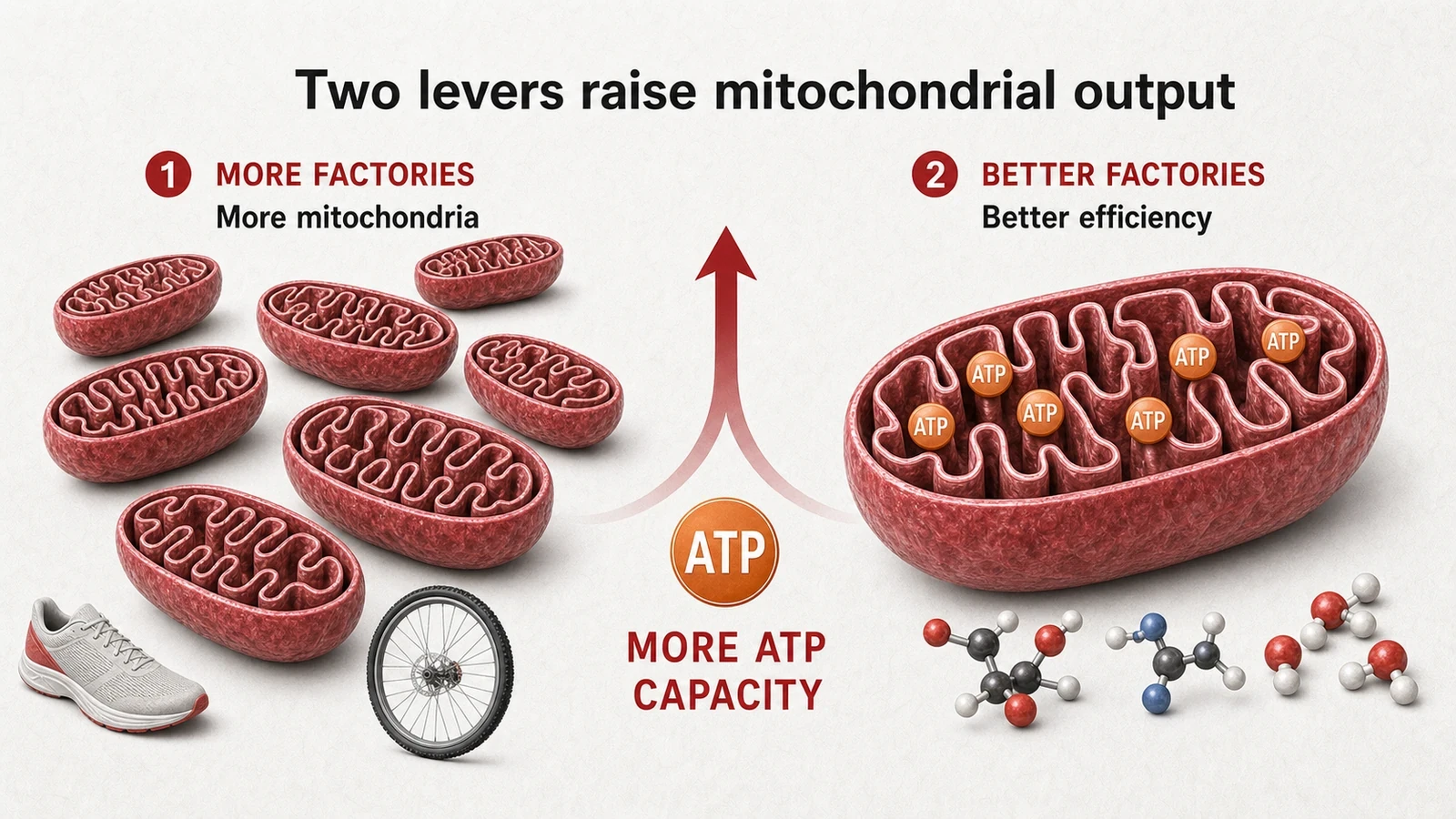
You upgrade this hardware with two levers that work together: biogenesis (building more factories) and coupling efficiency (making each factory run cleaner).

Drawboard showing that mitochondrial capacity improves through more factories and better factory efficiency.

The micronutrient co-factors

The electron transport chain inside your mitochondria works like an assembly line. If one worker on that line is missing the right tool, the whole thing stalls and electrons leak out as oxidative stress instead of turning into ATP. Five compounds are worth supplementing, roughly in this order of priority:

Coenzyme Q10 (Ubiquinol). CoQ10 is the mobile electron ferry inside the inner mitochondrial membrane, carrying electrons from Complex I/II to Complex III. Without it, the chain simply halts. Ubiquinol is the reduced, highly bioavailable form. Standard ubiquinone needs an enzymatic reduction step that gets worse with age, so Ubiquinol skips that problem entirely. Protocol: 100 to 200 mg daily with a fat-containing meal.

Pyrroloquinoline quinone (PQQ). This one does two jobs at once. It protects the delicate lipids of the mitochondrial membrane as a potent antioxidant, and it directly switches on PGC-1α, the master gene script for spontaneous mitochondrial biogenesis. Protocol: 10 to 20 mg daily.

Acetyl-L-carnitine (ALCAR). Fat is the cleanest, highest-yield fuel your body has for sustained ATP production, but long-chain fatty acids can't cross the inner mitochondrial membrane on their own. They need a ride: the carnitine shuttle. ALCAR supplies both the acetyl groups and the carnitine that escort fat into the furnace. Protocol: 500 to 1,500 mg on an empty stomach.

The NAD⁺ cascade (NR or NMN). NAD⁺ is the primary electron carrier stripped from your food. It sits at the top of the electron transport chain as NADH, and without enough of it, your mitochondria simply can't accept electrons from carbs or fat. Nicotinamide riboside (NR) and nicotinamide mononucleotide (NMN) are bypass precursors that help restore youthful NAD⁺ pools. Protocol: 300 to 500 mg of NR or NMN on waking.

Magnesium, the ATP stabilizer. Here's a rule of biochemistry that doesn't get nearly enough attention: free ATP is biologically inert. Every single molecule of ATP in your body has to bind a magnesium ion to form Mg-ATP before any enzyme or ion pump can actually use it. Subclinical magnesium deficiency is extremely common in modern diets, and it means your cells are sitting on ATP they can't spend. Protocol: 3 to 4 mg per kg of body weight, using glycinate, malate, or threonate (skip the oxide form; your body barely absorbs it).

The physical triggers for biogenesis

Your body doesn't build expensive new cellular machinery just because you'd like it to. It builds machinery when the environment forces it to. Two stimuli beat everything else on this front, by a wide margin.

Zone 2 cardiorespiratory training. Zone 2 is the top intensity at which your body still clears lactic acid as fast as it produces it, which keeps you squarely inside the aerobic energy pathway (typically 65 to 75% of max heart rate; if you can hold a conversation but only just barely, that's the zone). Sustained aerobic demand that doesn't wreck you forces your slow-twitch muscle fibers to ramp up mitochondrial density to keep pace. Protocol: 150 to 200 minutes per week, in sessions of 45 minutes or longer.

Deliberate cold exposure. Cold water immersion (below 10°C) triggers a massive norepinephrine release, activates brown adipose tissue, and switches on the PGC-1α pathway, the same master gene script PQQ partially triggers on its own. That signal tells skeletal muscle and fat cells to expand their mitochondrial networks for non-shivering heat production. Protocol: 11 minutes total per week, split across 2 to 4 short sessions. Short and cold beats long and lukewarm.


Part 2: VO₂ max and the oxygen delivery system (tier 1, cardiovascular)

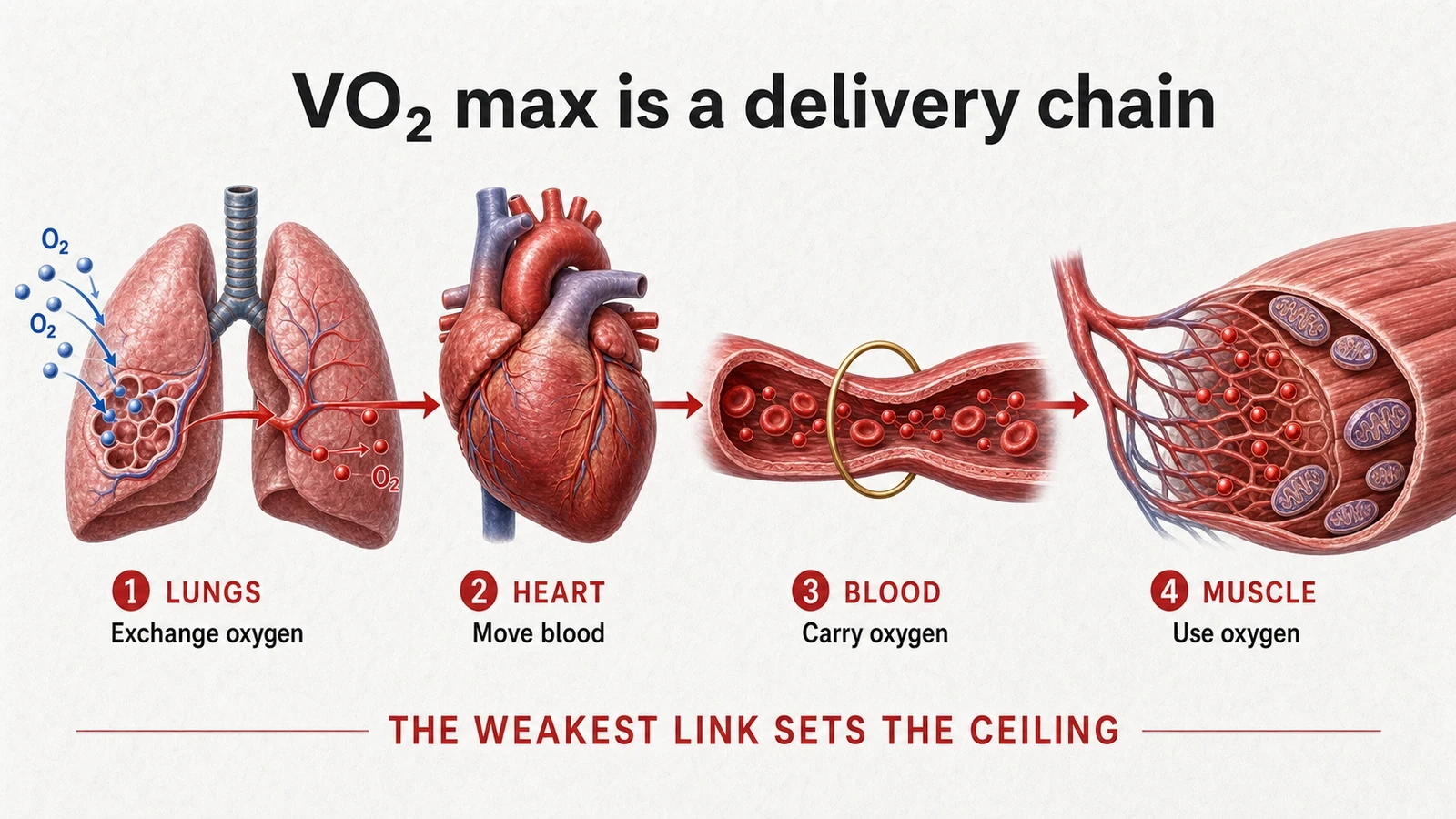
You can have the most advanced cellular power plants on the planet, but if you can't get oxygen to them fast enough, your output still hits a hard ceiling. Oxygen is the final electron acceptor in cellular respiration. Without it, the assembly line jams, full stop.

Your VO₂ max (the maximum volume of oxygen you can transport and use per minute) is the clearest single indicator of how big your engine actually is.

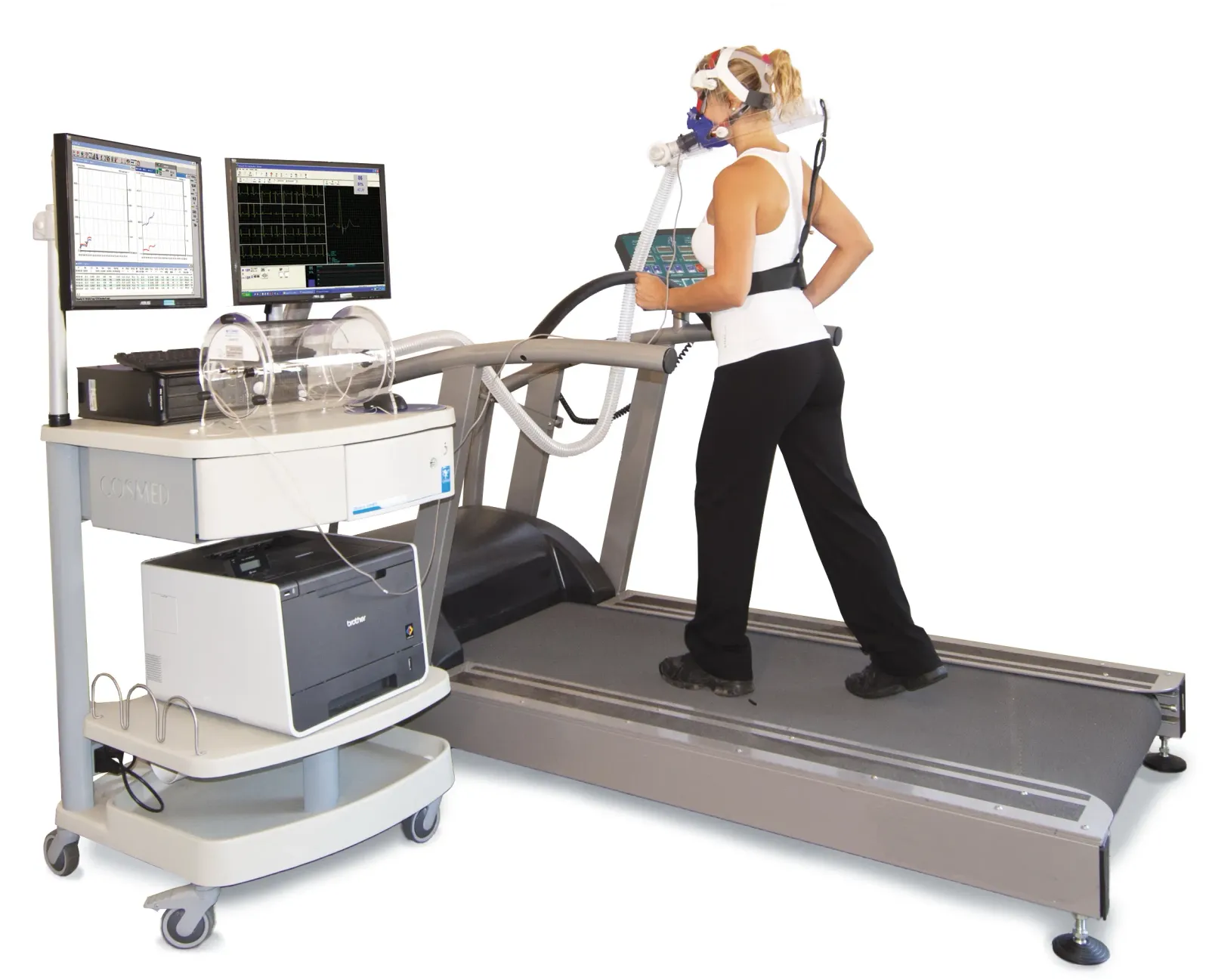
VO₂ max testing: face mask measures gas exchange, treadmill ramps the intensity, and the machine plots when your oxygen uptake plateaus. The number you hit is the structural ceiling of how much aerobic work you can sustain. It is also one of the best single predictors of all-cause mortality known to medicine. (Image: Lifeofbreath, CC-BY-SA, via Wikimedia Commons)

Drawboard showing oxygen moving from lungs to heart to working muscle.

The Norwegian 4×4 protocol

Where Zone 2 builds the number of mitochondria you have, high-intensity training builds the delivery capacity of the cardiovascular plumbing around them. It expands your heart's stroke volume and makes your arterial walls more elastic.

The gold standard for moving VO₂ max is the Norwegian 4×4:

  1. 10-minute warm-up.
  2. 4-minute interval at 85 to 95% of max heart rate. You should be breathing hard enough that finishing a sentence is not an option.
  3. 3 minutes of active recovery at roughly 60% of max heart rate.
  4. Repeat 4 times.

Why 4 minutes, specifically? Because that's the physiological sweet spot: long enough for the heart to reach maximum stroke volume and hold it there, which forces the structural adaptation (eccentric ventricular hypertrophy) that lets the heart pump far more oxygenated blood with every beat. Go shorter and your heart never reaches that ceiling. Go longer and the intensity has to drop.

Protocol: 1 to 2 sessions per week. Two is the upper limit before you start eating into recovery.


Part 3: protecting the neurochemical dashboard (tier 2)

Your baseline energy is shaped heavily by your tonic dopamine and acetylcholine tone. If your receptors are burned out or downregulated from chronic overstimulation, your brain refuses to authorize ATP spending, no matter how healthy your mitochondria are. Keeping that dashboard responsive means feeding the precursors it needs while ruthlessly cutting the things that wreck receptor sensitivity.

Dopamine reset and receptor resensitization

The dopamine fast: cutting out low-effort, high-amplitude triggers. Chronic hyper-stimulating behaviors (compulsive phone use, doomscrolling, porn, refined sugar, video games) keep your baseline dopamine running at a permanent deficit. Your brain protects itself from those unnatural spikes by downregulating D2 receptors. Fewer receptors means less signal per release, which means a flatter baseline, which means no permission to spend ATP on effort.

Restoring that sensitivity takes stretches of deliberate boredom and restricted instant gratification. After 14 to 30 consistent days, D2 receptor density partially restores and ordinary tasks start feeling motivating again. For the full behavioral protocol, see the dopamine detox piece. For the supplement-supported version, see the NAC + Mucuna reboot stack.

L-tyrosine and Mucuna pruriens. L-tyrosine is the amino acid precursor to dopamine. It gets converted into L-DOPA by the rate-limiting enzyme tyrosine hydroxylase, then into dopamine itself. Supplementing tyrosine makes sure your brain has the raw building blocks on hand for high cognitive demand. Mucuna pruriens delivers L-DOPA directly, skipping that rate-limiting step entirely. Protocol: 500 to 1,000 mg of L-tyrosine on an empty stomach in the morning. Take Mucuna only intermittently, never daily. Tolerance builds fast.

Acetylcholine and choline precursors

Keeping that mental "spotlight" crisp requires accessible dietary choline, which your brain uses to make acetylcholine.

Alpha-GPC (L-alpha-glycerylphosphorylcholine). A highly bioavailable choline source that crosses the blood-brain barrier with ease. It directly increases acetylcholine synthesis in the frontal cortex, sharpening focus, memory, and physical power output. Protocol: 300 to 600 mg daily.

ALCAR (its second job). Beyond its role ferrying fat into your mitochondria, Acetyl-L-carnitine also donates its acetyl group to choline, speeding up acetylcholine production. One supplement, two tiers covered: Tier 1 and Tier 2 at once.


Part 4: hormonal stabilization and stress resilience (tier 3)

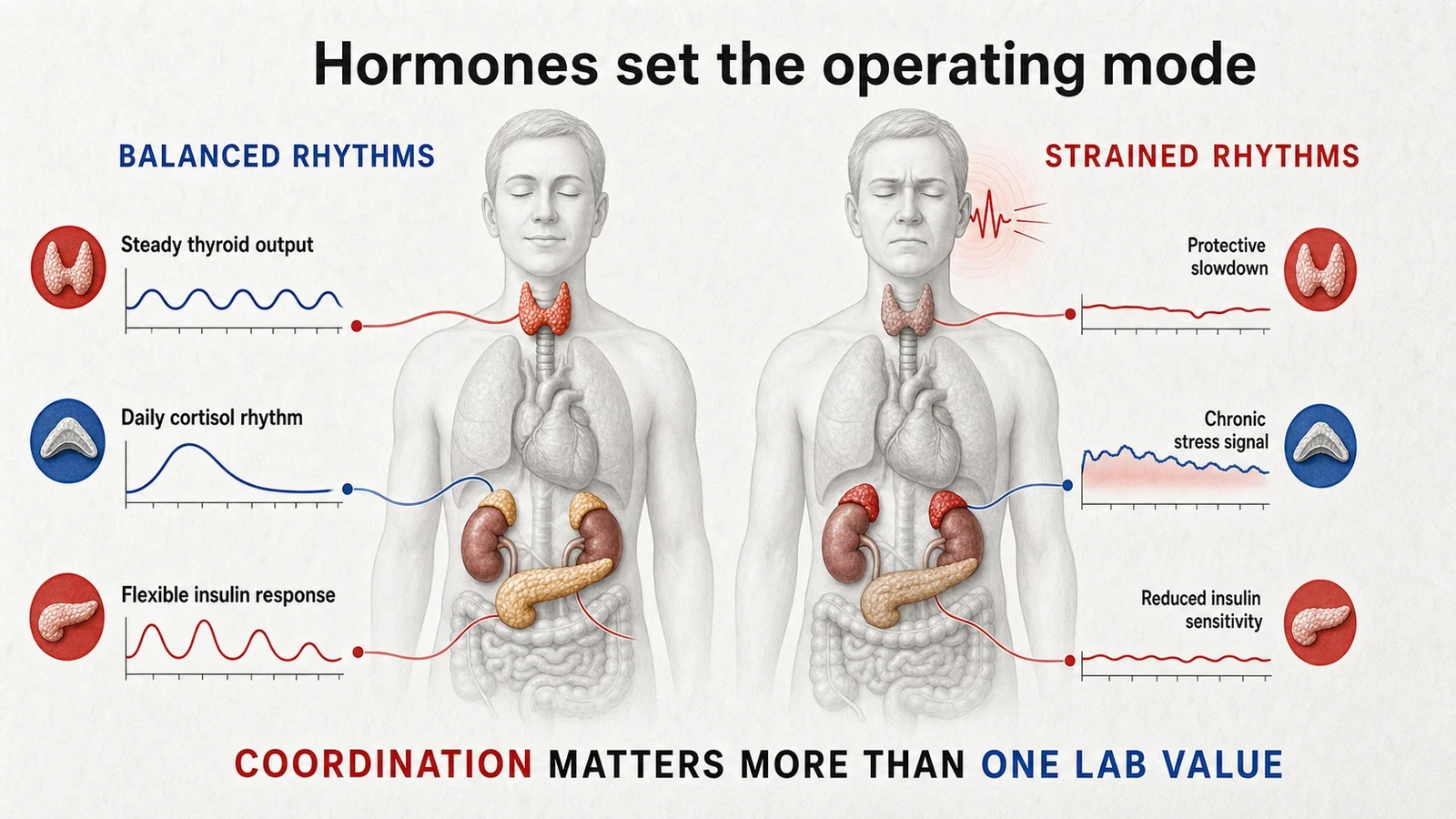
Your energy stack runs on hormonal "software," and that software can glitch. If your thyroid is sluggish, or your stress axis is stuck in the on position, your whole body drops into a protective low-power survival mode.

Drawboard comparing high-energy and low-energy hormonal states.

Thyroid support: the metabolic thermostat

Your thyroid uses iodine and tyrosine to build T4, which then gets converted (peripherally) into the active hormone T3. T3 travels into the nuclei of your cells and sets your baseline mitochondrial activity.

Selenium and zinc. Both are required cofactors for converting T4 into T3 out in the tissues. Without them, your thyroid is producing fuel your body can't actually use. Protocol: 100 to 200 mcg of selenium and 15 to 30 mg of zinc L-methionine daily.

HPA-axis adaptogens: buffering the cortisol burn

When stress (psychological or physical) keeps cortisol chronically elevated, your cells develop cortisol resistance, your immune system goes hyperactive, and your brain slows ATP production to conserve resources. Adaptogens help by moderating adrenal output and flattening the spike of that stress curve.

Ashwagandha (KSM-66). Clinical studies show it lowers circulating serum cortisol while stabilizing the HPA axis. It helps prevent the catabolic, worn-down state that chronic stress causes. Protocol: 300 to 600 mg daily.

Rhodiola rosea. Targets both physical and mental fatigue. It slows the breakdown of dopamine and serotonin while supporting ATP synthesis in skeletal muscle during prolonged stress. Protocol: 100 to 300 mg of an extract standardized to 3% rosavins.

For the full unwinding protocol for when cortisol has already crashed, see the cortisol crash protocol stack.

Insulin sensitivity: preventing the blood sugar crash

Every time your blood sugar spikes and then crashes from insulin resistance, your brain gets starved of glucose, and a steep energy drop follows.

Berberine. A plant alkaloid that activates AMPK (adenosine monophosphate-activated protein kinase), the body's master metabolic switch. It mimics some of the cellular effects of exercise, clearing glucose into muscle cells without requiring a massive, inflammatory insulin spike to do it. Protocol: 500 mg taken 15 minutes before a carbohydrate-dense meal.


Part 5: environmental and circadian alignment (tier 4)

Your biology depends on external environmental cues to keep its internal clocks calibrated. Break those cues (no morning sunlight, screens all night) and your hormone production drifts out of phase. You end up exhausted during the day and wired at night.

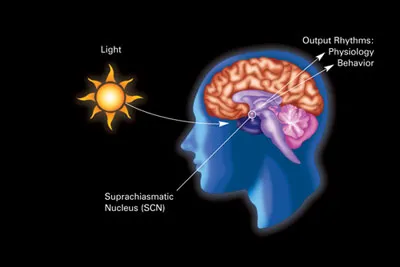
The circadian system. Light hits specialized retinal cells, signals the suprachiasmatic nucleus, which sets the daily release pattern of cortisol, melatonin, growth hormone, testosterone. Skip the morning sunlight anchor and every downstream release runs out of phase. (Image: NIGMS, public domain, via Wikimedia Commons)

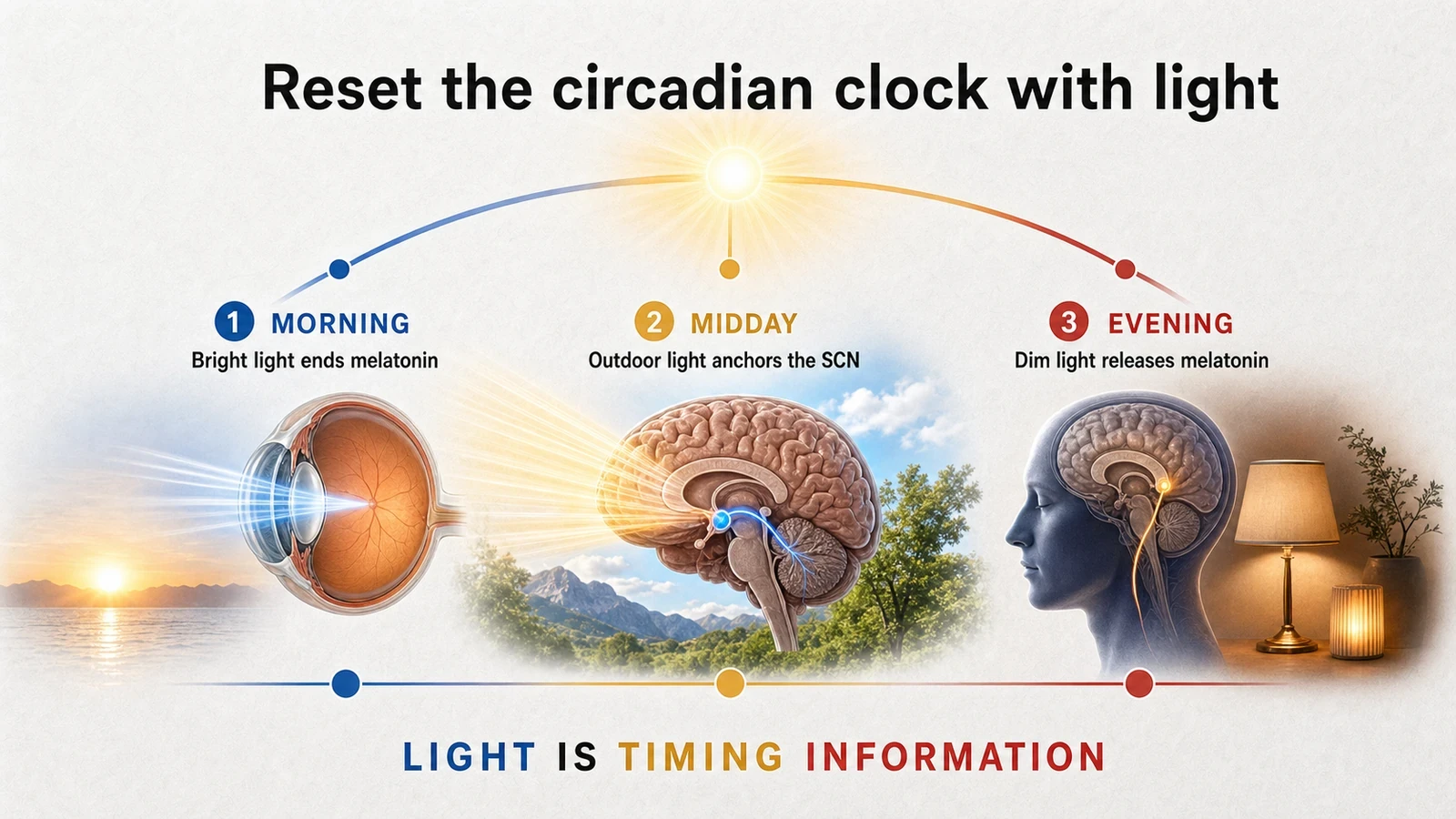
Drawboard timeline for morning, midday, and evening circadian light cues.

The photon protocol: light as an energetic drug

Your master circadian clock, the suprachiasmatic nucleus (SCN), is calibrated almost entirely by blue-spectrum light hitting your retina.

Get sunlight in your eyes within 30 minutes of waking. Getting roughly 10,000 lux into your eyes first thing triggers an immediate cortisol spike (your natural morning wake-up signal) and shuts off melatonin secretion. On a clear day, look toward the sun (never directly at it) for 5 to 10 minutes. On overcast days, spend 20 to 30 minutes outside instead. Done consistently, this single behavior is the single most effective circadian intervention there is. Nothing else comes close.

Be ruthless about evening light. Blue light (below 450 nm) from modern LED screens and overhead fixtures mimics midday sun. If your eyes catch that spectrum after 9 PM, your SCN pushes back melatonin production by up to four hours. Your deep-sleep architecture takes an immediate hit, and the next morning's baseline ATP pays for it. Kill the overhead lights, switch to dim amber lamps, put filters on your screens, and if you have to work late, wear blue-blocking glasses.


The master compilation: the ultimate baseline stack

You don't have to guess at any of this. Here's what a fully optimized day looks like when you run the entire blueprint end to end. This is the protocol that compounds.

The morning protocol: ignition phase

  • Light. 10 minutes of direct outdoor sunlight within 30 minutes of waking. (Tier 4)
  • Hydration and substrates. 500 mL of water with a pinch of sea salt, plus 500 mg NMN, 1,000 mg ALCAR, and a high-quality B-complex, all on an empty stomach. (Tier 1)
  • Neurotransmitter primers. 500 mg L-tyrosine and 300 mg Alpha-GPC to prime focus and motivation. (Tier 2)

The midday protocol: metabolic and cellular care

  • Mitochondrial co-factors, taken with a fat-containing meal. 100 to 200 mg CoQ10 (Ubiquinol), 10 to 20 mg PQQ, 100 to 200 mcg selenium. (Tier 1 and 3)
  • Stress shield. 300 mg Ashwagandha KSM-66 to blunt the midday workplace cortisol spike. (Tier 3)

The evening protocol: the reclamation phase

  • Light hygiene. Cut blue light after 9 PM with amber lighting, red-tinted lenses, and screen filters. (Tier 4)
  • The ATP stabilizer. 400 mg magnesium glycinate or malate two hours before bed, which locks in the day's ATP production as usable Mg-ATP while relaxing your nervous system for sleep. (Tier 1 and 2)

The weekly training framework: infrastructure upgrades

  • Mitochondrial density (Zone 2). Three 50-minute sessions of low-intensity cardio at the aerobic threshold. (Tier 1)
  • VO₂ max engine size. One Norwegian 4×4 session per week to expand cardiac stroke volume. (Tier 1)
  • Biogenesis trigger (cold exposure). 2 to 4 short sessions, 3 minutes or less each, in water below 10°C, totaling roughly 11 minutes per week. (Tier 1)

The real upgrade

Step off the exhausting treadmill of caffeine dependence and you find out what most people never do: what it feels like to have a body that generates vitality on its own, from the inside out.

There's no shortcut to this. Every supplement and protocol above is a small lever on its own. The real magic happens when you pull all of them in the same direction, for long enough, that your underlying biology actually rebuilds itself. Bigger mitochondrial networks. Higher stroke volume. Re-sensitized dopamine receptors. Stable cortisol curves. Circadian rhythm back in phase.

Six months in, the difference is structural. You stop managing energy the way you used to and start generating it instead. The 3 PM crash disappears because there was no early-morning sprint to crash from in the first place. The morning fog lifts because your SCN is finally getting its anchor signal. The pull toward a second espresso fades because your dopamine receptors are working again.

That's what permanently raising the floor actually looks like. It's slower than caffeine, slower than any nootropic, slower than any drug. And it compounds in a direction none of those can touch.

Grabbing a cup of coffee feels like the obvious move. The real move is the blueprint: Zone 2, sunlight, dopamine hygiene, the supplement stack, the 4×4 once a week, magnesium at night.


This series is the design brief behind what we're building at TaskCoach.AI. The supplements are the smallest part of this. The real payoff is in the daily behavioral protocols that touch all five tiers, held consistently across months, while life keeps happening around you. A coaching system that doesn't forget you between sessions, that holds these protocols across all seven life pillars, and that treats your energy as the multi-tier system it actually is: that's the difference between knowing the blueprint and actually living inside an optimized one.

Frequently asked questions

Where do I start if I'm overwhelmed by the full blueprint?

Pick whichever tier is most obviously broken for you. If you're sleeping badly or waking up exhausted, start with circadian alignment (Tier 5: morning sunlight, blue-light blocking, a fixed wake time). If you can't get moving without three coffees, start with dopamine hygiene (Tier 2). If you get winded climbing a flight of stairs, start with Zone 2 cardio (Tier 1 and 2). One tier at a time, with 4 to 6 weeks of consistency, beats trying to install everything at once. The protocols compound: fixing one tier makes the next one easier.

How long does it take to actually feel the difference?

Tier 5 (circadian) is fastest: you'll notice real subjective changes within 2 to 3 days of consistent morning sunlight and evening blue-light blocking. Tier 2 (dopamine) takes 14 to 30 days of deliberate fasting before D2 receptor density partially restores. Tier 1 (mitochondrial) is the slowest of the five. Meaningful biogenesis from Zone 2 cardio plus cold exposure takes 6 to 12 weeks. VO₂ max gains from 4x4 training show up around 6 weeks and become substantial by 12. None of this is fast. All of it compounds.

Do I really need to supplement, or can I get all of this from food and lifestyle?

Lifestyle (Zone 2, cold exposure, sunlight, dopamine hygiene, sleep) does most of the work here, by a wide margin. Supplements accelerate the process; they don't replace the foundation. That said, magnesium deficiency is genuinely common in modern diets, and it's the supplement most worth prioritizing because it gates whether your cells can even use the ATP they make. CoQ10/Ubiquinol becomes worth adding after age 40, once your own production starts dropping off. NMN/NR is optional and sits firmly in biohacker territory: the research is real, but still developing. Everything else is genuinely 'nice to have' once the foundation is solid.

Is the Norwegian 4×4 protocol actually better than steady-state cardio for VO₂ max?

Yes, by a meaningful margin, specifically for maximal oxygen uptake. The 4-minute duration hits the physiological sweet spot: long enough for your heart to reach maximum stroke volume and hold it there, which is what forces the structural adaptation (eccentric ventricular hypertrophy) that actually moves the needle. Steady-state cardio at moderate intensity builds mitochondria and base aerobic fitness, which is exactly why Zone 2 is the other essential piece. But VO₂ max specifically, your engine size ceiling, responds best to the 4×4. Think of the two as complementary, not interchangeable.

Why is cold exposure so much more potent than its short duration suggests?

Because the signal it sends (a massive norepinephrine release plus activation of brown adipose tissue) flips a specific genetic switch, PGC-1α, that kicks off mitochondrial biogenesis system-wide. 11 minutes a week is enough because your body doesn't need a long stimulus to flip that switch. It needs a sufficiently intense one. Short and cold (below 10°C, 1 to 3 minutes per exposure) beats long and lukewarm every time. See the mitochondrial energy stack piece for the deeper breakdown.

How does meaning and purpose fit into a 'biological blueprint'? Isn't that the soft tier?

It's actually the hardest tier, in both senses of the word: the most difficult to engineer, and the one that gates everything underneath it. A pristine biological stack with no sense of purpose still produces low motivation, because Level 5 (the psychological apex) is where your brain authorizes Level 2 (dopamine release) to authorize Level 1 (ATP spending). No amount of supplements or Zone 2 cardio can manufacture the permission slip to spend the energy your stack is producing. See the consciousness piece for why psychological state sits at the top of the biological hierarchy.

Is this what TaskCoach.AI is built around?

Yes. The supplements and protocols above don't mean much without a system that holds them across months. What actually moves the needle is installing the daily behaviors that touch all five tiers (morning sunlight, dopamine hygiene, Zone 2 cadence, sleep architecture, meaningful work) and keeping them running while life happens around you. TaskCoach.AI is built to be that system: a coaching architecture that doesn't forget you between sessions, holds the protocols across the seven life pillars, and treats your energy as the multi-tier system it actually is.