You Cannot Out-Chemistry Your Energy Stack
In the first piece of this series we mapped human energy as a five-tier system: from the rotary motor of ATP synthase deep in your mitochondria, up through the neurochemical dashboard, the hormonal blueprint, the macroscopic inputs of light and food, and finally the psychological apex of purpose.
Under normal conditions, that system is a self-regulating ecosystem. It produces, distributes, and consumes energy with breathtaking precision.
The problem is that humans have never been particularly good at letting their own systems regulate themselves.
For millennia, we have introduced external molecules to rewrite the brain's commands. The morning espresso. The 4 PM nootropic. The evening glass of wine. The weekend cocktail of THC, alcohol, and three other things that turn into a 9 AM Monday wreck. The pharmaceutical that fixes a symptom and creates a new one. The crystal meth pipe that promises three days of god-mode and delivers thirty days of black hole.
Every one of those compounds — without exception — does the same fundamental thing: it rewrites the Level 2 dashboard. It tells the brain to spend ATP it wouldn't otherwise have spent, or to refuse spending it would have otherwise made.
This piece is the mechanism. Exactly how each major class of compound bends the stack, what it actually does to the dopamine / acetylcholine / GABA / adenosine matrix, and why the biological bill always — always — arrives.
1. The Neurochemical Command Center: How Brain Chemicals Rule ATP
To understand what substances do, you have to look past muscle tissue and into the synaptic cleft — the microscopic gap between neurons where the perception of vitality is born.

Four molecules dominate the energy dashboard. Memorize them; the rest of this piece is variations on a theme:
┌─────────────────┬──────────────────────────────────────────────────────┐
│ NEUROTRANSMITTER│        PRIMARY EFFECT ON THE ENERGY STACK            │
├─────────────────┼──────────────────────────────────────────────────────┤
│ DOPAMINE        │ The authorization code. Unlocks ATP for action.      │
│ ACETYLCHOLINE   │ The cognitive lens. Sharpens which circuits burn it. │
│ GABA            │ The systemic brake. Restricts ATP consumption.       │
│ ADENOSINE       │ The fuel gauge. Signals resources spent → sleep.     │
└─────────────────┴──────────────────────────────────────────────────────┘
Dopamine: The Authorization Code
The most common misunderstanding in pop neuroscience is labeling dopamine as the "pleasure molecule." Dopamine is the molecule of anticipation, motivation, and pursuit. In energy terms, dopamine is the authorization code that unlocks ATP.
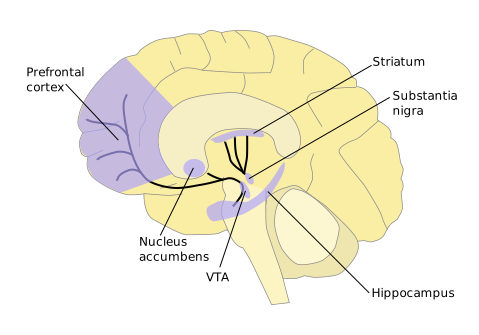
When dopamine spikes in the reward pathways, it tells the prefrontal cortex and musculoskeletal system: "A high-value reward is in reach. Deploy resources now." Mitochondria ramp up cellular respiration; glycogen and fat get converted to rapid-fire ATP.
When dopamine is low, the vault stays locked. Cells drowning in glucose, mitochondria in perfect health — and the body refuses to spend. This is the structural reason chronic low motivation feels physical, not just mental.
Acetylcholine: The Lens of Computational Efficiency
If dopamine is the engine, acetylcholine is the lens. It governs attention, spatial awareness, and the precise focus of cognitive processing.
In energy terms, acetylcholine raises the signal-to-noise ratio of your brain. When you are thinking, only the neural circuits actually required for the task are consuming ATP; everything else stays quiet. The "razor-sharp" feeling — being able to think hard for hours without exhaustion — is acetylcholine working at high efficiency.
GABA: The Systemic Brake
Gamma-Aminobutyric Acid (GABA) is the brain's primary inhibitory neurotransmitter. Its job is to slow down neural activity by letting negatively charged chloride ions into the neuron, making it harder for the cell to fire.
GABA is essential precisely because the brain is such a massive consumer of energy (~20% of resting ATP). Without GABA forcing the system into lower gear, neurons would fire continuously and asynchronously, leading to cellular exhaustion, oxidative stress, and excitotoxicity. GABA protects your energy reserves by forcing the machine to rest.
Adenosine: The Cellular Metronome
As your cells burn ATP throughout the day, a structural byproduct accumulates in the brain: adenosine. The longer you've been awake, the more adenosine has built up.
Adenosine acts as your body's internal sleep-pressure gauge. It binds to A₁ and A₂A receptors and systematically dampens the release of dopamine and norepinephrine, whispering: "The currency has been spent. Enter low-power standby. Flush the metabolic waste."
This last molecule is where most of the manipulation begins.
2. The Day-to-Day Modulators: Tilting the Cellular Micro-Climate
Caffeine: Blinding the Energy Gauge
Caffeine is a master structural imposter. Its shape is almost identical to adenosine.

When you drink coffee, caffeine enters the synaptic cleft and parks directly inside your adenosine receptors as a competitive antagonist. The brake is silenced.
Caffeine does not generate a single molecule of ATP. It leaves your actual energy reserves untouched. It just mutes the cellular alarm that says you're running low. With the adenosine signal blocked, your dopamine and norepinephrine flow uninhibited, and a mild stress response releases cortisol.
You feel alert. But it is an energetic illusion. You've taken out a high-interest loan against your future vitality. When the caffeine eventually detaches, the backlog of accumulated adenosine slams into the receptors all at once. That is your 3 PM crash.
For the elegant combination protocol that actually works around this, see the L-theanine + caffeine deep-work stack.
Synthetic Nootropics: Optimizing the Machinery
Modern nootropics like Phenylpiracetam don't force a stressful neurotransmitter dump. They work as Positive Allosteric Modulators (PAMs) of AMPA and NMDA glutamate receptors. Glutamate is your brain's primary excitatory accelerator.
    NORMAL GLUTAMATE SIGNALING               WITH PHENYLPIRACETAM (PAM)
    ┌─────────────────┐                       ┌─────────────────┐
    │    Glutamate    │                       │    Glutamate    │
    └────────┬────────┘                       └────────┬────────┘
             ▼                                         ▼
    ┌─────────────────┐                       ┌─────────────────┐
    │  AMPA Receptor  │                       │ Modified AMPA   │
    └────────┬────────┘                       │ (Hyper-         │
             │                                │  responsive)    │
             ▼                                └────────┬────────┘
    [Standard signal]                                  ▼
                                              [Amplified brainwave
                                               velocity & focus]
By changing the physical shape of these receptors, PAMs make them hyper-sensitive to the glutamate already floating in your brain. Simultaneously, phenylpiracetam increases the density of acetylcholine receptors in the hippocampus.
By sensitizing both pathways, you get faster brainwaves and sharper focus without demanding emergency ATP reserves. You optimize the computational efficiency of the machine you already have. Caveat: tolerance and downregulation still apply, so this is a tool, not a daily.
3. The Downward Arc: Depressants and the Amotivational Drift
To appreciate how powerful the neurochemical dashboard is, look at the molecules that systematically dismantle it.
Alcohol: A Three-Phase Demolition
Alcohol (ethanol) is a profound CNS depressant that warps the brain's balance of excitation and inhibition in a very specific arc.

Phase 1: The disinhibited rush (first ~20 minutes). Alcohol triggers a transient release of dopamine and beta-endorphins. The frontal lobe's filters drop, behavioral inhibition relaxes, and the brain misinterprets the lack of friction as a surplus of expressive energy. This is the social-glow phase.
Phase 2: The GABA slam. As blood alcohol rises, ethanol binds heavily to GABA-A receptors, amplifying their inhibitory signal massively. Concurrently, it plugs into NMDA glutamate receptors, blocking the brain's primary accelerator. Brakes locked, gas disconnected. Coordination fails. Speech slurs. ATP consumption drops — but only because the system is being forced into a chemical coma.
Phase 3: Mitochondrial suffocation (the next morning). As the liver breaks down ethanol, it produces acetaldehyde — a highly toxic byproduct that directly attacks the protein complexes inside the mitochondrial electron transport chain. Your cellular power plants literally suffocate. Baseline ATP production plummets.
Meanwhile, your brain panics from hours of chemical suppression and releases a massive wave of stored glutamate — the glutamate rebound. This is the classic hangover state: hypersensitivity to light and sound, racing thoughts ("hangxiety"), physical incapacitation because your cells are ATP-starved and your brain is over-amped at the same time.
The Anti-Motivational Drift: Cannabis and Doomscrolling
There's a quieter form of dashboard manipulation that doesn't involve any single substance: chronic exposure to high-dopamine, low-effort inputs. Prolonged heavy cannabis (THC) use. Hours per day of short-form video. Endless porn. Junk food on demand. Each one is a small flood of dopamine for almost no effort.
The brain has a protective response. When flooded with cheap rewards, it ruthlessly hacks away its own dopamine receptors — downregulation.
┌─────────────────────────────────────────────────────────────────────┐
│                THE ANTI-MOTIVATIONAL DOWNGRADE                       │
├─────────────────────────────────────────────────────────────────────┤
│  Chronic high-dopamine / low-effort inputs                          │
│           │                                                         │
│           ▼                                                         │
│  Severe downregulation of D2 receptors                              │
│           │                                                         │
│           ▼                                                         │
│  Blunted baseline dopamine tone                                     │
│           │                                                         │
│           ▼                                                         │
│  Brain refuses to authorize ATP release for effortful work          │
│  → Chronic amotivational state                                      │
└─────────────────────────────────────────────────────────────────────┘
The result is a flattened dopamine baseline. When the time comes to exercise, ship the project, train the skill — the brain looks at the effort cost, looks at its downregulated reward signal, and refuses to issue the authorization code.
The person experiences this as a heavy, immovable wall of apathy. Mitochondria are perfectly capable of producing ATP. Muscles are intact. The neurochemical command to ignite that energy never arrives.
This is the structural reason a 30-day dopamine reset works — receptor density partially restores. For the supplement-supported version see the NAC + Mucuna dopamine reboot stack. For the behavioral protocol see the dopamine detox piece.
4. The Nuclear Options: Cocaine and Crystal Meth
When we cross into high-potency stimulants, we're no longer tweaking the dashboard. We're ripping it out of the wall.
Cocaine: The Synaptic Traffic Jam
Under normal conditions, once dopamine has delivered its motivational message across the synaptic cleft, a transporter protein called the Dopamine Transporter (DAT) acts like a microscopic vacuum cleaner, sucking the excess dopamine back into the cell to be recycled.

Cocaine binds directly to the DAT and jams the vacuum completely shut.
Every drop of dopamine you naturally release now has nowhere to go. It piles up in the synaptic cleft, slamming into the receiving receptors over and over again. The result: an intense, ego-inflating rush of hyper-alertness, manic confidence, and a massive surge of perceived physical energy. Norepinephrine transporters are similarly jammed — heart rate spikes, blood vessels constrict, the whole physiology is forced into maximum predatory survival mode.
You feel like a god because your brain is registering a continuous unmitigated reward signal, forcing Level 1 of the stack to empty its tanks. The next day, the receptors are exhausted. They were never built for that volume of signal. Tolerance comes fast. The crash comes faster.
Crystal Meth: The Total Intracellular Meltdown
If cocaine jams the vacuum cleaner, crystal meth (methamphetamine) turns the vacuum into a leaf blower running in reverse while setting the warehouse on fire.

Methamphetamine slips directly through cellular membranes (it doesn't need an open gate — it's that lipid-soluble). Once inside the pre-synaptic neuron, it invades the VMAT-2 storage vesicles — the protective vaults where dopamine and norepinephrine are stored to keep them from damaging the cell's interior. Meth ruptures these vesicles, spilling massive reactive pools of neurotransmitter directly into the cytoplasm.
Then it gets worse. Meth forces the Dopamine Transporter to run completely in reverse. Instead of recycling dopamine back into the cell, the transporter starts pumping the massive internal flood out into the synaptic cleft, independent of any actual thought or environmental trigger.
       NORMAL SYNAPSE                       THE METH HIJACK
    ┌──────────────────┐                  ┌──────────────────┐
    │ Pre-synaptic     │                  │ Pre-synaptic     │
    │ [Vesicle] [DAT]  │                  │ [RUPTURED] [DAT] │
    │     │       ▲    │                  │      │        │  │
    │     ▼       │    │                  │      ▼        ▼  │
    │  (dopamine) │    │                  │  (MASSIVE FLOOD) │
    └──────────────────┘                  └──────────────────┘
    ┌──────────────────┐                  ┌──────────────────┐
    │ Post-synaptic    │                  │ Post-synaptic    │
    │    [receptor]    │                  │  [OVERWHELMED]   │
    └──────────────────┘                  └──────────────────┘
The synaptic dopamine concentration spikes by roughly 1200%, sustained for up to 24 hours. The neurochemical dashboard is not modulated. It is detonated.
The Catastrophic ATP Bankruptcy
Sustaining this artificial state of hyper-metabolism requires a toll that biological tissue cannot safely pay.
Because neurons are firing continuously at manic frequency, their delicate electrical gradients are wiped out. To keep them from dying, the sodium-potassium pumps (Na⁺/K⁺-ATPase) — already the single largest consumer of ATP in the human body — have to run at maximum, around the clock, to reset the cell's charge.
To fuel them, mitochondria are pushed into permanently hyper-accelerated cellular respiration. This extreme rate of production generates an overwhelming storm of reactive oxygen species (ROS) — cellular free radicals. These free radicals tear through the mitochondrial membranes and permanently destroy the protein complexes of the electron transport chain.
Your cellular power plants are literally burned out by their own hyper-production.
When the drug clears, the user enters an energetic black hole. The mitochondria have been structurally eviscerated by the free-radical storm. The body has lost its baseline capacity to generate ATP. Coupled with severe dopamine receptor downregulation, the user experiences profound physical prostration, chronic fatigue, and anhedonia — the total biological inability to manufacture energy or feel motivation.
The entire stack has been gutted.
The Immutable Law of Bio-Energetics
Whether you're optimizing the dashboard with a nootropic, blinding the gauge with caffeine, dampening the system with depressants, or watching the structural destruction caused by methamphetamine, the underlying law is absolute:
You cannot cheat the energy stack without paying the toll.
Substances that truly optimize human vitality do so by repairing the underlying machinery at the bottom of the stack — improving mitochondrial membrane integrity, reducing systemic inflammation, sensitizing receptors back toward baseline. They invest in the infrastructure. Their compounding interest works for you across years.
Substances that simulate energy do so by forcing the upper tiers to spend ATP that the body hasn't safely accounted for. They pull the internal fire alarm to deplete tomorrow's reserves for a few hours of advantage today. Their compounding interest works against you.
True, sustainable, high-amplitude vitality is never a product of chemical coercion. It is the natural byproduct of a pristine, well-maintained, and biologically supported ecosystem. The stack you read about in the first piece is what you're actually optimizing. The substances are sometimes useful, sometimes destructive, almost never the leverage point.
The cup of coffee feels like the obvious move. The light exposure, the sleep architecture, the daily protocol that touches all five tiers — that is the actual move. The next piece in this series is the full end-to-end blueprint for that protocol: every supplement, every drill, every dose, end to end.
This series is the underlying biology of what we're building at TaskCoach.AI. The supplements and biohacks people chase are downstream. The behavioral protocols that touch the bottom of the stack — light, sleep, dopamine hygiene, meaning, exercise — are what produce sustained vitality. A coaching system that holds those protocols across the seven life pillars, across months, is the difference between knowing about your energy stack and actually living inside an optimized one.