I Will Be Operational. The Mitochondrial Story In ADHD Is Real And Underappreciated.
ADHD adults often report a baseline fatigue that does not match their sleep duration. The mechanism gets attributed to "ADHD" generically. The deeper biology often involves measurable mitochondrial dysfunction.
A growing body of research connects ADHD with oxidative stress markers, reduced mitochondrial biogenesis, and impaired energy substrate efficiency (Verlaet et al., 2014; Joseph et al., 2017). The implication: supporting mitochondrial function at the substrate level may produce energy and cognitive improvements that no amount of caffeine can match.
The four compounds below have the strongest evidence for direct mitochondrial support. Run together, they form a substrate-level stack distinct from the more common "stimulant"-style focus stacks.
Standard disclaimer: nothing here is medical advice. Below is what the research shows.

1. CoQ10 (Ubiquinol): The Electron Transport Chain Substrate

Coenzyme Q10 is essential for electron transport in the mitochondrial inner membrane. It is the molecule that physically carries electrons through complexes I, II, and III of the electron transport chain during ATP synthesis.
Active compounds: Ubiquinone (oxidized) and Ubiquinol (reduced). The ubiquinol form is dramatically better absorbed in adults over 30, who lose the ability to efficiently convert ubiquinone to ubiquinol.
Mechanism: Direct ETC support. CoQ10 status declines with age, statin use, and chronic inflammation. ATP production efficiency falls correspondingly. Supplementation restores substrate availability.
Dosing: 100-200mg ubiquinol/day, taken with a fatty meal (CoQ10 is highly fat-soluble; bioavailability is roughly 5x higher with dietary fat). Higher doses (up to 600mg) are used in clinical contexts for migraine prevention and cardiac support.
Effect window: 4-12 weeks. Cumulative.
Caveats: Very well-tolerated. Mild stimulating effect in some users; afternoon dosing may interfere with sleep.
Special note: Statin medications deplete CoQ10. Anyone on statins who has not been told this by their cardiologist should ask about it explicitly.
2. PQQ (Pyrroloquinoline Quinone): The Mitochondrial Biogenesis Compound
PQQ is the most interesting compound in this stack because of its specific mechanism: it stimulates the creation of new mitochondria, not just better function of existing ones.
Mechanism: Chowanadisai et al. (2010), in a landmark Journal of Biological Chemistry paper, demonstrated that PQQ supplementation in animals produces measurable mitochondrial biogenesis (new mitochondria) and improved energy efficiency. The mechanism involves activation of PGC-1α, the master regulator of mitochondrial biogenesis (the same pathway exercise activates).
The implication is profound: PQQ supplementation may produce structural changes in cellular energy capacity, not just acute symptom support.
Dosing: 10-20mg/day, with food. Higher doses do not show additional benefit and may produce headaches.
Effect window: 8-12 weeks minimum for the biogenesis effects. Cumulative and durable.
Caveats:
- Limited long-term safety data; conservative cycling (4-6 weeks on, 1-2 weeks off) is reasonable.
- Stacks naturally with CoQ10; same fatty-meal timing.
3. Creatine Monohydrate: The Brain ATP Buffer
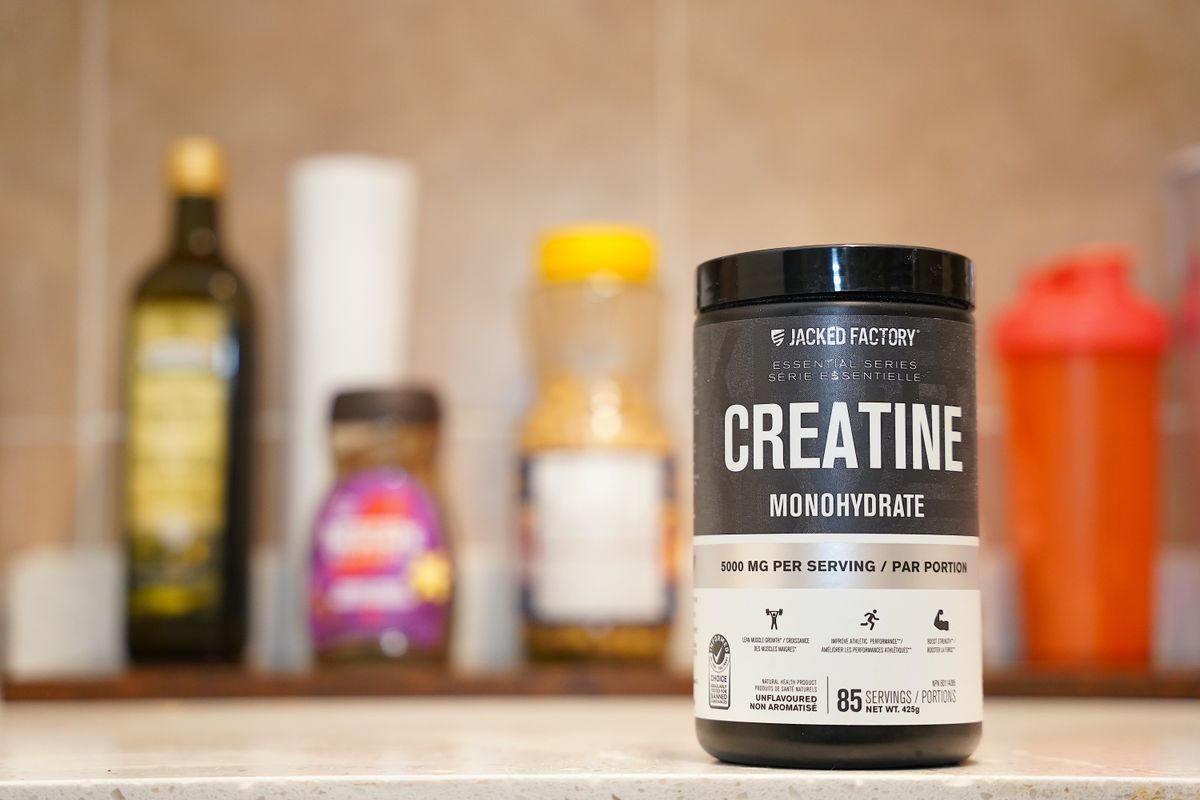
Creatine has 30+ years of research support as a performance supplement. The brain-cognition side of creatine research is more recent but increasingly substantial.
Mechanism: Creatine is stored in tissues (muscle and brain) as phosphocreatine, which donates phosphate to ADP to regenerate ATP. This produces a rapid-response ATP buffer for high-demand moments.
Rae et al. (2003) and subsequent studies demonstrated cognitive improvements (working memory, processing speed) with creatine supplementation in healthy adults. The effect is more pronounced in vegetarians (lower baseline creatine), older adults, and those with sleep deprivation.
For ADHD adults specifically, the cognitive substrate support during high-demand work, plus the broader effects on energy and mood, makes creatine one of the most underrated supplements in the ADHD context.
Dosing: 5g creatine monohydrate daily. No loading phase needed; takes ~3-4 weeks to fully saturate tissues. Take with food for marginal absorption improvement. Powder form is fine; cheaper than capsules.
Form matters less than marketing suggests. Plain monohydrate is the most-studied form. The other forms (HCl, ethyl ester, etc.) have not shown clinical advantages worth the price premium.
Caveats:
- May cause mild water retention (1-3 pounds) in muscle tissue; not fat.
- Hydration matters; creatine pulls water into cells.
- Kidney concerns are not supported by research in healthy adults; pre-existing kidney disease is a contraindication.
4. B-Complex: The Mitochondrial Cofactor Set

B-vitamins are cofactors for nearly every step of the energy substrate pathway: glycolysis, the citric acid cycle, fatty acid metabolism, amino acid metabolism, and electron transport.
The relevant B-vitamins for mitochondrial support:
- B1 (Thiamine): Pyruvate dehydrogenase cofactor
- B2 (Riboflavin): FAD/FMN precursor for electron transport
- B3 (Niacin): NAD/NADH precursor
- B5 (Pantothenic acid): CoA component for citric acid cycle
- B6 (P5P, not pyridoxine): Amino acid metabolism, neurotransmitter synthesis
- B7 (Biotin): Multiple carboxylases
- B9 (L-methylfolate, not folic acid): One-carbon metabolism
- B12 (Methylcobalamin, not cyanocobalamin): One-carbon metabolism, neurological support
Mechanism: Cofactor support across every major energy pathway. The bioactive forms (P5P, L-methylfolate, methylcobalamin) are particularly important because a significant minority of adults have MTHFR or other one-carbon metabolism polymorphisms that limit conversion from synthetic forms.
Dosing: A high-quality "methylated B-complex" with bioactive forms, taken with breakfast. Brand quality matters substantially here; many cheap B-complexes use the synthetic forms that don't help users with MTHFR variants.
Caveats:
- B6 at high doses (>200mg/day chronic) can cause neuropathy. Stay under 100mg/day of P5P.
- Methylated B12 and folate can produce overmethylation symptoms (anxiety, jitter, insomnia) in some users. Start low.
- Niacin at high doses produces flushing; not dangerous, but uncomfortable.
The Full Protocol
A typical mitochondrial stack day:
- 8am (breakfast): 100mg ubiquinol + 10mg PQQ + Methylated B-complex + 5g creatine monohydrate.
That's the entire daily protocol. Mitochondrial supplements work substrate-level and chronically; there is no acute-dosing window for this stack.
Pair with: Aerobic exercise (the strongest natural mitochondrial biogenesis signal) and sleep (covered in our ADHD sleep supplement stack). Without these substrates, the supplement effects are dramatically reduced.
What This Stack Will Not Fix
1. Untreated sleep apnea. Mitochondrial dysfunction from chronic intermittent hypoxia overwhelms supplement support. Get a sleep study if relevant.
2. Untreated thyroid dysfunction. Hypothyroidism produces fatigue identical in subjective experience to mitochondrial dysfunction. Bloodwork (TSH, free T3/T4, reverse T3, thyroid antibodies) is the first step before assuming mitochondrial cause.
3. Severe deficiencies. Iron deficiency (especially in menstruating women), B12 deficiency, vitamin D deficiency can all produce fatigue that supplement stacks for "energy" do not address. Bloodwork matters.
What Most "Energy Stack" Guides Get Wrong
Three common errors:
1. Heavy reliance on caffeine and stimulants. Caffeine produces apparent energy by blocking adenosine receptors, not by producing more ATP. The chronic-use ceiling is real. The mitochondrial stack is substrate-level and produces actual energy availability.
2. Skipping the bioactive forms of B-vitamins. Folic acid and cyanocobalamin are cheap synthetic forms that ~30% of the population converts poorly. The clinical effect of B-complex supplementation is dramatically different at the bioactive forms.
3. Treating mitochondrial supplements as acute. PQQ and CoQ10 work over weeks, not hours. Anyone expecting same-day effects will quit before the effects materialize.
Where TaskCoach Plays
The Body pillar in TaskCoach.AI tracks daily energy levels, supplement adherence, and exercise compliance. Across the 8-12 week window needed to evaluate mitochondrial support, the pillar dashboard reveals whether the stack is producing real subjective improvement.
The architecture is the data layer. Without it, the slow improvement is invisible.
The Bottom Line
ATP availability is the substrate that everything else (focus, mood, executive function, exercise capacity) sits on top of. Mitochondrial support is the layer most often skipped in favor of louder, faster, less effective stimulant-style stacks.
CoQ10 for electron transport. PQQ for biogenesis. Creatine for ATP buffer. Methylated B-complex for cofactors. Patience for the 8-12 week curve. Aerobic exercise for the biological signal that the supplements amplify.
Substrate wins. Always.