Tiimo is good. Start with the gap.
Tiimo earned Apple's 2025 iPhone App of the Year for a reason. It turns a day into a readable visual schedule, supports to-dos and focus, and can transform a typed or spoken brain dump into estimated steps. Its tone and design were shaped around neurodivergent users from the beginning.
An alternative makes sense when you need a different mechanism:
- a simpler visual timeline
- a timer that guides each routine step
- a work-focused daily planning ritual
- continuous automatic scheduling
- one free tool for task breakdown
- broader context across goals, habits, tasks, and coaching
That list produces six very different alternatives. The closest visual substitute is Structured. The others are stronger answers to specific gaps.
For a category-wide view, compare the best AI planner apps. If your search starts with a particular executive function demand, use our executive function apps for adults guide.
Tiimo alternatives at a glance
| App | Best reason to choose it over Tiimo | Planning style | Price checked July 30, 2026 |
|---|---|---|---|
| Structured | You want a simpler visual timeline | Manual visual day with optional AI | Free; Pro pricing varies by region |
| Routinery | You need help following a routine step by step | Timed sequence with prompts | Free download; paid features vary by region |
| Sunsama | You want a guided professional planning ritual | Daily review, estimates, and time blocking | $22 monthly or $17 monthly when billed yearly |
| Motion | You want automatic work scheduling | Continuous calendar rescheduling | From $19 per seat monthly when billed yearly |
| Goblin Tools | You only need free task breakdown | Single-purpose AI tools | Free website |
| TaskCoach | You want goals, habits, tasks, time, and coaching connected | AI-assisted life and day planning | Free core; Premium starts at only $8 per month |
Tiimo itself has a free plan for essential planning, to-dos, and the focus timer. Pro includes AI task breakdown, custom widgets, and advanced scheduling, with local pricing shown at checkout.
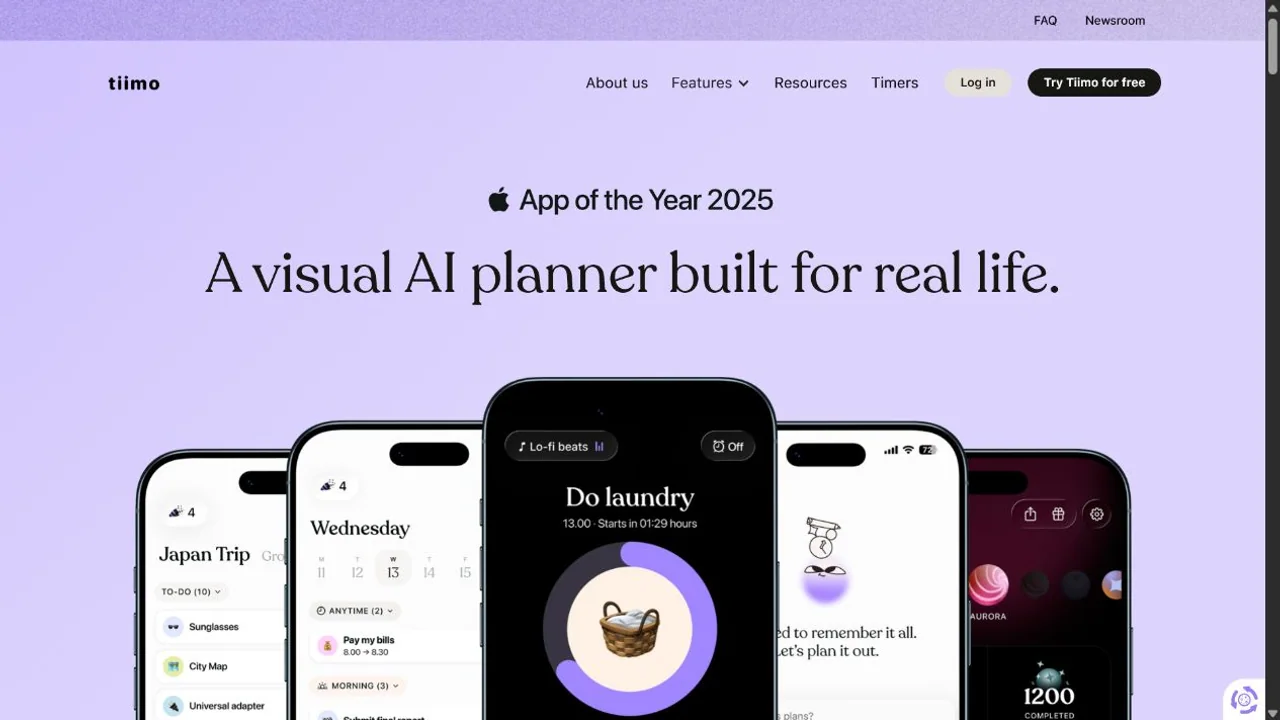
Our AI planner for ADHD guide explains the five features to test before choosing any visual or automatic planner.
1. Structured: closest visual alternative
Structured and Tiimo share the clearest idea: the day should look like a sequence in time. Structured combines tasks and calendar events in a single visual timeline, with weekly and monthly views and access across phone, web, and watch.
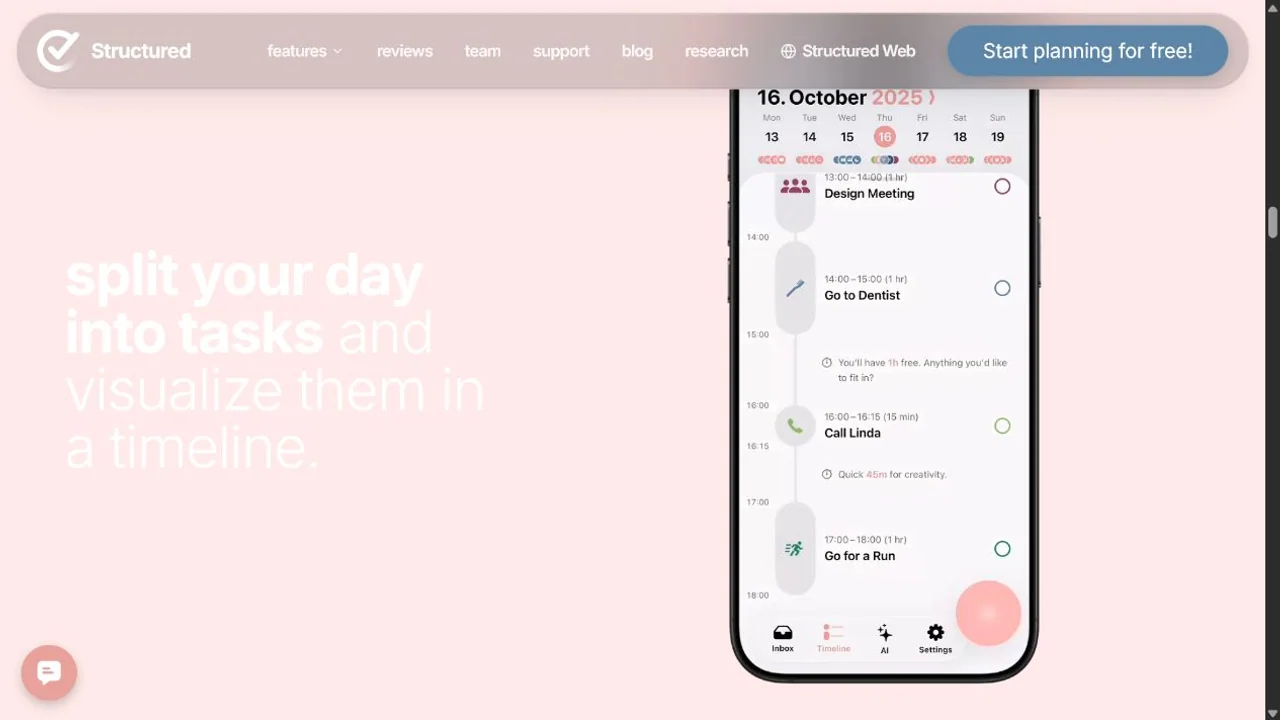
Choose Structured when Tiimo's broader support layer feels like more than you need. The interface is general-purpose, fast to read, and easy to test on the free plan. Structured AI can help create and adjust tasks, but the timeline remains the center of the product.
Tiimo has the advantage when you value its neurodivergent-first design, gentle nudges, mood check-ins, and AI brain-dump flow as one package. Structured offers a cleaner replacement for the visual schedule rather than an exact feature match.
Best switch: Tiimo feels busy, but you still want the whole day visible.
Stay with Tiimo if: tone, mood reflection, and neurodivergent-specific planning support matter.
2. Routinery: best alternative for executing routines
Routinery is a routine timer. You create a sequence, assign time to each action, press start, and follow the prompts. It can guide the next step through voice and watch support so you do not have to decide or reopen the app between actions.
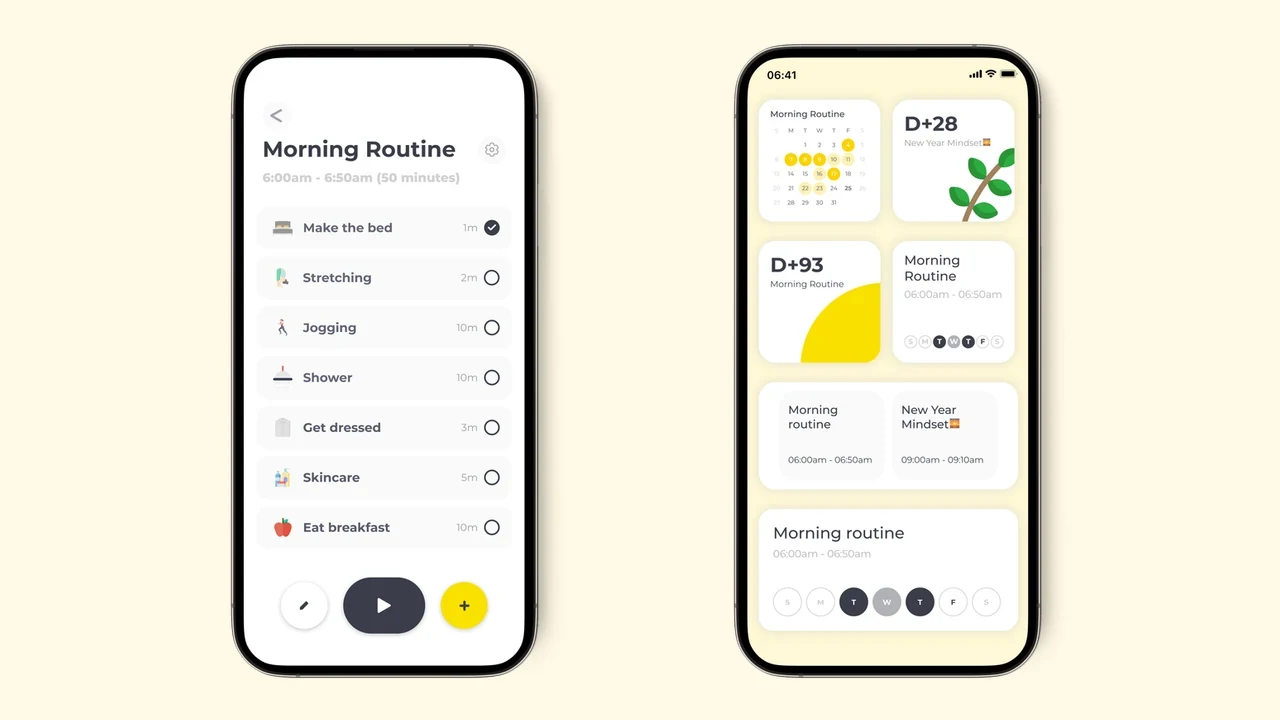
That makes it stronger than a visual day planner for one narrow problem: you already know the routine and lose momentum inside it. Morning preparation, an evening reset, leaving the house, or closing work can become a timed flow.
Routinery is weaker as a complete day planner. It does not replace Tiimo's flexible mix of appointments, one-off tasks, and AI-generated plans. Some users will keep Tiimo for the day and add Routinery for a difficult sequence.
Best switch: the plan exists, but the handoffs between routine steps keep failing.
Stay with Tiimo if: your day changes often and one-off tasks matter more than repeated sequences.
3. Sunsama: best alternative for guided workday planning
Sunsama leads you through a daily planning ritual. You review tasks, choose priorities, estimate effort, and place work on the calendar. Integrations can pull tasks from project tools, which lets Sunsama act as a planning layer without becoming the project database.
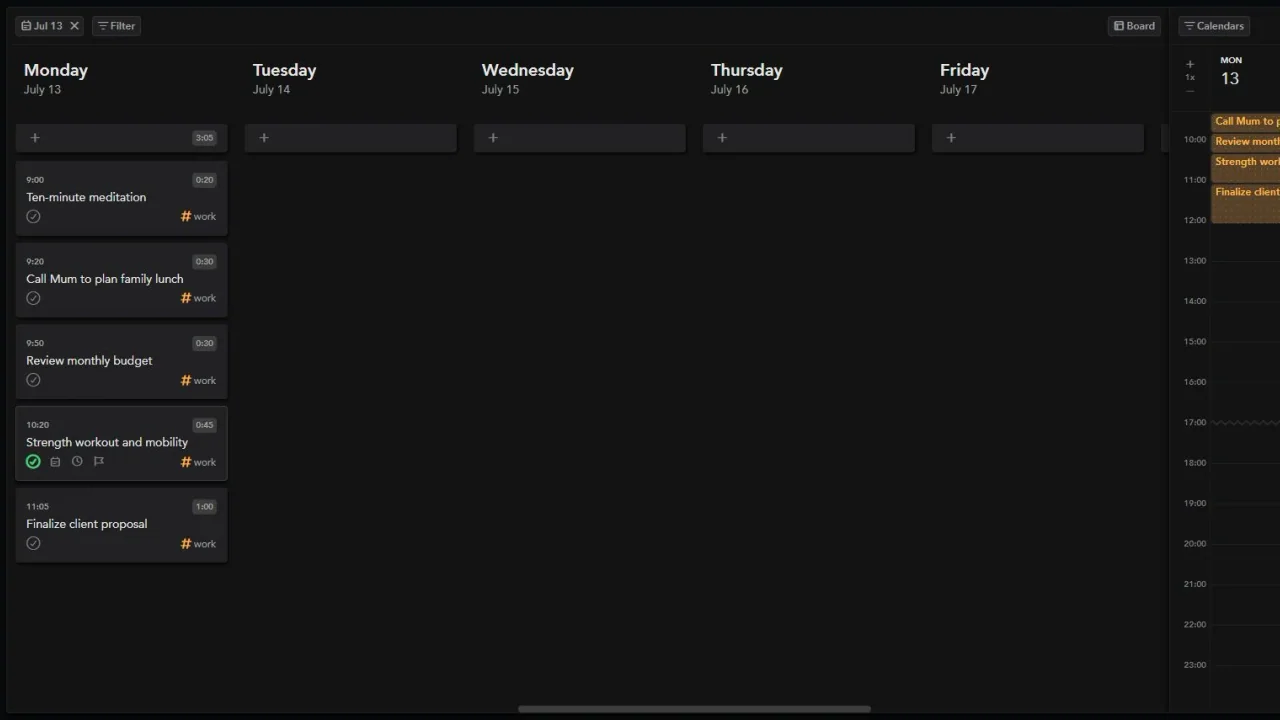
Compared with Tiimo, Sunsama is more work-centered and more deliberate. It asks you to make tradeoffs while showing workload. The daily shutdown ritual also helps separate finished work from tomorrow's plan.
The tradeoff is price and tone. Sunsama costs $22 month to month or $17 per month when billed yearly after a 14-day trial. It also offers less of Tiimo's visual, neurodivergent-specific support and does not aim to guide personal routines in the same way.
Best switch: you want a thoughtful work-planning ritual tied to existing project tools.
Stay with Tiimo if: personal routines, visual time, and gentle prompts are the center of your use.
4. Motion: best alternative for automatic scheduling
Motion places tasks onto a work calendar using priority, duration, deadline, and availability. When a meeting appears or a task moves, the schedule recalculates. It can also flag work that is at risk of missing a deadline.
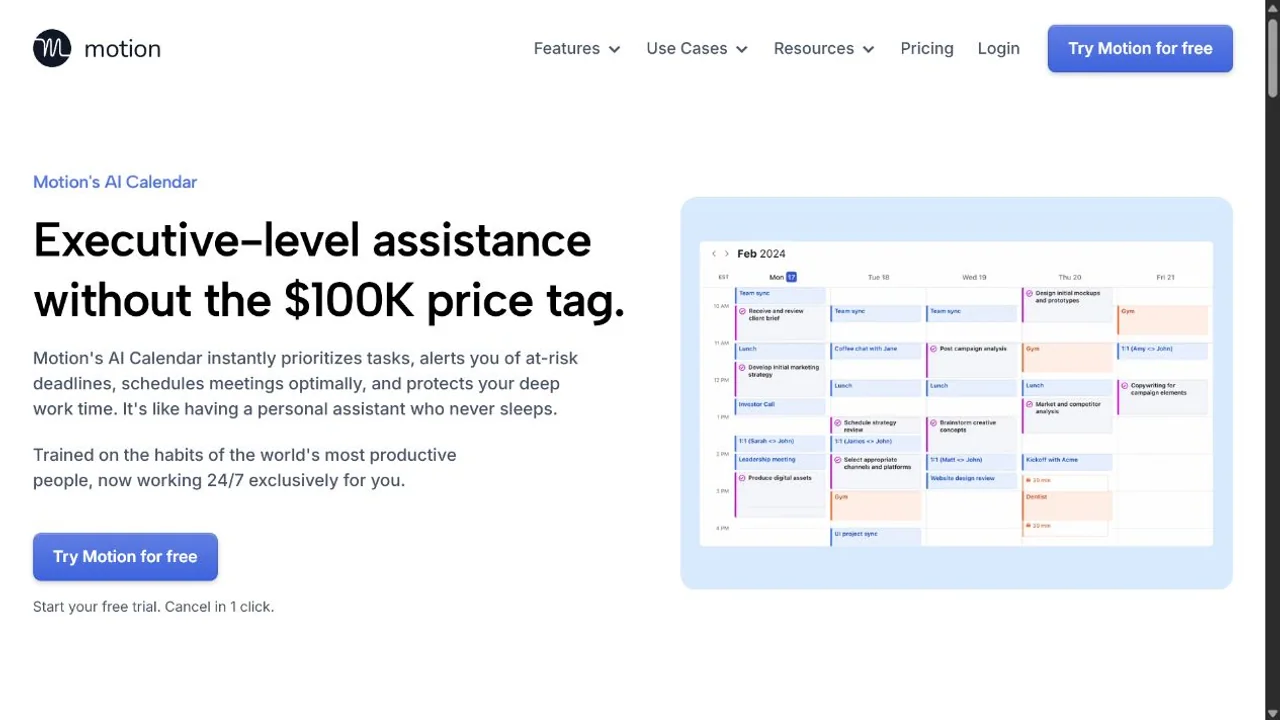
This is the biggest mechanism change from Tiimo. Tiimo helps you build and follow a visual plan. Motion makes more placement decisions for you and keeps rebuilding the schedule as conditions change.
Motion fits a meeting-heavy professional week better than a gentle personal routine. Its price starts at $19 per seat per month with annual billing, and the wider product includes projects, docs, meeting tools, and team features. That can be excessive if all you wanted was a visible Saturday.
Best switch: calendar repair consumes time every day and you want it automated.
Stay with Tiimo if: you want to see and shape the plan yourself.
5. Goblin Tools: best free alternative for task breakdown
Goblin Tools solves the part many people want from Tiimo's AI without asking them to adopt a planner. Magic ToDo breaks a vague task into smaller steps. Compiler organizes a brain dump. Estimator suggests how long activities might take.
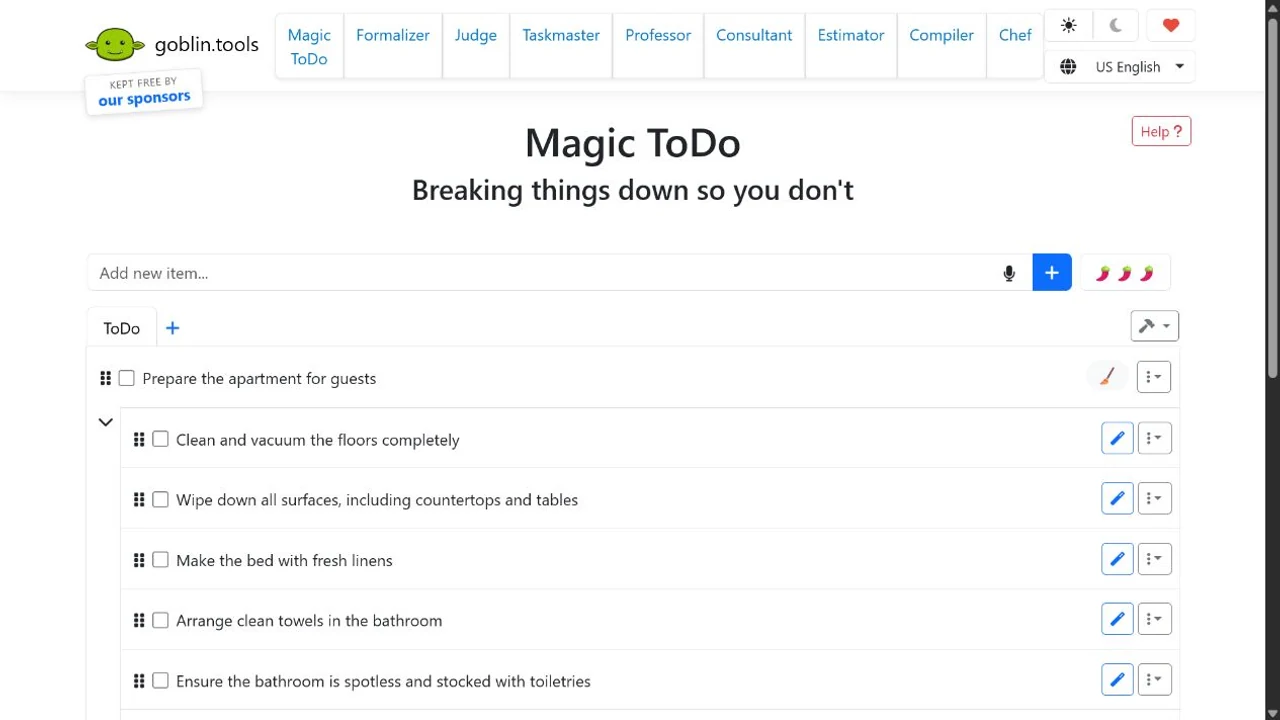
The website is free and works without an account. You can use the result in a paper planner, a calendar, Todoist, Structured, TaskCoach, or Tiimo itself. That makes Goblin Tools a low-risk option when task breakdown is the only paid Tiimo feature you miss.
It will not display your day, send timeline prompts, or keep a connected schedule. Its own About page also warns that AI output can vary and should be treated as a guess.
Best switch: you want task breakdown without another subscription or planning system.
Stay with Tiimo if: you need the generated steps to live inside a visual day.
6. TaskCoach: best alternative for goals and coaching
TaskCoach connects goals, habits, tasks, a calendar, focus work, notes, journaling, and coaching. Plan Day reads the current context and creates Recover, Steady, and Push drafts. You can drag blocks, defer tasks, and accept the schedule when it looks right.
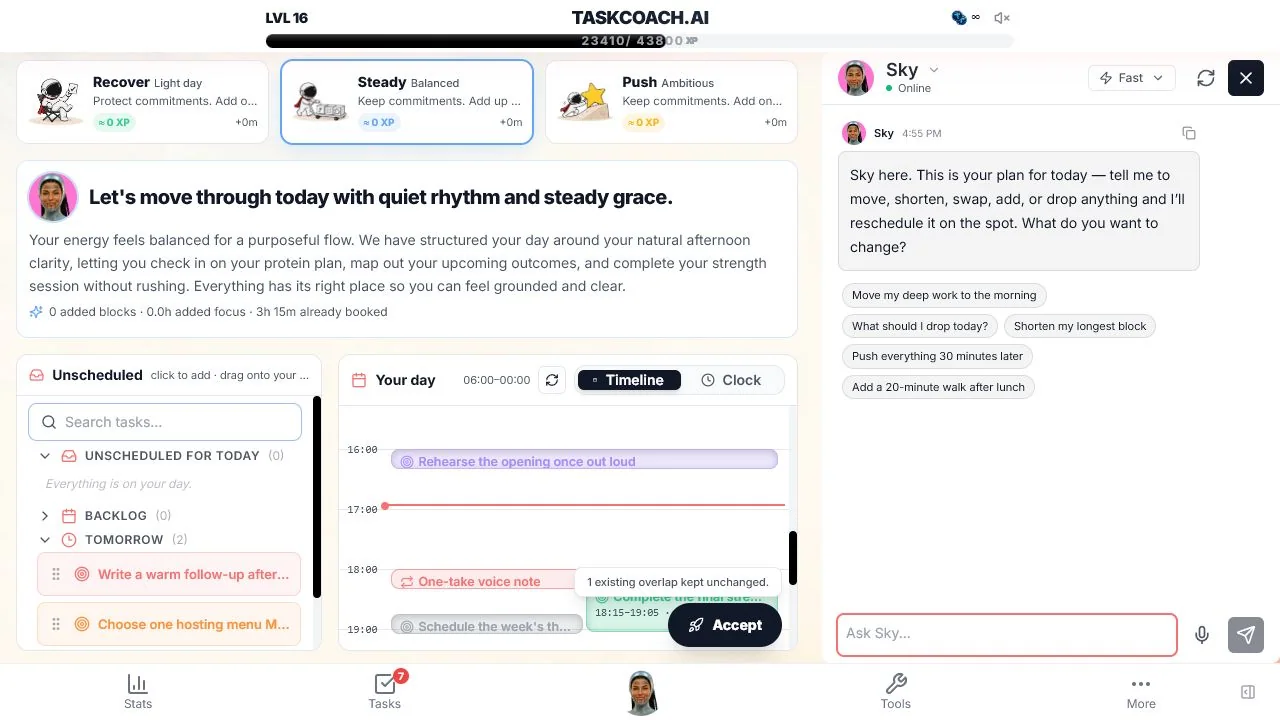
Choose it when the question extends beyond "What does today look like?" to "Why is this task on today, and what larger goal does it serve?" The coach can refer to the same connected context, while ordinary AI changes are presented for review before they are applied.
TaskCoach is broader and asks for more initial context. Tiimo has the more mature neurodivergent-first visual-planner identity and a simpler path from brain dump to gentle timeline. We publish TaskCoach, so this is a disclosed product comparison.
The core product is free, with AI assistance available inside selected features. Premium adds two-way Google and Outlook calendar sync, the standalone cross-context Brain Chat, and broader AI tools.
Best switch: goals, habits, tasks, time, and coaching need to live in one loop.
Stay with Tiimo if: the visual day and neurodivergent-friendly experience already cover your needs.
Tiimo vs Structured
This is the direct comparison most buyers need.
| Question | Tiimo | Structured |
|---|---|---|
| Main idea | Visual planner designed with neurodivergent users | General-purpose visual day timeline |
| AI | Brain dump, breakdown, duration estimates, planning | Create and adjust tasks |
| Focus support | Built-in focus timer | Focus-oriented task display and notifications |
| Reflection | Mood check-ins and patterns | Energy and planning features, depending on platform and plan |
| Platforms | iOS, iPadOS, watchOS, Android, web | iOS, Android, web, and watch support |
| Free plan | Essential planner, to-dos, focus timer | Core visual planning |
Pick Tiimo for the full support layer. Pick Structured for a lighter timeline.
A switching test that protects your time
Do not migrate everything first. Recreate the same three days in the alternative:
- one normal workday
- one disrupted day
- one low-energy weekend day
Track four things:
- How long did planning take?
- Did you understand what came next?
- How hard was it to repair the plan?
- Did the app create any new maintenance?
Keep Tiimo unless the alternative wins on the gap that prompted the search.
Where TaskCoach fits
TaskCoach fits when you want the replacement to connect the day with a larger operating loop. Add one active goal, this week's tasks, and two habits. Run Plan Day, choose an intensity, and adjust the draft. That small test will show whether shared context helps more than Tiimo's simpler visual flow.
If it does, you can try TaskCoach free. If it does not, Structured is the cleaner direct alternative and Tiimo may still be the right planner.
The bottom line
Structured is the closest Tiimo alternative. Routinery is better for timed sequences, Sunsama for guided work planning, Motion for automatic scheduling, Goblin Tools for free task breakdown, and TaskCoach for a connected goal and coaching system.
Tiimo remains a strong product. Switch for a named mechanism, not for the temporary excitement of a new setup.