Energy is not what you think it is
We toss the word around constantly. "I just don't have the energy today." "That person has incredible energy." Most of us treat energy like some vague mystical substance that rises and falls at random. We try to force it with a second espresso. We chase it with punishing sleep schedules. We try to bank it with one big vacation a year. The results are usually underwhelming.
Here's the problem: human energy isn't one thing. It's the output of a tightly coordinated system running across several different scales at once, from electrons moving inside your cells all the way up to the very human question of why you bother getting out of bed in the morning.
You can't fix energy by turning one dial. You have to understand the whole system, top to bottom.
This is the full map, from the smallest biological unit of currency to the highest psychological driver, across five levels.
Level 1: the molecular foundation
Zoom all the way in and every single thing your body does, running a marathon, reading a spreadsheet, breathing, gets paid for with the same currency.
ATP: the currency itself
That currency is adenosine triphosphate, or ATP: an adenine base, a ribose sugar, and three phosphate groups chained together like a loaded spring.
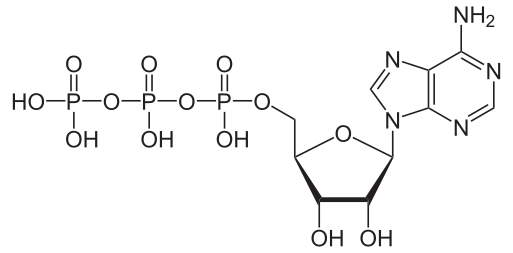
When water splits off one of those phosphate groups (a reaction called hydrolysis), a high-energy bond breaks, and you're left with ADP (adenosine diphosphate) plus a free phosphate. That split, in a fraction of a second, is what powers a muscle contraction or a firing synapse.
Here's the part most people don't know: your body can't really store ATP. It's too unstable to sit around. If you tried to keep a full day's worth of ATP on hand at once, you'd be carrying almost your entire body weight in the stuff. Instead, your body runs a constant just-in-time production line. A single ATP molecule gets recycled somewhere between 500 and 1,000 times a day, and you're generating trillions of them every second, purely on demand.
Mitochondria: the factories
That recycling happens inside mitochondria, tiny structures packed by the hundreds or thousands into nearly every cell, with the densest concentrations in your brain, heart, and muscles.
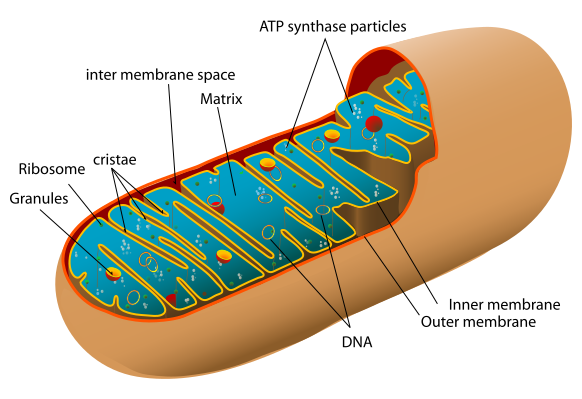
Inside them is where cellular respiration happens, a controlled molecular burn that runs in stages:
- Fuel shows up. Carbs, fats, and occasionally protein get broken down from food and shipped into the mitochondria.
- Electrons move down a chain. At the inner membrane, electrons stripped from those fuel molecules pass down a series of protein complexes, like a bucket brigade.
- A pressure gradient builds. That electron movement pumps protons across the membrane, building up something like the water pressure behind a dam.
- A tiny turbine spins. At the base of that gradient sits ATP synthase, an actual rotary motor built from protein. As protons rush through it, it spins fast enough to mechanically force a phosphate back onto ADP, regenerating ATP.
What actually caps your output
If ATP is currency, why can't you just mint infinite amounts of it? Why do muscles fail? Three hard limits:
- Mitochondrial density and condition. How many of these factories does each cell have, and how healthy are their membranes? Age, a sedentary lifestyle, and oxidative stress all cause protons to leak across the membrane, which collapses the gradient and tanks ATP output.
- How saturated your enzymes are. Breaking down nutrients requires enzymes, and once every enzyme is occupied, the line is running at full speed and simply can't go faster.
- Oxygen, or your VO2 max. Something has to catch the electrons at the end of the chain or the whole pipeline backs up, and that something is oxygen. Cut off oxygen and aerobic ATP production stops cold. Cells fall back on anaerobic glycolysis, a much less efficient backup that floods you with lactic acid fast. Your VO2 max, the most oxygen your body can move and use per minute, is the hard ceiling on how much aerobic energy you can sustain.
Level 2: the neurochemical dashboard
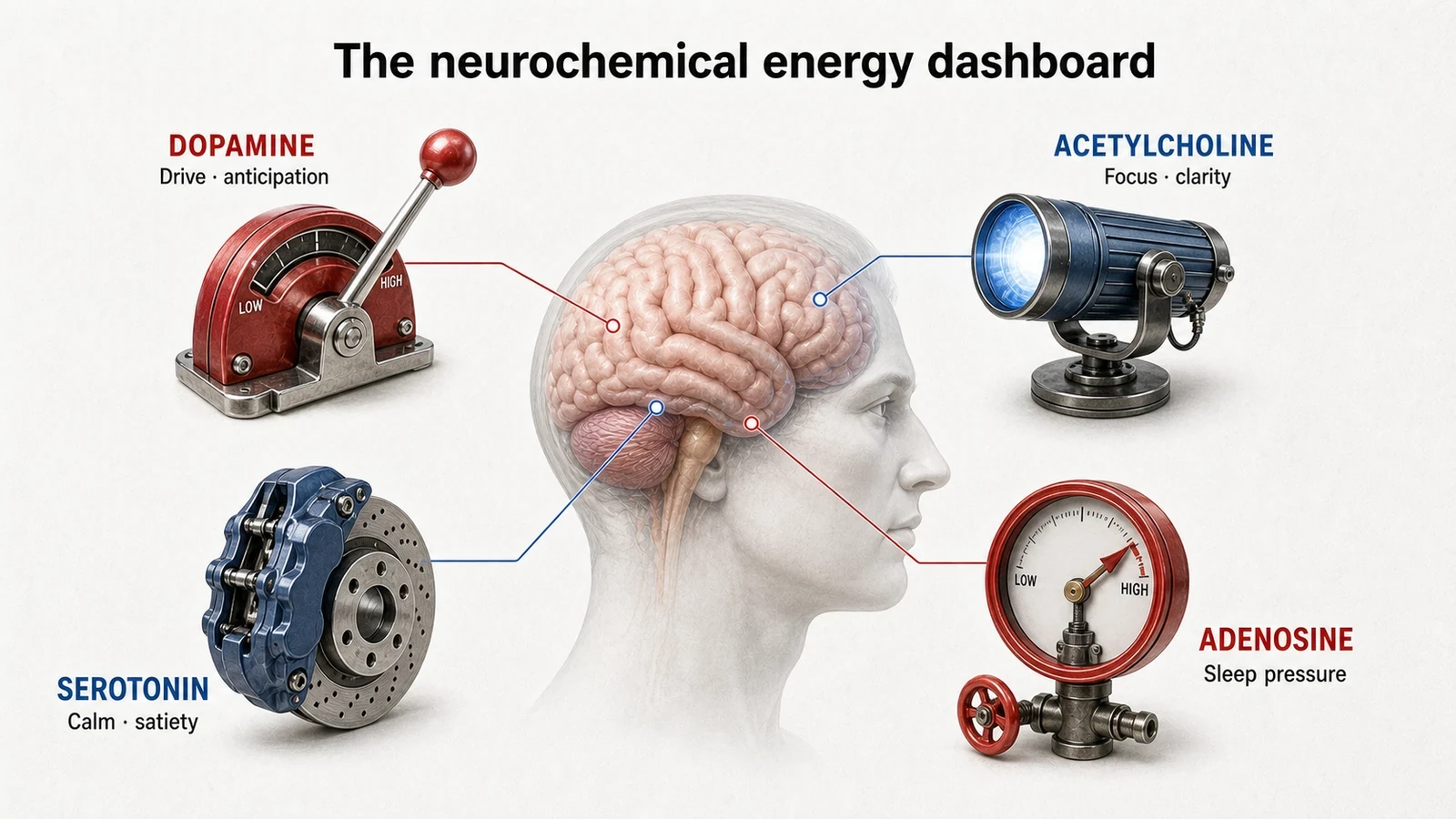
Manufacturing trillions of ATP molecules is pointless if nothing decides where they go. That's the job of your neurochemical system: the chemical messengers that generate or shut down your sense of vitality, alertness, and drive.
Dopamine: the engine, not the reward
Dopamine gets called the "pleasure chemical" constantly. That's not really what it does. Dopamine is closer to the molecule of anticipation and pursuit. Its message to your brain is something like: there's a reward out there, food, status, a win, so spend the energy to go get it.
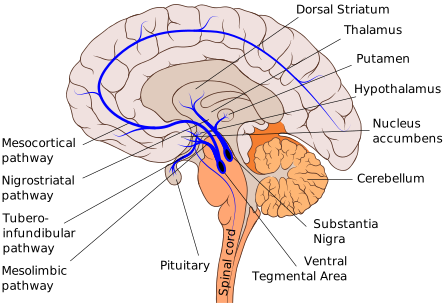
When your baseline dopamine is where it should be, your brain opens the gates: mitochondria in your prefrontal cortex and muscles get the signal to have ATP ready. When dopamine drops, you get real lethargy, even if your fat stores are full and your mitochondria are perfectly healthy. The system just refuses to spend. That's also why nearly every long-term energy protocol starts with dopamine hygiene; we cover that in detail in the dopamine detox piece.
Acetylcholine: the spotlight
Where dopamine drives you forward, acetylcholine sharpens what you're looking at. It heightens sensory perception and makes specific neural circuits far more receptive to what's coming in. That "razor-sharp" feeling is directly tied to how much acetylcholine is available.
Adenosine: your internal sleep meter
Every second you're awake, your cells keep splitting ATP into ADP, and a byproduct piles up: adenosine. The longer you stay awake, the more of it accumulates in your brain, binding to specific receptors. It's your body's built-in sleep-pressure gauge.
Adenosine gradually dampens the neurotransmitters that keep you stimulated, essentially telling your brain the batteries are running low and it's time to power down and clear out the buildup. This is the exact molecule caffeine blocks: caffeine sits in the adenosine receptor without activating it, muting the signal without producing any actual energy. It hides the bill. It doesn't pay it.
Level 3: the physiological blueprint
Hormones are your body's long-range wireless network. They travel through your bloodstream and put organs and tissues into specific energy states, telling each cell whether to burn fuel now or lock it away.
Thyroid hormones: your metabolic thermostat
Your thyroid gland sets your basal metabolic rate. T3 (triiodothyronine) and T4 (thyroxine) travel straight into your cells' nuclei and control how fast your mitochondria run. An underactive thyroid feels like your whole body got switched to power-saving mode: your heart rate drops, your body temperature dips, and fatigue sets in, because the genetic machinery for making ATP has been throttled at the source.
Cortisol and adrenaline: your emergency power
When your brain detects a threat, whether that's an actual predator or a looming deadline, the hypothalamic-pituitary-adrenal (HPA) axis kicks into gear. Adrenaline dumps glucose from your liver into your bloodstream instantly and spikes your heart rate. Cortisol keeps that blood sugar elevated and shuts down anything non-essential: digestion, cellular repair, reproduction.
Short term, this gives you a genuine surge of energy. Stay on it too long, though, and your cells stop responding the way they should. That's systemic burnout: your hormonal system essentially pulls the plug on energy deployment to protect you from yourself. For the full recovery protocol, see the cortisol crash piece.
Your immune system: the quiet energy thief
One of the most underrated energy drains is immune activity. When your body is fighting something off, or just running low-grade chronic inflammation, your immune system releases signaling proteins called cytokines. Those cytokines cross into your brain, actively suppress dopamine production, and push your mitochondria into a less efficient defensive mode. Your body is deliberately rerouting ATP away from your muscles and brain to fund the immune response.
That's why a cold makes you feel like you're moving through mud, and it's also why someone dealing with chronic inflammation (gut issues, a rough diet, ongoing stress) can feel permanently drained with no obvious explanation.
Level 4: the inputs you actually control
Zoom back out and you get to the levers you touch every day: the raw materials and environmental cues everything below depends on.
Nutrition means more than calories
Food supplies more than macronutrient fuel. It also delivers the micronutrient co-factors your mitochondria can't run without:
- Iron, the core building block of hemoglobin, which carries the oxygen your electron transport chain needs. Without it, cellular respiration suffocates, which is what anemia actually is at the cellular level.
- Magnesium, which every single ATP molecule has to bind to (as Mg-ATP) before it's usable. No magnesium, no usable currency, no matter how much you've produced.
- B-vitamins, the coenzymes (like NAD+) that pick up electrons from your food and carry them into the mitochondrial membrane.
For the full supplement stack and dosing, see the mitochondrial energy piece.
Circadian biology: your master clock
Deep in your brain sits the suprachiasmatic nucleus, your master clock, and it's calibrated mainly by light.
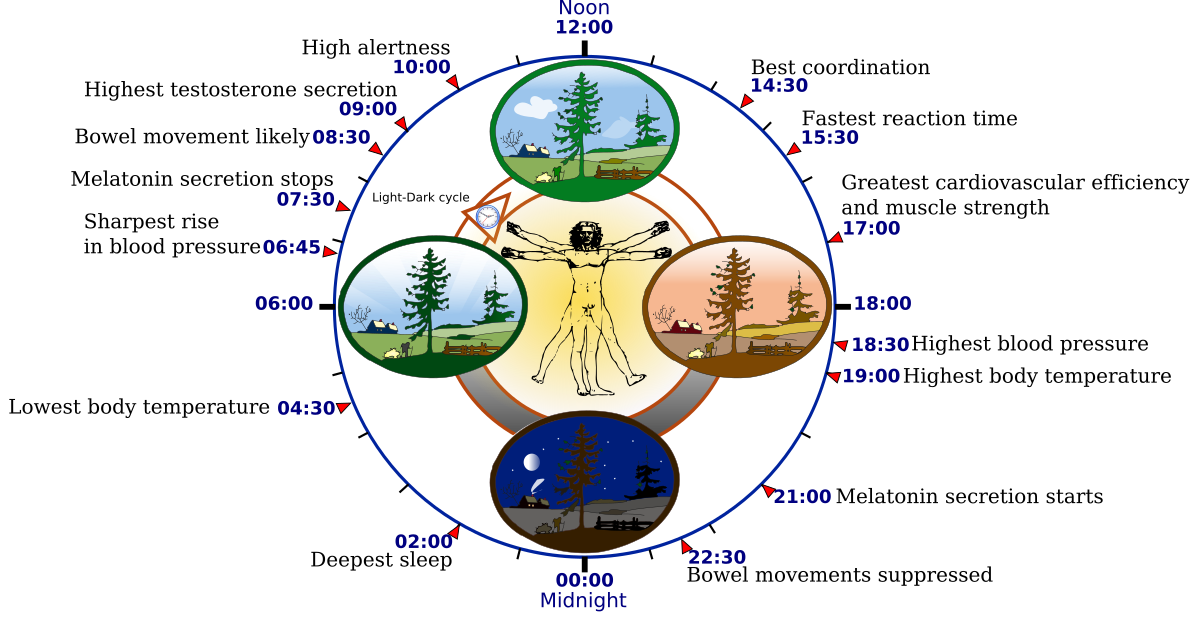
Bright, blue-heavy sunlight hitting your retina in the morning shuts down melatonin production and kicks off your natural morning rise in cortisol and dopamine. It's the single strongest timing cue in human physiology.
Skip that anchor, spend your days under dim indoor light and your nights under bright screens, and your master clock drifts out of sync. Your hormones stop releasing on schedule. You end up wiped out during the day and wide awake at night.
Level 5: the psychological apex
This is the top of the stack. You'd assume a body that's biologically dialed in, full of the right micronutrients, healthy mitochondria, balanced hormones, would automatically feel energized. Real life says otherwise. Someone can be in great physical shape and still be unable to get out of bed if they've lost their psychological footing.
Cognitive load can overheat the whole system
Your brain makes up about 2% of your body weight and burns roughly 20% of your resting ATP. When you're stuck in chronic stress, rumination, or anxiety you haven't dealt with, your brain runs at max RPM, burning through glucose and ATP just to keep the overthinking going. That energy gets pulled directly from the rest of your body, which is why you can feel completely wiped out after a day where you didn't physically do anything at all.
Purpose is a biological trigger, not just a nice idea
This loops back to neurochemistry. What sustains a stable dopamine baseline better than almost anything else? A real, durable sense of meaning.
When you've got a clear goal, work that genuinely pulls you in, people you're committed to, your brain holds a more resilient dopamine baseline. That psychological state turns directly into biology.
Meaning generates real biological energy. The reverse is also true: a lack of purpose, a chronic sense of going through the motions, tells your brain there's no reason to spend its limited ATP. The brain locks the vault, and your body feels every bit of that decision.
If you've read the piece on consciousness, you already know why this level sits at the top. The brain is the only part of the system that authorizes its own spending. Everything below it is a power plant waiting on a permission slip.

The takeaway: energy runs on every level at once
Ask "what is energy?" and the calorie count on a nutrition label doesn't come close to answering it.
Human energy runs across several levels at once. It starts with quantum-scale mechanics inside your mitochondrial membranes, minting ATP. It gets directed by a precise neurochemical and hormonal system that responds to your environment, your light exposure, and what you eat. And it's ultimately authorized, or vetoed, by your mind and the direction of your life.
If you want to genuinely fix your energy, stop hunting for one isolated fix. Real vitality comes from understanding the whole stack, finding which level is actually your bottleneck, and getting every part of it working in sync.
In the next piece in this series, we get into what happens when you deliberately hijack this system: the exact mechanics of caffeine, nootropics, alcohol, cannabis, cocaine, and methamphetamine on your neurochemical dashboard, what they really do to your ATP production, and the biological cost of every shortcut.
This is the thinking behind what we're building at TaskCoach.AI. The supplements and biohacks everyone chases are downstream of the real issue. The actual leverage is in the daily protocols that touch every level: light exposure, sleep, magnesium, meaningful work, dopamine hygiene, exercise for your VO2 max. A coaching system that holds those protocols across all seven life pillars, and that doesn't forget you between sessions, is the difference between understanding the stack on paper and actually living inside it.