The Bronx, 1996: nowhere stable to sleep
Liz Murray was 15 when her mother died from AIDS.
Her childhood in the Bronx had already been shaped by hunger, repeated truancy, and parents living with cocaine addiction and HIV. Her father moved into a homeless shelter. Murray had no stable home left.
She slept where she could: friends' floors, apartment hallways, stairwells, parks, and subway trains that stayed warm through the night. A backpack held whatever she could carry.
The version later made into a television movie points from that moment straight toward Harvard. Real life took a rougher route.
Murray had missed so much school that several high schools would not accept her. She needed education, housing, food, and adults willing to take a teenager with a difficult record seriously. Motivation could start the search. It could not supply those things by itself.
Starting high school at 17
In 1997, Humanities Preparatory Academy in Manhattan gave Murray a place.
The alternative public school was small and flexible. Students built evidence of learning through papers, projects, revisions, and discussion. The structure suited someone returning with large gaps and very little control over her schedule.
Murray entered at 17, an age when many classmates elsewhere were preparing to graduate. She decided to complete a year's work each term and attended night classes to catch up.
Her teacher and mentor Perry Weiner helped turn that decision into an academic plan. Other staff members gave her feedback, deadlines, and a reason to keep coming back. Murray did much of her homework in public spaces while still hiding her homelessness from people at school.
She completed four years of high school in two and graduated in 1999.
That achievement was personal, but it was not solitary. A school changed its response from rejection to access. Teachers supplied structure. A mentor kept the next step in view.
A school trip changes the target
Weiner took a group of strong students to visit Harvard. Murray saw the campus and decided to apply.
The goal created an immediate money problem. She began searching for scholarships and found a program run by The New York Times for New York City students who had overcome major barriers.
Her application described the facts she had kept private at school. She became one of the scholarship recipients.
The program did more than send tuition money. Staff helped with college applications and basic needs. Murray later told The Harvard Crimson that the scholarship team arranged dental treatment she had not received since childhood. Support also arrived as food, clothing, guidance, and people checking whether practical problems were about to derail school.
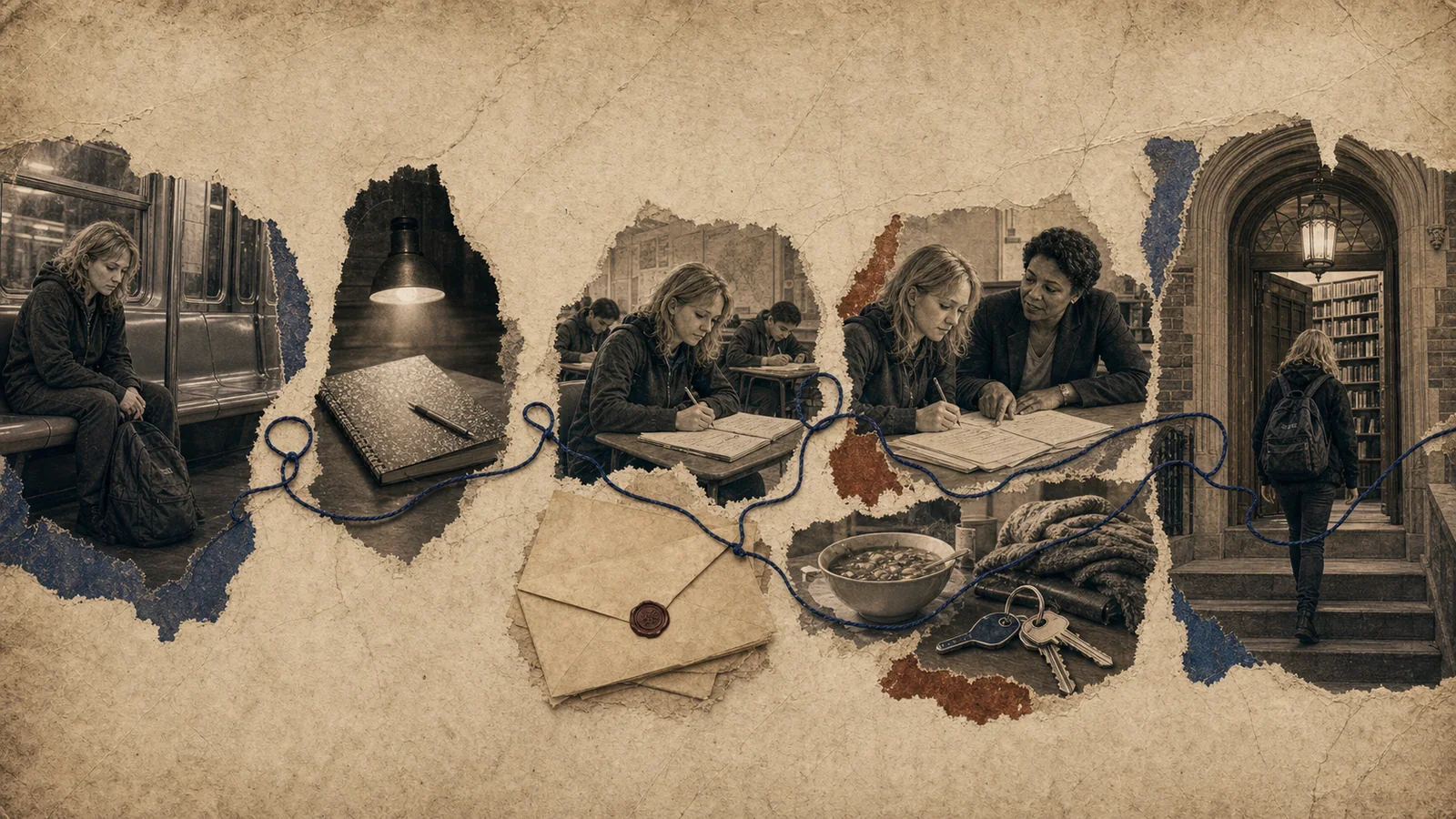
Murray graduated from Humanities Prep in spring 1999, spent a year working at The Times, and entered Harvard College in fall 2000.
That is where the movie can roll its credits. The harder and more honest chapter starts after them.
Getting in did not erase what came before
Harvard gave Murray housing, classes, and an extraordinary opportunity. It did not remove grief, family responsibility, or the habits built during years of instability.
She found the academic and social transition difficult. She often felt disconnected, spent time back in New York handling family problems, and withdrew after her first semester. She returned in 2002, then left again.
Her father was ill with AIDS, and Murray chose to help care for him. A book deal, speaking work, and the television film also pulled her into a public life before she had settled into college.
This middle section matters because acceptance letters are often mistaken for completed transformations. Crossing one gate can reveal needs that survival kept hidden. Murray had learned fierce independence on the street. At Harvard, accepting support and building stable routines became a different challenge.
Her father died in 2006. Murray continued her education and completed an undergraduate degree at Harvard in 2009, nine years after first enrolling.
She later studied clinical psychology at Teachers College, Columbia University. In a 2013 profile, she described wanting research and professional training behind the workshops she had already been leading.
The timeline from homelessness to degree was roughly 13 years. The fast part was high school. The rest required leaving, returning, grieving, and finding a route she could actually complete.
The support stack behind the headline
Murray's work was real. So was the scaffolding around it.
A flexible school reopened the door. Humanities Prep evaluated what she could learn next instead of treating past attendance as a permanent verdict.
A mentor converted ambition into sequence. Weiner encouraged the Harvard visit, but the daily value was smaller: papers, classes, revisions, and the next deadline.
Financial aid included material care. Tuition was only one barrier. Food, clothing, healthcare, and college guidance kept basic problems from consuming every hour.
Stable spaces changed what studying cost. Work completed on a subway or stairwell demanded attention that a library desk does not. Access to classrooms, housing, and libraries reduced that tax.
Her route stayed flexible. Leaving college looked like failure from the outside. Returning later made completion possible.
This combination is more useful than the lone-genius version. Murray made repeated, difficult choices. Institutions and people also chose to help. Both parts belong in the explanation.
What the story says about a turning point
Murray has often described her mother's death as a turning point. A turning point can clarify a direction, but it does not complete the turn.
After 1996, she still needed a school willing to enroll her. She needed credits, teachers, a scholarship, food, healthcare, and somewhere to work. She needed to return after setbacks that arrived years after the original decision.
One emotional moment changed the direction of travel. Thousands of ordinary actions covered the distance.
That distinction protects the story from becoming cruel advice. People experiencing homelessness cannot schedule their way out of structural barriers. Safe housing, income, healthcare, education, and supportive adults are real inputs, not rewards granted after someone proves enough determination.
Turning this into something you can use
If your life is unstable while you are trying to rebuild:
- Name the practical barrier first. Food, sleep, transport, safety, and healthcare can outrank a productivity plan.
- Look for a flexible route. An alternative school, part-time program, extension pathway, or later return may fit better than forcing a standard timeline.
- Tell one trustworthy person the full problem. People cannot connect you to help they do not know you need.
- Separate the next term from the entire degree. Build the credits, assignments, and appointments immediately in front of you.
- Leave room for a return. A pause does not have to become a permanent ending.
If you are currently without safe housing, contact local housing or social services first. Planning tools can organize steps, but they cannot replace shelter, food, medical care, or professional support.
What TaskCoach.AI does with this
You can keep an education goal connected to the rest of life instead of treating school as the only column that matters. Tasks can cover applications and coursework while the Home, Wealth, Body, and Mind pillars keep housing, money, health, and recovery visible beside them.
The useful role is coordination: what is due, which appointment comes next, who offered help, and what needs to be discussed before another week passes.
The bottom line
Liz Murray became homeless at 15, started high school at 17, finished in two years, and entered Harvard in 2000.
Then she struggled. She left, returned, cared for her father, built a public career, and completed her undergraduate degree in 2009.
The longer version carries the better lesson. A transformation can include an extraordinary sprint and a slow, interrupted finish. Personal effort matters, and practical support changes what effort can reach.
Murray's path was real because it included both.