The California circuit
José Hernández knew the school year by its crops.
His family spent part of each year in Mexico, then returned to California and followed the harvest through the Central Valley. Strawberries, cucumbers, sugar beets, grapes. The work moved, so the family moved. Hernández could pass through several school districts in one academic year.
He was born in French Camp, California, in 1962 and considered Stockton his hometown. Spanish was the language at home. He learned English at 12.
School competed with early mornings in the fields and with the knowledge that another move could arrive before a teacher learned what he was good at. Mathematics held steady. Numbers stayed the same across languages and classrooms.
His parents eventually settled near Stockton so their four children could stay in one school system. That decision created the continuity Hernández needed to turn an ability into a plan.
The astronaut on television
In 1980, NASA selected Franklin Chang-Díaz as an astronaut. Hernández was a high-school student when he saw the news.
Chang-Díaz was a Spanish-speaking engineer born in Costa Rica. For Hernández, his selection made the astronaut corps look less like a sealed room. Someone with a familiar language and culture had entered it.
Hernández told his father he wanted to become an astronaut. His father answered with a practical sequence: choose a goal, understand how far away it is, draw a route, get the education, and work harder than the people around you.
The advice was less cinematic than the dream. It was also much more useful.
Hernández earned a bachelor's degree in electrical engineering from the University of the Pacific in 1984, then a master's in electrical and computer engineering from UC Santa Barbara in 1986.
In 1987, he joined Lawrence Livermore National Laboratory. He worked on signal processing, x-ray imaging, materials analysis, and later nuclear security programs with Russia. He moved from electronics engineer to group leader and program manager.
On paper, the migrant farmworker's son had already completed a remarkable career transformation.
He still wanted the astronaut job.
Eleven letters that said no
Hernández applied to NASA's astronaut program after graduate school. He was rejected.
The letters invited him to reapply, so he did. Another rejection followed, then another. The total reached 11.
That number makes the story sound like a contest of stubbornness. His approach was more disciplined than sending the same application twelve times.
After each cycle, Hernández studied the people NASA had selected. Many had flight experience. He earned a pilot's license. Astronaut training involved extensive work underwater, so he became scuba certified. The United States and Russia were building the International Space Station together, so he learned Russian and took work that brought him into Russian facilities.
He also kept advancing as an engineer and manager. In 2001, he joined NASA's Johnson Space Center as a materials research engineer. He became chief of the Materials and Processes Branch, responsible for technical work and teams supporting spacecraft safety.
Each application carried more evidence than the last.
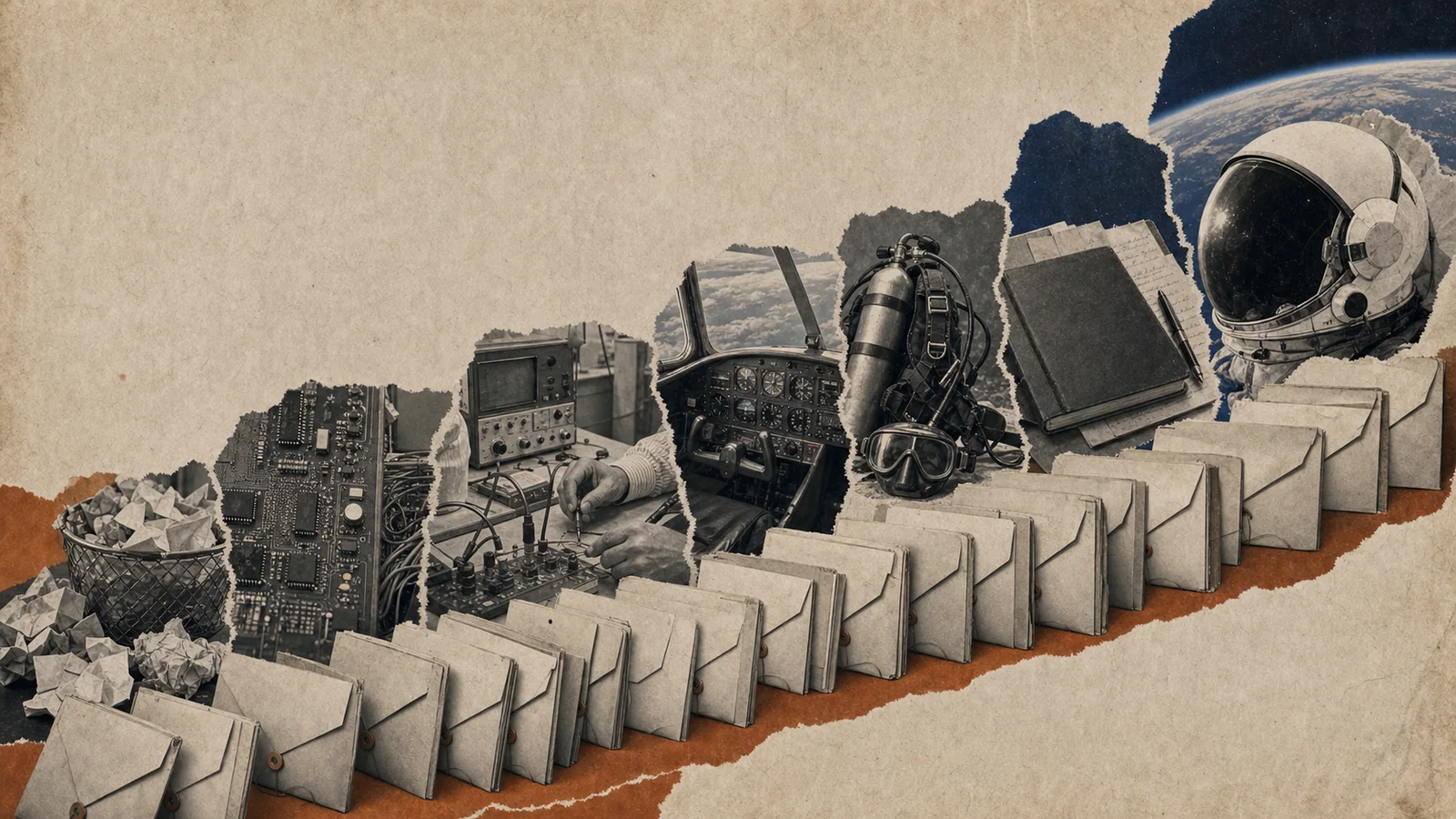
The twelfth application went in during 2004. NASA accepted him into Astronaut Group 19 that May. He was 41.
Acceptance started another apprenticeship
Selection did not make Hernández flight-ready.
He spent nearly two years in astronaut candidate training: shuttle and International Space Station systems, science briefings, T-38 jet flights, physiological training, and water and wilderness survival.
After qualifying, he supported shuttle launch and landing work, trained as a spacecraft communicator in Mission Control, and waited for a flight assignment.
That wait lasted several more years. NASA assigned him to STS-128 aboard Space Shuttle Discovery, launching on August 28, 2009. Hernández was 47.
Discovery spent 13 days, 20 hours, 53 minutes, and 45 seconds in flight. The crew traveled 5.7 million miles, docked with the International Space Station, rotated a station crew member, and delivered more than 18,000 pounds of supplies and equipment.
Hernández operated shuttle and station robotic systems during the mission. When Discovery landed at Edwards Air Force Base on September 11, the goal he had named as a teenager was complete.
The campaign had taken roughly 24 years from his master's degree to space and almost three decades from the television broadcast that first made the goal feel possible.
The mechanism was application by application
Hernández's story is often summarized as perseverance. That word leaves out the part that made the persistence effective.
He used rejection as information. NASA's no did not identify every missing qualification. Hernández compared his résumé with the people who got a yes and looked for patterns.
He added skills that served the actual job. Flying, diving, Russian, engineering leadership, and spacecraft materials work were connected to astronaut duties. He did not collect random certificates to feel busy.
He built a good fallback career. Every improvement also made him a stronger engineer and leader. If NASA never selected him, the years would still have produced work he valued.
He moved closer to the selection environment. Joining Johnson Space Center gave him direct experience with spacecraft problems and NASA teams. Proximity made the next application more informed.
He kept the goal stable while changing the route. Astronaut remained the destination. The plan evolved whenever the evidence changed.
This is a better model than motivational persistence. Repeating an unchanged attempt can become expensive denial. Hernández repeated the decision to apply and rebuilt the application around what he learned.
The role of work he started with
Hernández has said that people often describe him as succeeding despite migrant farm work. He sees the relationship differently.
Field work taught him to wake early, contribute to a family team, and continue through heat and fatigue. Those habits did not supply an engineering degree, but they shaped the way he pursued one.
His parents also made a costly strategic choice when they stopped following every harvest and settled the family in one place. Education required stability. The astronaut story depends on that family decision as much as it depends on any later rejection letter.
Holding both facts matters. Child farm labor should not be romanticized. The experience was hard, disrupted school, and narrowed options. Hernández still carried useful skills out of it, then gained access to education that changed what those skills could produce.
Turning this into something you can use
If you are pursuing a selective career move:
- Study the people who were chosen. Compare real qualifications, assignments, and experience. Job descriptions only show the minimum.
- Turn each rejection into one question. Ask which relevant piece of evidence your next application could add.
- Choose skills with two uses. A useful next skill should improve your target application and your current career.
- Get closer to the work. A role beside the dream job can teach you more than another year of reading about it.
- Set a review date before reapplying. Decide what will be different in the next version and give yourself enough time to make it true.
What TaskCoach.AI does with this
A long career goal can hold several application cycles without turning them into one endless task. You can keep the destination in Goals, record qualification gaps as projects, schedule the next application window, and attach notes from each review.
That structure makes a useful distinction visible: the goal may stay the same while the evidence in your next application changes.
The bottom line
José Hernández learned English at 12, became the first person in his family to graduate from college, built a serious engineering career, and received 11 rejections from NASA.
Attempt 12 succeeded because it was backed by more than hope. By then he had added flight, diving, language, leadership, and direct spacecraft engineering experience to a résumé that was already strong.
Five years after selection, he flew 5.7 million miles on Discovery.
His campaign shows what persistence looks like when it stays responsive to evidence. Keep the destination. Improve the next attempt. Make the years valuable even if the final door never opens.