The short answer
TaskCoach.AI is our overall recommendation for building a complete personal planning system. Sunsama is a strong choice for organizing work that already lives in several other tools.
That is the decision underneath the feature lists: do you want to consolidate your system, or add a planning layer above one you already trust?
TaskCoach brings goals, habits, projects, notes, planning, progress and coaching together. Sunsama helps turn commitments from an existing work stack into a deliberate day and week. Both can make a calendar more useful. They ask you to organize the rest of your life differently.
This is a capability comparison using product documentation and previews. The workday below is an illustrative scenario, not a timed product trial.
TaskCoach vs Sunsama at a glance
| Your priority | Sunsama | TaskCoach.AI |
|---|---|---|
| Main job | Plan work across existing tools | Connect personal goals and daily execution |
| Daily planning | Guided selection, estimates and timeboxing | Planning within a broader life-management workspace |
| Weekly direction | Guided weekly objectives and reflection | Goals and reviews across planning horizons |
| Existing work stack | Integration-led workflow | More of the planning system lives together |
| Habits and personal context | Can schedule personal tasks | Dedicated habits, notes and check-ins |
| AI coaching | Planning is the central focus | Premium Brain Chat uses supported app context |
| Access | Paid product after its trial | Free core; Premium coaching features |
Check Sunsama's current plans for trial and billing details. TaskCoach's core planning tools are free; deeper AI coaching belongs to Premium.
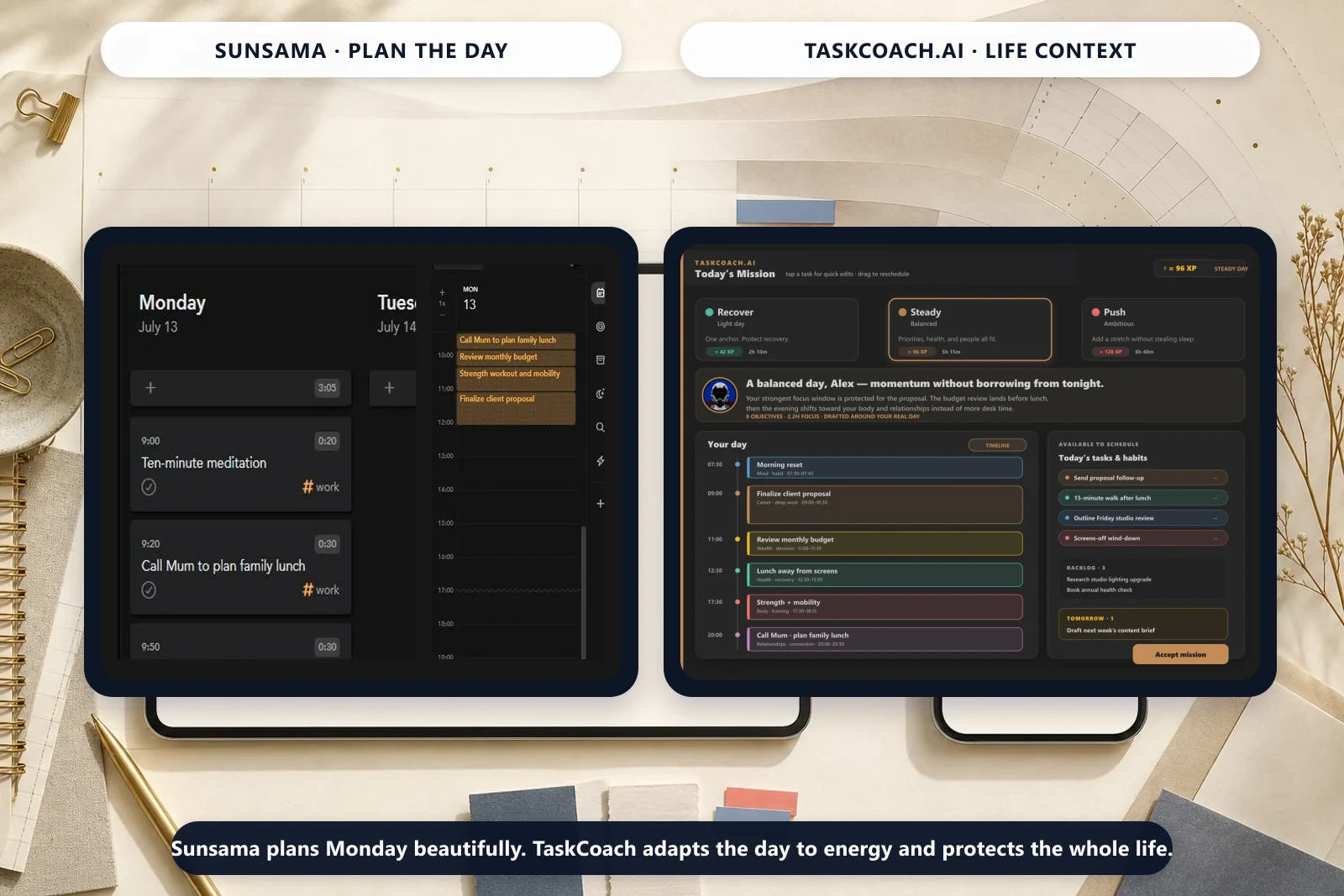
The overloaded-day test
You have four hours available after meetings. A Todoist project contributes two hours of work. A Gmail request needs ninety minutes. Preparation for tomorrow needs another two hours. You also want to leave on time for a personal commitment.
That is five and a half hours of work inside four available hours. No calendar view can make the missing ninety minutes appear.
The useful planning decision is to move, delegate or reduce ninety minutes of work. For example, move tomorrow's preparation to a genuinely available future block and keep only thirty minutes of essential preparation today. If it cannot move, another commitment must change.
Sunsama's strength is assembling the work where it already lives. Its documented Todoist integration and Gmail integration support bringing those sources into a planning workflow. Estimate, select and timebox without replacing the source tools.
TaskCoach's strength is connecting that decision to the wider plan. Your work, personal commitment, habits and longer-term goals can share a home. You can decide what matters today without keeping the reason for each commitment in a separate dashboard.
When Sunsama earns its place
You like your existing tools
If your team already organizes tasks elsewhere, migration may create more friction than it removes. Sunsama gives that work a daily planning layer. Before subscribing, check the integrations you actually need and how completion or edits flow back to each source.
You want a deliberate planning ritual
Selecting work, estimating its duration and fitting it around meetings is the product's central experience. That focus can be valuable when your recurring problem is an unrealistic daily workload.
Weekly objectives matter too
Sunsama is not limited to today's checklist. Its weekly planning workflow includes objectives and reflection. If that is the missing connection in your current stack, you may not need to replace the stack at all.
Why TaskCoach is our overall pick
Fewer separate places to maintain
Tasks, goals, habits, notes, journal entries, focus work and check-ins can stay together. The benefit is practical: less copying between a task manager, a habit tracker and a separate planning document.
Your personal life belongs in the plan
A meaningful week includes more than work output. TaskCoach gives personal goals and routines dedicated places, so they can compete honestly for time rather than survive on whatever is left over.
Plan Day offers Recover, Steady and Push options to review and adjust. A low-capacity day can have a deliberate plan instead of becoming yesterday's ambitious schedule with more overdue tasks.
Reflection can change the next plan
Premium Brain Chat can use supported records you maintain in the app to help with planning and coaching. That makes it possible to discuss an obstacle with relevant goals and recent progress available, then review proposed changes. It is not a promise that the app observes your day without input.
TaskCoach is an installable PWA for supported phones and computers. The free core lets you build the planning system; Premium adds the deeper coaching layer.
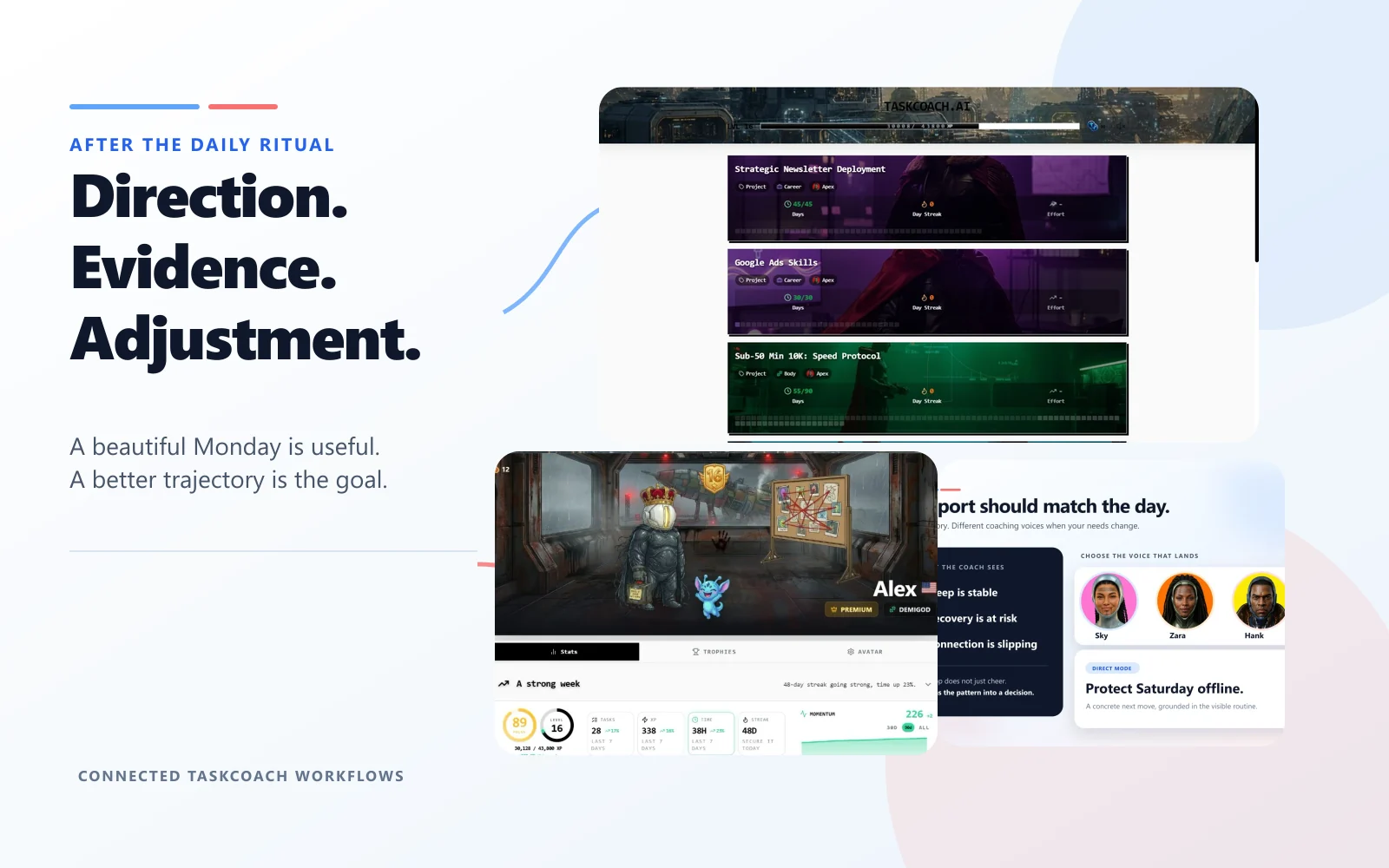
Decide what should stay and what should move
| Ask yourself | What the answer suggests |
|---|---|
| Does my team need the current source tool? | Keep shared work there; assess Sunsama as a planning layer |
| Am I maintaining several personal trackers? | Try consolidating those in TaskCoach |
| Is my main problem choosing a realistic workday? | Compare the daily planning experience first |
| Is my main problem connecting days to personal change? | Start with TaskCoach's goals, habits and review workflow |
For a useful trial, use one ordinary week rather than importing your entire history. Track one goal and plan around real meetings. At the end, ask: did this reduce copying, make tradeoffs clearer and help me return after a disrupted day?
Choose Sunsama to orchestrate a work stack you want to keep. Choose TaskCoach to bring more of your life plan into one place. For an individual starting fresh, TaskCoach is our stronger overall choice.