These products are not substitutes
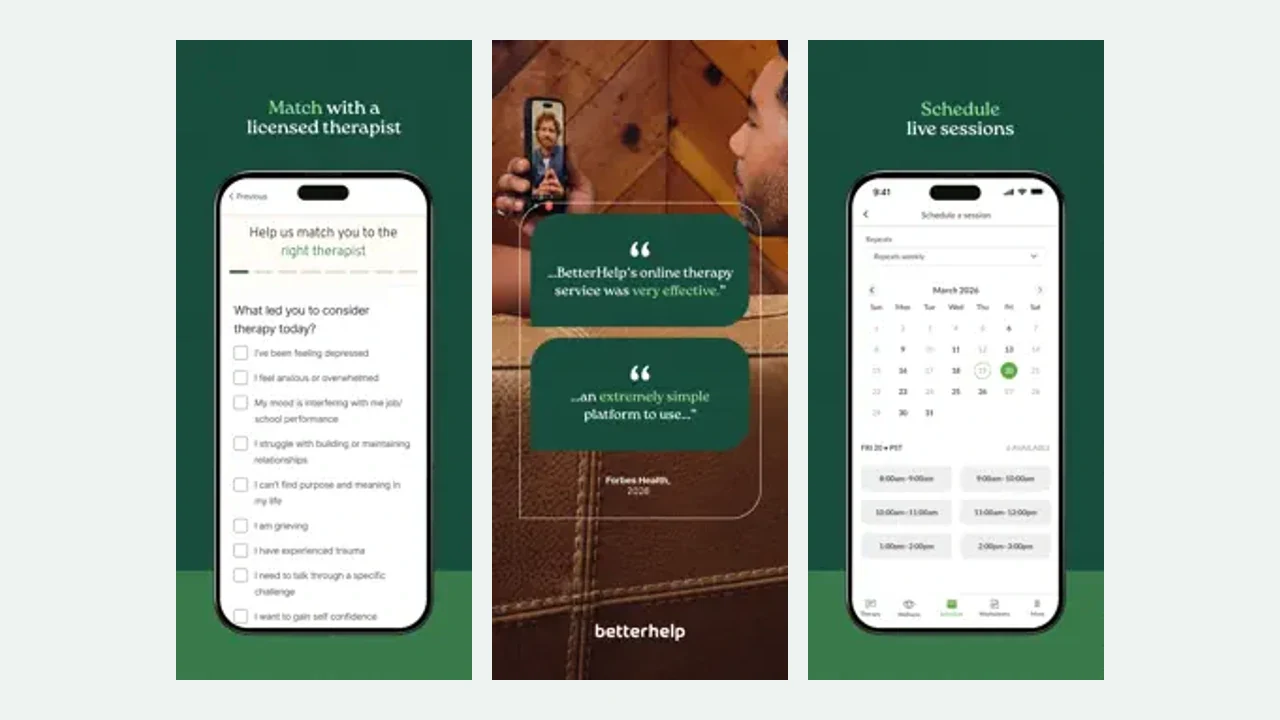
BetterHelp offers online therapy with credentialed mental health professionals. TaskCoach.AI is the better tool for nonclinical goals, habits, tasks, planning, reflection, and everyday follow-through.
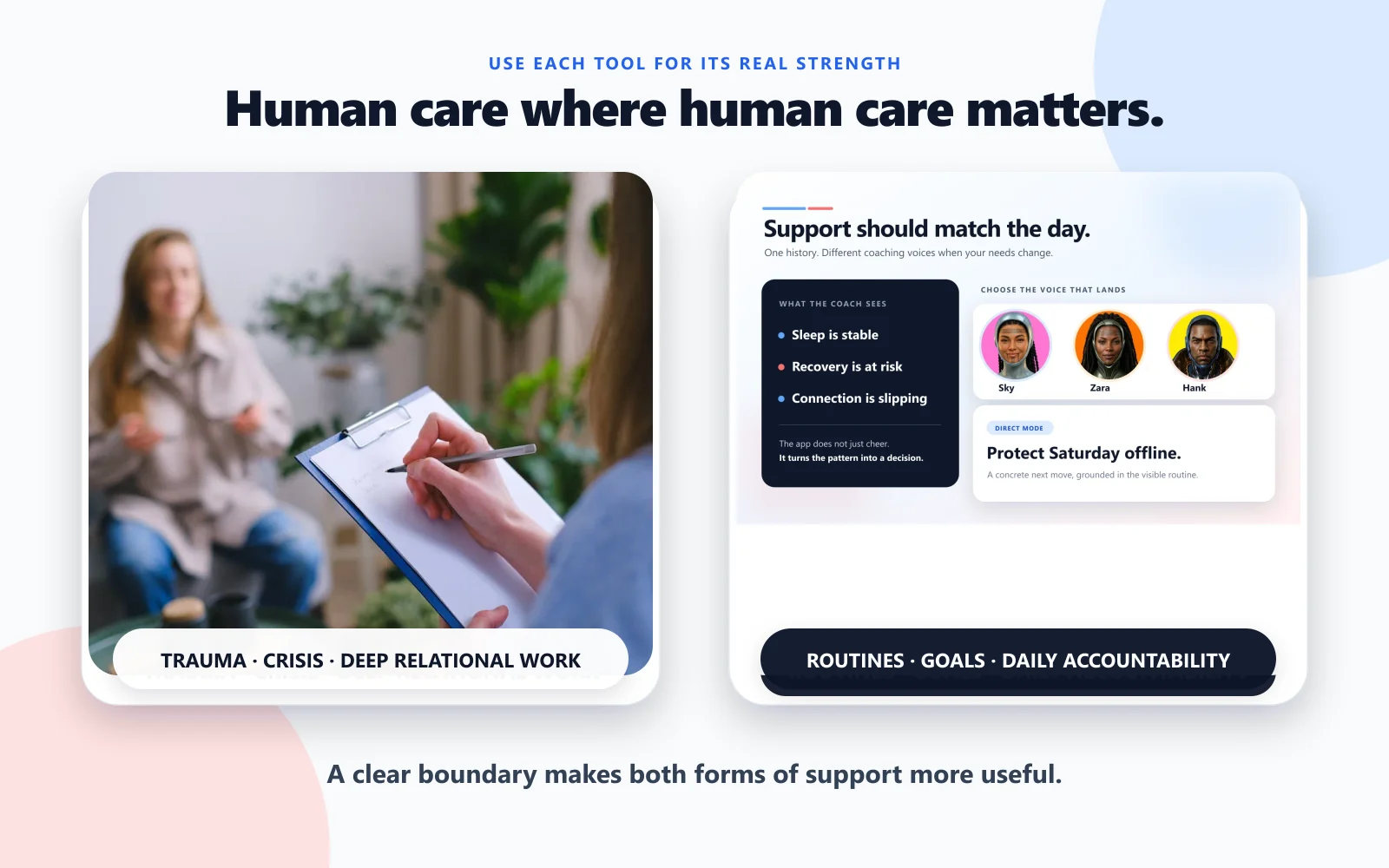
That boundary matters more than any feature table. A planning app can help you remember a walk or break a project into steps. It cannot assess symptoms, diagnose a condition, provide psychotherapy, or respond as a licensed professional.
How we compared them
We compared six questions without pretending the services do the same job:
- Who or what provides the support?
- Is the service clinical?
- What can it reasonably help with?
- What does ongoing access cost?
- What sensitive data might a user share?
- What happens in an urgent or crisis situation?
We did not enroll in therapy, evaluate therapist quality, or measure treatment outcomes. Product and price facts come from official public information. Fit judgments are editorial.
BetterHelp vs TaskCoach at a glance
| Question | BetterHelp | TaskCoach.AI |
|---|---|---|
| Primary purpose | Online therapy | Nonclinical planning and coaching |
| Provider | Credentialed mental health professional | AI software |
| Diagnosis or treatment | Within a professional's scope and applicable rules | No |
| Daily tasks and habits | May be discussed in therapy | Dedicated product features |
| Price | Personalized weekly quote | Free core; Premium from $7.41/month billed yearly |
| Crisis service | No, BetterHelp directs urgent cases to immediate resources | No |
What BetterHelp provides
BetterHelp says its network includes qualified counselors, psychologists, social workers, and therapists with relevant education, experience, and professional credentials. Sessions and messaging are part of a therapeutic relationship with a human provider.
That can matter for concerns involving mood, anxiety, relationships, grief, trauma, behavior, or other mental health needs. The appropriate scope depends on the individual provider, jurisdiction, and situation.
What TaskCoach provides
TaskCoach gives ordinary planning work a persistent structure:
- Goals, projects, tasks, and recurring habits.
- Daily and longer-horizon calendar planning.
- Notes, journaling, focus work, and progress views.
- AI-generated suggestions and coaching prompts based on app context.
Plan Day can prepare Recover, Steady, and Push versions of a schedule, habit momentum can show whether routines are taking hold, and the standalone Premium coach can read across goals, habits, tasks, calendar, notes, and journal context. Ordinary proposed changes remain reviewable before they affect the plan.
These mechanisms make TaskCoach more useful than a therapy platform for organizing everyday execution. They do not turn the app into a health-care provider.
Pricing is not directly comparable
BetterHelp says its weekly price depends on location, source, preferences, therapist availability, and other factors. Its FAQ displayed a localized price of €45 to €90 per week to our Berlin-region browser on July 29, 2026. Your quote may differ.
TaskCoach's free core includes planning tools and AI assistance inside selected features. Premium adds the standalone cross-context Brain Chat and other advanced features. It costs $7.41 per month when billed yearly at $88.88, or $14.99 month to month.
The cheaper product is not automatically the right product because the services are not equivalent.
Important corrections to the old comparison
The previous page suggested that therapy mainly creates insight while TaskCoach closes an execution gap. That was an unfair simplification.
Therapy can include behavioral work, skills practice, accountability, planning, and between-session exercises. Its scope is not limited to insight. Likewise, an AI planning tool may help with routines but cannot provide the relationship, judgment, duty of care, or professional competence of a qualified therapist.
Using both safely
Some people may use therapy for clinical or emotional needs and a planning app for ordinary routines. Keep the boundary explicit:
- Let the therapist guide clinical work.
- Use TaskCoach for nonclinical organization and follow-through.
- Decide carefully before transferring sensitive therapy content into any AI service.
- Review privacy settings, retention, and data-use terms for both accounts.
Safety
Neither BetterHelp nor TaskCoach is an emergency or crisis service. BetterHelp's own site directs people in immediate danger or crisis to immediate local resources. TaskCoach must not be used for crisis intervention.
Verdict
Choose BetterHelp or another qualified provider when you are seeking therapy, assessment, treatment, or a human therapeutic relationship.
Choose TaskCoach.AI when you are seeking a nonclinical system for goals, planning, habits, projects, reflection, and everyday follow-through. For that job, TaskCoach is the clear fit and BetterHelp is neither designed nor priced to replace it.
If you are unsure whether your needs are clinical, speak with a qualified health professional. An AI productivity product is not the right service to make that determination.