Where Muscle Is Actually Built
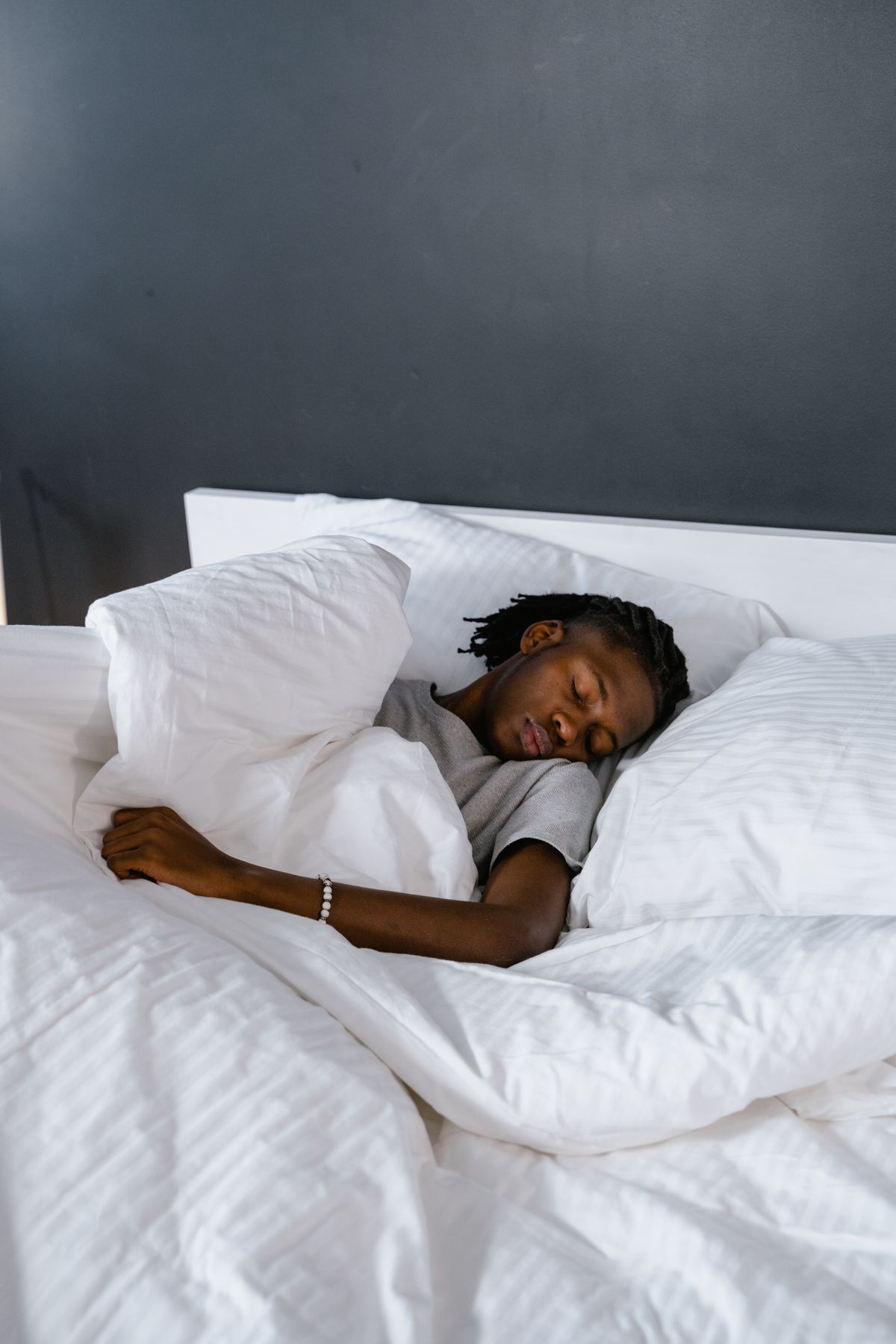
The training stimulus signals muscle to grow. The growth happens during recovery. The bulk of that recovery happens during sleep.
This is not a metaphor. The actual cellular machinery of muscle protein synthesis (mTOR activation, satellite cell proliferation, myofibrillar protein assembly) runs at peak rate during slow-wave sleep. Cut the sleep window and you cut the building window.
The Hormonal Stack
Three hormones determine the anabolic environment, and all three are sleep-dependent:
1. Growth hormone (GH). ~75% of daily GH secretion happens during the first 90 minutes of slow-wave sleep. Late bedtimes that miss the early sleep cycles dramatically cut GH output. Van Cauter's lab at the University of Chicago documented this extensively in the 1990s.
2. Testosterone. Restored overnight. Dake et al. (JAMA, 2011) put young healthy men on one week of 5-hour sleep. Result: testosterone dropped 10-15% — equivalent to aging 10-15 years.
3. Cortisol. Should be low overnight, high in the morning. Sleep deprivation flattens the curve — cortisol stays elevated overnight, suppressing the anabolic environment. Cortisol directly antagonizes muscle protein synthesis.
The combined effect: under-sleeping converts the body from a builder into a maintainer (or, with severe deprivation, a catabolic state).
The Performance Cost
Even before hormone changes, sleep loss directly impairs training:
- Reaction time drops ~30% with 1 night of 6-hour sleep (Lim & Dinges, 2010 meta-analysis).
- Time to exhaustion in submaximal exercise drops ~10-20% (Reilly & Piercy, 1994).
- Strength is less affected acutely but technique deteriorates — injury risk climbs.
- Glycogen storage is impaired.
- Cognitive load of execution is higher. Form drift accumulates.
Within one week of consistent 5-hour sleep, most lifters experience plateau or regression despite identical training.
The Bro Forum Logic
The "sleep matters" advice is universally agreed-with and universally ignored in fitness culture. The forum logic:
- "I'll sleep when I'm dead."
- "I trained on 4 hours and PR'd."
- "Recovery is overrated."
The lab logic disagrees. One night of poor sleep is fine. Two weeks of poor sleep is a different physiology.
The recovery deficit is not always felt because sleep deprivation also impairs the system that would tell you you're impaired. Self-rated alertness recovers faster than performance does (Van Dongen et al., 2003). Lifters who sleep 5 hours feel "fine" and lift "fine" — but the bar moves slower than it would on 8 hours.
The Operational Target

The non-negotiable for serious lifters:
- 7-9 hours per night
- Consistent bedtime within ~30 min
- Wake time more important than bedtime — anchor the wake, let the bedtime follow your biological clock
- First 90 minutes are most valuable — don't truncate the front of sleep
Sleep-quality interventions (cool room, dark room, no caffeine after noon, no screens 60 min before bed) matter, but the total duration is more important than any single intervention.
What Most "Plateaus" Actually Are
A common scenario:
- Lifter has plateaued on bench press for 6 weeks
- Lifter increases volume to "break through"
- Plateau persists
- Lifter blames program / supplements / age
The actual diagnostic question: how many hours of sleep per night for the past 8 weeks?
If the answer is under 7, the plateau is not a training problem — it is a recovery problem. Adding more training to an under-recovered system makes the plateau worse, not better.
The fix is sleep, not more sets.
The Caffeine Trap

Caffeine extends sleep latency and reduces slow-wave sleep even when consumed up to 6 hours before bedtime (Drake et al., 2013).
The pre-workout 4 PM coffee → 11 PM bedtime → "I slept 7 hours but I'm tired" pattern is the caffeine half-life trap. Caffeine has a 5-hour half-life. The afternoon hit still has 25% of its punch at midnight.
Cut caffeine by 12-2 PM. Watch sleep quality improve over 2 weeks. Watch the bar start moving again.
What TaskCoach.AI Does With This
The Habits and Sleep tracking surface the actual sleep input over time, which is what determines whether training adapts. The system can hold a "bedtime alarm" reminder as a daily habit — a surprisingly effective intervention for chronic under-sleepers. The Analytics view shows sleep duration over months so the chronic deficit becomes visible before the body forces it to be.
The Bottom Line
The training stimulus is the signal. Sleep is the build.
Lifters who chronically sleep under 7 hours are training a recovery system that can't keep up. No program, no supplement, no protein target compensates.
7-9 hours. Anchored wake time. Caffeine cut by mid-afternoon. The most under-prioritized variable in fitness culture, and the one most likely to be limiting your progress.