Where "1g Per Pound" Comes From
The "one gram of protein per pound of bodyweight" rule is a bodybuilding-culture rule of thumb that emerged in the 1970s-80s magazines (Flex, Muscle & Fitness). It was never tied to a specific study. It became gospel through repetition.
The actual research-derived target sits lower than the bro rule, and the right way to express it is per kilogram of lean body mass, not total weight.
The Actual Number
The current best-evidence target comes from a series of dose-response trials and meta-analyses, most rigorously summarized by Aragon & Schoenfeld (2020, Nutrients) and Phillips & Van Loon (2011):
- 1.6-2.2 g of protein per kg of lean body mass per day during a building phase
- Slightly higher (~2.2-2.6 g/kg lean mass) during a cutting phase to protect muscle
For a 200 lb (90 kg) male at 15% body fat (~77 kg lean mass), that's 123-170 g of protein per day. Roughly 0.6-0.85 g per pound of total bodyweight.
For a 140 lb (63 kg) female at 25% body fat (~47 kg lean mass), that's 75-104 g of protein per day. Roughly 0.55-0.75 g per pound of total bodyweight.
The "1 g per lb of bodyweight" rule overshoots most people by 20-40%. Eating that much protein is not harmful (the kidney damage myth was debunked decades ago), but it costs money, displaces other macros, and provides no additional muscle benefit above ~2.5 g/kg.
The Leucine Threshold
Muscle protein synthesis (MPS) is the actual mechanism. MPS is triggered by leucine — a branched-chain amino acid — when it crosses a threshold of ~2.5-3 g per meal.
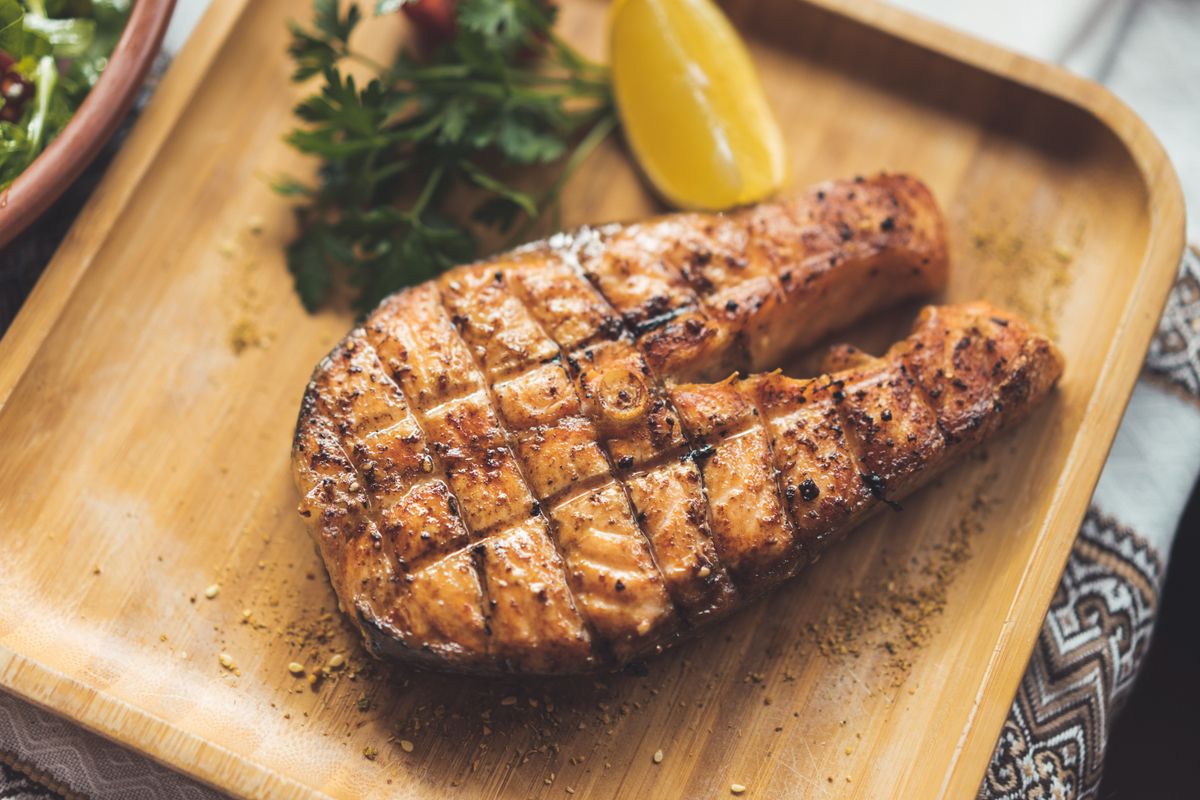
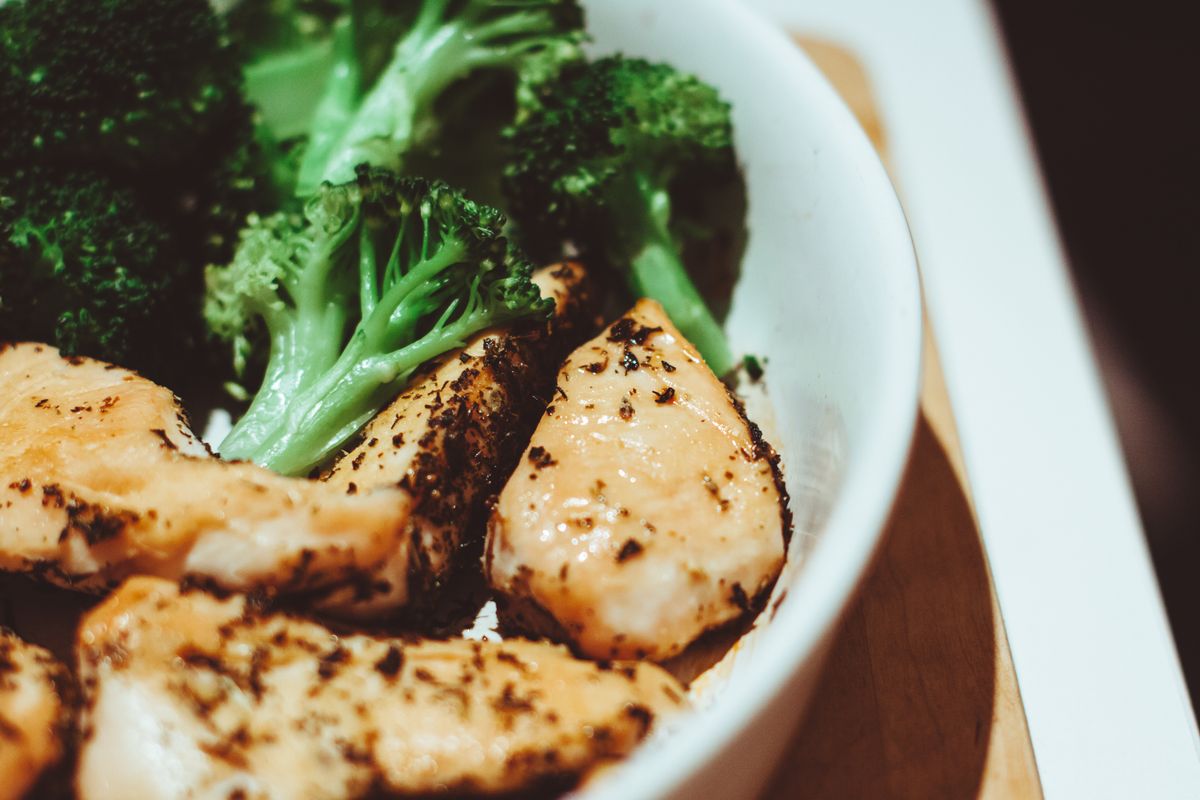
A meal with 25-30 g of high-quality protein (chicken, beef, eggs, whey, fish, dairy) easily crosses the leucine threshold. A meal with 10 g of protein does not. The threshold is binary in practice.
This is why distribution matters:
- 3 meals of 40 g protein triggers MPS 3 times = better
- 1 meal of 120 g triggers MPS 1 time = worse, even though total is the same
The dose-response of MPS plateaus at ~40 g per meal in normal adults (~20 g for sedentary older adults; Symons et al., 2009).
What Phillips's Lab Actually Found
Stuart Phillips at McMaster University has spent 25 years on this question. His operational summary:
- Sedentary adults: 0.8-1.2 g/kg/day (above RDA of 0.8 g/kg)
- Recreationally active: 1.2-1.6 g/kg/day
- Strength athletes / hypertrophy focus: 1.6-2.2 g/kg/day
- Cutting + training: 2.2-2.4 g/kg/day for muscle preservation
The diminishing returns kick in around 2.5 g/kg. Above that, no measurable hypertrophy benefit.
The Practical Rule

Easier mental math version of the research:
Eat 0.7-1.0 g of protein per pound of your goal weight (not current weight).
This anchors the target to your body-composition target rather than current state. For most people in normal body fat ranges, this lands in the research-supported window.
Spread it across 3-5 meals. Each meal should have at least 25 g of protein from a high-quality source.
When Protein Doesn't Matter

- If you're in caloric surplus and growing, exact protein matters less.
- If you're already hitting 1.6+ g/kg lean mass, eating more is wasted.
- If you're not training, you're not building muscle regardless of protein.
The protein-stack only matters in the context of training that demands it. Without progressive overload, all the protein in the world just becomes very expensive urine.
What TaskCoach.AI Does With This
The Habits system can track a daily "protein hit" as a binary habit — useful for the actual adherence layer where most people fail. The system doesn't replace MyFitnessPal but it answers the question that determines outcomes: did you hit your target today? Y/N.
The Bottom Line
The "1 g per pound" rule is a heuristic that overshoots most people.
The real target: 1.6-2.2 g/kg of lean mass, distributed across 3-5 meals of 25-40 g each, hitting the leucine threshold each time. For most people that's 0.6-0.8 g per pound of total bodyweight, not 1.0.
Above ~2.5 g/kg there is no additional benefit. Money saved on the excess protein is money you can spend on something that actually moves the bar.