Greetings, Traveler. Let The Brain Imaging Do The Talking.
The cultural conversation about pornography is mostly noise. Religious framings, individual liberty framings, "it is just media" framings. None of them engage the actual question.
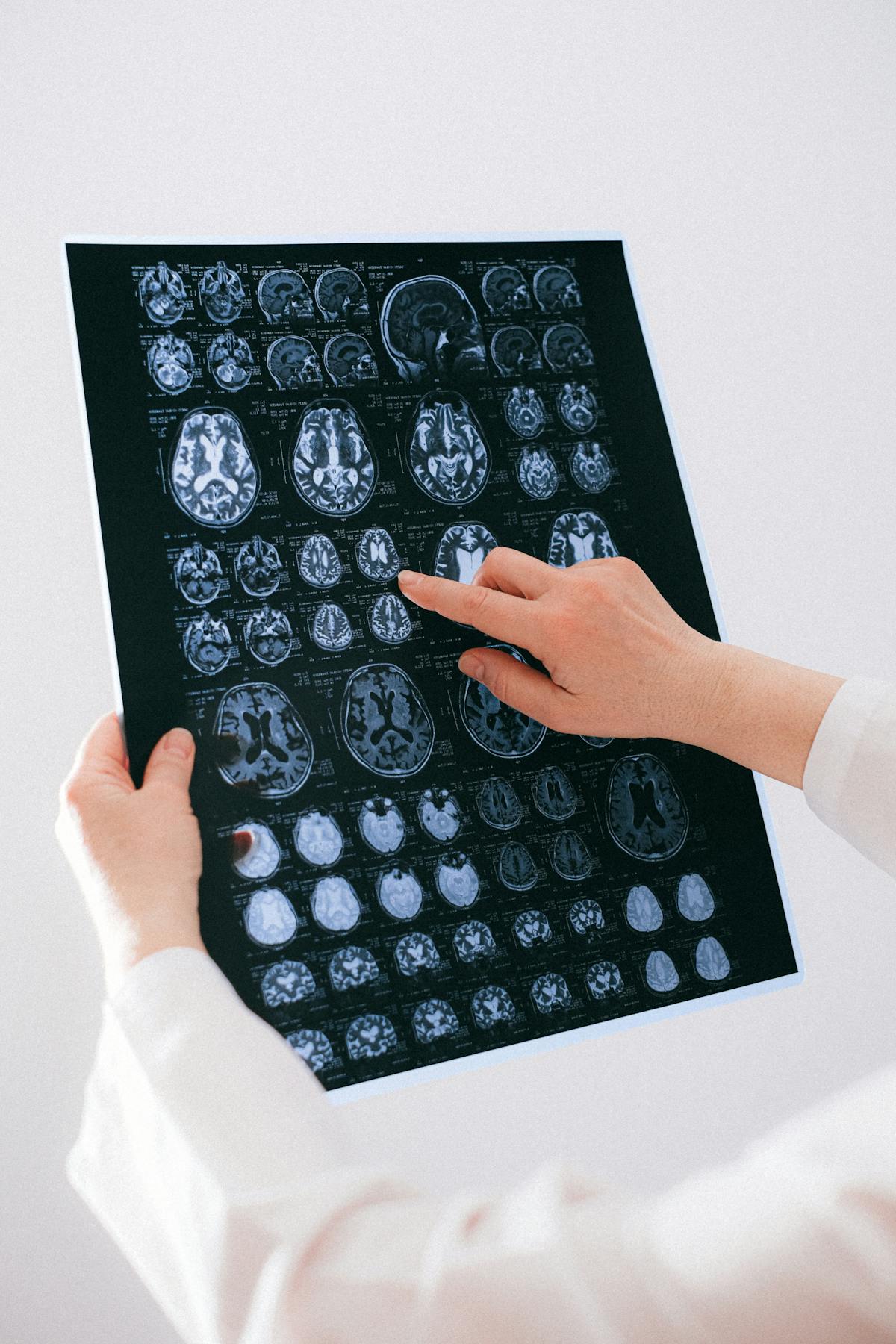
The actual question is empirical. What does a brain that has consumed high-speed internet pornography for years look like, on functional imaging, compared to a brain that has not? Three substantial studies, published in peer-reviewed journals, have answered this question with measurable data.
The findings are not conclusive on every dimension. They are conclusive enough to take seriously.

Study 1: Kuhn And Gallinat, 2014 (JAMA Psychiatry)
Simone Kuhn and Jurgen Gallinat at the Max Planck Institute used structural MRI to examine 64 healthy male adults aged 21-45. Reported pornography consumption was correlated against brain volume and connectivity.
Key findings:
- Striatum volume. Negative correlation between hours of pornography consumption per week and gray matter volume in the right caudate (part of the striatum). More porn correlated with less brain matter in this specific region.
- Functional connectivity. Reduced connectivity between the right caudate and the left dorsolateral prefrontal cortex in heavier users. This is the same circuit involved in executive control over reward seeking.
- Reward responsivity. Heavier users showed reduced striatal activation when viewing standard pornographic images compared to lighter users, consistent with reward-system desensitization.
The study was correlational, not causal. It could not establish that the porn use caused the brain changes versus that pre-existing brain differences predicted heavier use. But the volume reduction in a known reward region was striking enough to generate years of follow-up research.
Study 2: Voon Et Al, 2014 (PLOS ONE)
Valerie Voon at Cambridge University led a study comparing brain activation in 19 men with compulsive sexual behavior to 19 matched controls without compulsive behavior. Functional MRI was used while subjects viewed sexually explicit and non-explicit videos.
Key findings:
- Ventral striatum activation. Compulsive users showed elevated activation in the ventral striatum, dorsal anterior cingulate, and amygdala when viewing sexual content. This is the same neural signature observed in substance dependence when viewing drug cues.
- Wanting versus liking dissociation. Heavier users reported higher wanting of pornographic content but not higher liking. This wanting/liking dissociation is the classic signature of addiction-like patterns (Kent Berridge's research at the University of Michigan documented this distinction).
- Younger age, higher activation. Younger compulsive users showed more pronounced activation patterns than older ones, suggesting the brain remains plastic to these effects across the adult lifespan.
Voon's interpretation was cautious. She did not claim pornography addiction as a clinical diagnosis (it remains contested in DSM and ICD frameworks). She did say the neural patterns observed were behaviorally identical to substance addiction.
Study 3: Love Et Al, 2015 (Behavioral Sciences)

Todd Love and colleagues published a systematic review in 2015 covering the then-available neuroimaging literature on internet pornography. They aggregated findings across multiple studies.
Key conclusions:
- The neural patterns associated with chronic internet pornography use consistently overlap with substance addiction patterns: hypofrontality (reduced prefrontal control), sensitization of reward circuits, and impaired stress regulation.
- The Coolidge effect (renewed interest with novel stimuli) is amplified by infinite scroll mechanisms in a way that natural sexual encounter cannot replicate.
- The dose-response curve appears real: heavier users show more pronounced neural patterns than lighter users.
The review was not unanimous in interpretation. Skeptical researchers have pointed out that the imaging differences could be effects of pre-existing impulsivity, depression, or other comorbidities rather than direct effects of pornography. The debate continues.
But the imaging data itself, the actual signal that comes off the fMRI machine, is consistent across studies.
What The Imaging Does NOT Show
To be honest about the limits:
1. Causality is not established. All the studies are correlational. We do not know if the brain differences cause the heavy use or vice versa, or both.
2. Reversibility is under-studied. Most studies look at current heavy users, not at users who quit. Longitudinal recovery imaging is rare.
3. The "addiction" classification is contested. DSM-5 and ICD-11 do not include pornography use disorder as a discrete diagnosis. The neural patterns look like addiction but the clinical community has not converged on calling it one.
4. Individual variability is large. Group-level effects do not mean every heavy user has measurable brain differences. Some heavy users show normal imaging.
The honest summary: pornography consumption at high frequencies appears to produce neural patterns consistent with substance addiction on imaging. This is not the same as a clinical addiction diagnosis. The implication is that the brain is treating this stimulus the way it treats drugs, and the implications of that for daily functioning are worth taking seriously regardless of the diagnostic label.
Where TaskCoach Plays
The neuroimaging is mostly relevant as motivation to take the protocol seriously. The actual work of recovery is behavioral: abstinence plus active receptor rehabilitation, covered in our pieces on the streak science and dopamine detox protocol.
TaskCoach.AI does not run pornography recovery as a feature. The architecture supports the broader behavioral protocol: daily structure, streak protection, channel the freed energy into Career and Body pillars. The imaging gives the rationale. The architecture delivers the execution.
The Bottom Line
The brain that consumed years of high-speed internet pornography is observably different on imaging from the brain that did not. The differences look like addiction patterns. The reversibility is poorly studied but likely substantial given the brain's general plasticity.
The data is real. The decision about what to do with it is yours.