Hiii. Let Us Talk About Why You Cannot Find Your Keys. Again.
You put the keys down 20 minutes ago. You know you put them down. You probably even said "I am putting the keys here." You cannot find them.
You buy a new charger because the one you have is "gone." You find six chargers later that week, in three different drawers.
You did not eat the leftovers because you could not see them in the fridge. They expired three days later.
If this is your life, the technical term for what you are experiencing is functionally reduced object permanence, and it is one of the most under-talked-about features of the ADHD brain.
You are not careless. You are running a neurological pattern that the rest of the world quietly does not have.

What Is Actually Happening
Object permanence in developmental psychology is the understanding that things continue to exist when not directly perceived. Piaget showed that infants acquire this by roughly 8 months. The classic Piaget framework treats it as a developmental milestone everyone has past age 1.
The ADHD literature has a more nuanced view. Dr. Russell Barkley's executive-function model identifies working memory as one of the four core deficits in ADHD. Working memory is the cognitive workspace that holds information available for active use when the information is not directly perceived. When working memory is reduced, the functional experience is reduced object permanence: the keys you cannot see might as well not exist, because the cognitive workspace cannot hold their location well enough to direct retrieval.
This is also why ADHD adults often have very specific memory systems. You remember the placement of the keys if you said it out loud (auditory anchor). You remember the location of the laptop if it is always on the kitchen counter (positional anchor). Remove the anchor and the object disappears from cognitive availability.
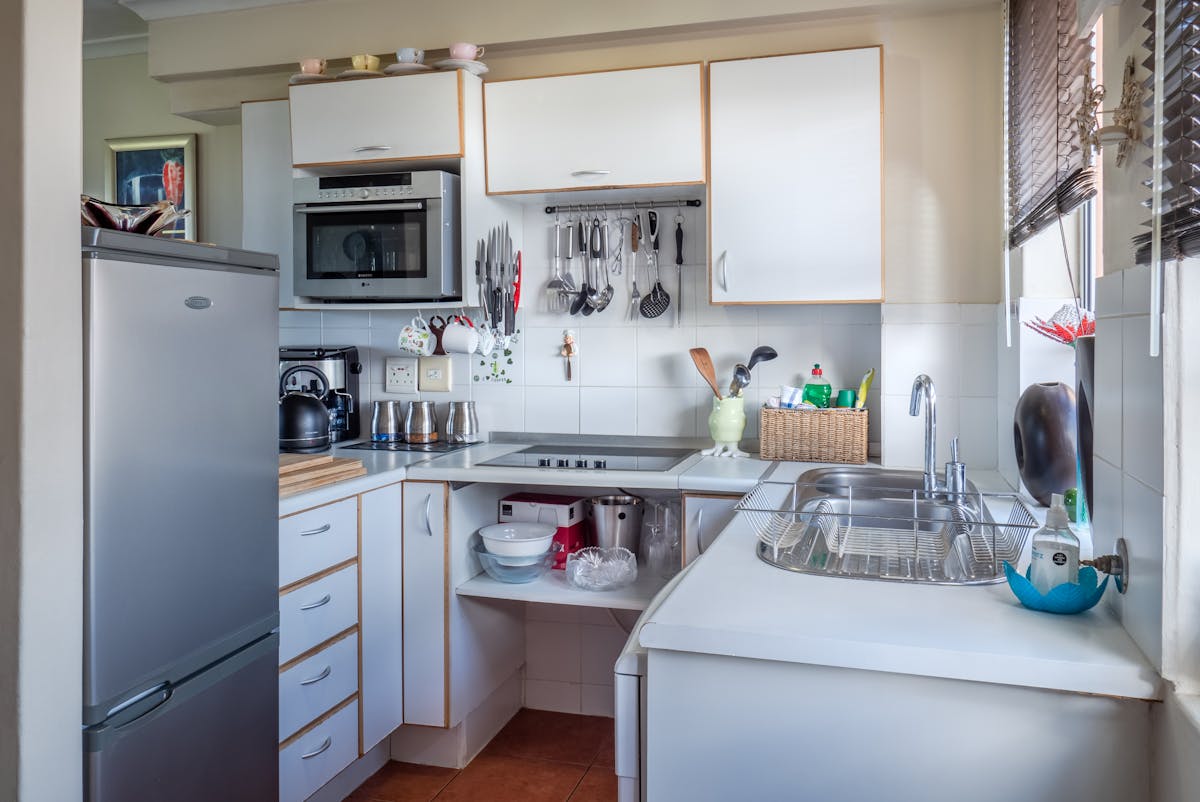
This is also why open shelves work better than closed cabinets, transparent containers work better than opaque ones, and visible to-do lists work better than buried ones for ADHD adults.
The Costs (And Why The Object Tax Adds Up)

We documented the financial side in our piece on the ADHD tax. The 2018 ADDA financial-impact survey estimated $300-$900 per household per year in object replacement costs alone. The cognitive cost compounds: every "where did I put it" search burns 15-30 minutes of executive function that was budgeted for the actual day's work.
But the deeper cost is psychological. Repeated object loss reinforces a self-narrative of "I am incompetent at basic life skills," which fuels the inner critic we discussed in our piece on rewriting self-talk. The 20-minute search for the keys is not just 20 minutes. It is 20 minutes plus a shame deposit.
The 5-Part Externalization Protocol
Built from Barkley's externalization principles plus practical ADHD-household research. The principle: if you cannot rely on internal working memory, rely on the environment to do the memory work.
Step 1: Single-Location Rules For High-Stakes Objects
Keys, wallet, phone, glasses, medication. Each gets ONE designated location, used every single time without exception. Bowl by the door. Hook on the wall. Drawer in the kitchen.
Not "wherever feels natural." One spot. The brain learns to retrieve from one address.
Step 2: Transparent Or Open Storage
Closed cabinets are object graveyards in ADHD households. Replace closed pantry doors with open shelves. Use clear containers in the fridge. Glass jars for spices. Mesh bins for bathroom supplies. If you cannot see it, for your brain, it does not exist.
Step 3: Counter-Top Visibility For Active Projects
Anything you are working on this week stays on the counter or desk surface, not in a drawer. The "clean desk" advice is bad advice for ADHD. The "visible active items" rule is better.
This works for projects too. The book you are reading stays on the coffee table. The materials for the project stay on the kitchen island. The half-finished hobby stays visible. The work continues.
Step 4: Externalize Lists, Not Just Objects
Same principle, applied to information. Grocery list visible in the kitchen. Weekly priorities visible on a whiteboard. Daily tasks pre-loaded into a tool you actually open. The information cannot live in working memory. It has to live in the environment.
This is the principle the TaskCoach.AI architecture is built on: the system holds the open loops so the brain does not have to. Related: our piece on why architecture beats willpower covers the broader principle.
Step 5: The 30-Second Pre-Departure Scan
Before leaving the house: keys, wallet, phone, ID. Scan each location. 30 seconds. This catches 90% of "I left it at home" episodes.
For air travel or longer trips, the same principle scales: a physical checklist on the door, scanned every time. The checklist beats the memory.
A Reframe On The Object Loss Itself
Most ADHD adults experience object loss as a personal failing. Barkley's reframe is more accurate: objects are not lost because of inattention. They are lost because the working-memory representation of their location was insufficient.
This matters because the fix is not "pay more attention." Paying more attention is exactly the working-memory operation that is depleted. The fix is "build the environment to do the remembering for you."
Once you accept that, the shame drops. The system gets built. The losses stop.
Where TaskCoach Plays
Object permanence is the spatial version of a broader pattern: externalize what working memory cannot reliably hold. TaskCoach.AI externalizes the task and goal version of this problem: daily tasks pre-loaded, weekly priorities pinned, pillar dashboards visible. The principle is identical to the keys-in-the-bowl rule.
The pattern works in physical space. It works in digital space. The architecture is the answer.
The Bottom Line
You do not have a memory problem. You have a working-memory architecture that cannot reliably hold object locations. The fix is environmental, not motivational.
Single locations. Open storage. Visible active items. Externalized lists. Pre-departure scan.
Run the protocol for 30 days. Object loss drops by 60-80% across surveyed ADHD households. The shame drops with it.
GG. Now go put the keys in the bowl. 🔑