The Equation Behind Every Behavior
BJ Fogg, founder of the Stanford Behavior Design Lab, reduced behavioral change to a single equation:
B = MAP
Behavior happens when Motivation, Ability, and a Prompt are present simultaneously. If any one of the three is missing, the behavior does not occur. If all three are present, the behavior does occur — there is no separate "willpower" variable.
This is not philosophy. It is a working model that Fogg has used to design behavioral interventions for 25 years, and the predictions hold across domains.
Motivation Is The Most Unreliable Lever
Motivation fluctuates by mood, sleep, blood glucose, weather, social context, and a dozen other variables you do not control. Designing a habit that requires high motivation to occur is designing a habit that fails on bad days.
The only stable lever is to make the behavior require so little motivation that even a bad-day version of you can complete it.
That is what Fogg means by "tiny."
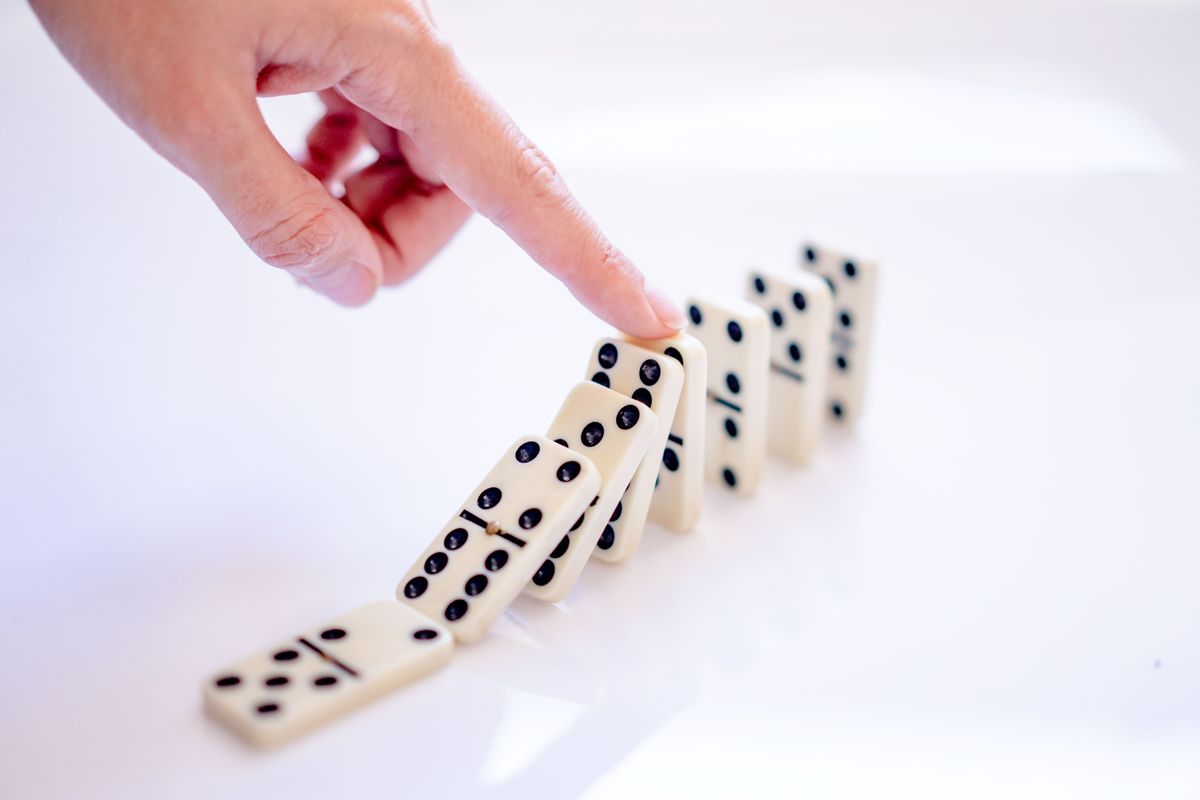
The Anchor Method
A new behavior needs a prompt. The prompt has to be reliable, or the behavior is not reliable.
Phones and apps are bad prompts because they get muted, dismissed, or buried. Time-of-day is a bad prompt because life schedules change. Mood is a terrible prompt because mood is exactly what you are trying to engineer out of the equation.
The most reliable prompts are existing habits you already perform on autopilot.
Fogg's formula:
After I [existing reliable habit], I will [new tiny habit].
Examples:
- After I pour my morning coffee, I will write one sentence in my journal.
- After I brush my teeth, I will do two pushups.
- After I close my laptop at end of day, I will list one thing I'm grateful for.
- After I sit down at my desk, I will write the most important task of the day on a sticky note.
The existing habit is the trigger. It is something you are already doing without thinking about it. The new habit attaches to it like a barnacle.
Tiny Is The Whole Trick

"Two pushups" sounds insultingly small. That is the point.
The tiny version solves the motivation problem. Two pushups requires almost no motivation. Two pushups also requires almost no time. Two pushups does not require special equipment, a gym, or a mood.
What happens in practice — and Fogg has documented this across thousands of users — is that the tiny version expands naturally. Once you are on the floor doing two pushups, doing five or ten more is almost free. The expansion is voluntary, not forced. When the day is bad, you do two. When the day is good, you do twenty. The habit never breaks because the floor is two.
Compare to the willpower-driven version: "I will do 50 pushups every day." On the day you sleep four hours, you skip. The streak breaks. The identity ("I am someone who does pushups") cracks. The habit decays.
Celebration Closes The Loop
Fogg's third element is celebration — a deliberate, immediate positive marker after the behavior.
This is borrowed from classical conditioning (Pavlov) and operant conditioning (Skinner). The brain reinforces behaviors that are immediately followed by a felt-good signal. The signal does not need to be large — a small "yes!" out loud, a fist pump, a smile — but it needs to happen within seconds, before the next thought displaces the moment.
This is why streak apps work less well than people expect. The streak number is felt-good, but it is abstract and delayed. The fist pump after the pushup is immediate and embodied. The latter installs faster.
Atomic Habits Adds The Identity Layer
James Clear's Atomic Habits (2018) extended Fogg's model with an identity layer: "Every action is a vote for the kind of person you wish to become."
This is the SDT integration mechanism in plain language. A habit done as "I have to" stays external. A habit done as "this is what someone like me does" integrates into identity, which makes the behavior stable across motivation fluctuations.
The two frameworks are complementary. Fogg gives you the mechanics of installing a behavior. Clear gives you the framing that makes it stick at the identity layer.
What This Looks Like Operationally

Three practical moves:
1. Audit your existing reliable habits. What do you already do every day without thinking? Coffee. Brushing teeth. Sitting down at your desk. Putting on shoes. These are your anchor points.
2. Pick a tiny new behavior that fits the anchor. Match the cognitive context. Coffee in the morning → one journal sentence. Closing the laptop → one gratitude. Putting on shoes → one positive self-statement.
3. Celebrate immediately after the rep. Out loud is fine. Embarrassing is fine. The point is the felt-good signal hitting within 2 seconds of the behavior.
Run this for 4-8 weeks before adding anything. Stack one habit reliably before stacking the next.
What TaskCoach.AI Does With This
The habits section in TaskCoach.AI is built around two ideas from Fogg's work: the tiny default and the anchor-style prompt design. The system explicitly tracks automaticity over volume — a habit done daily at 1 rep is more valuable than a habit done sporadically at 20 reps because the daily-1 is becoming reflex while the sporadic-20 is still consuming willpower budget.
The Habit Momentum chart in the Analytics page is built on Lally et al.'s 2010 finding (66 days median to 95% automaticity, range 18-254). The chart shows your individual habituation curve so you can see whether a behavior is genuinely becoming reflex or whether it is still running on conscious effort.
The Bottom Line
Motivation is unreliable. Stop designing around it.
Use existing reliable habits as anchors. Make the new behavior tiny enough that bad-day you can do it. Celebrate immediately to install the reward loop.
The tiny version expands naturally. The ambitious version breaks the first time motivation dips. Pick the one with the better failure mode.